When Can a Baby Face Forward in a Car Seat? Parent Guide
Every parent hits this moment. Your toddler’s legs are pressed against the seat back, they’re fussing on every ride, and you start wondering if it’s time to flip that car seat around. The question “when can a baby face forward in a car seat” feels urgent, especially when your little one seems cramped and uncomfortable.
Here’s the truth: the answer isn’t just about age. It’s about height, weight, and the specific limits printed on your car seat’s label. As of 2026, the American Academy of Pediatrics recommends keeping children rear-facing until they reach the maximum height or weight limit of their convertible seat, which for many models means age 3 or even 4.
That’s a far cry from the old “1 and 20” rule your parents might remember.
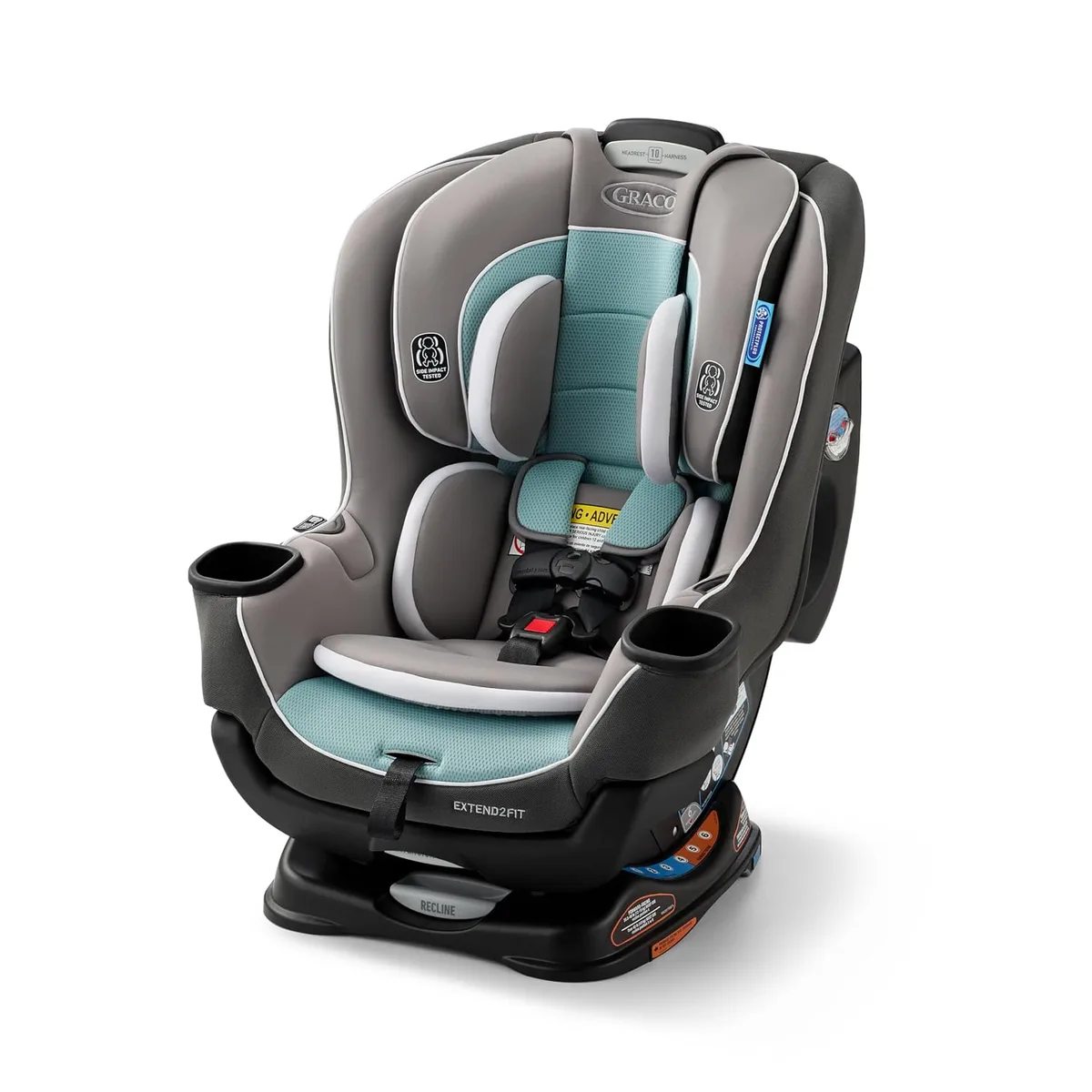
Image source: Web (Bing) / tiendamia.cr (Web image (fair-use with source credit))
Quick Answer
A baby can face forward when they reach the maximum height or weight limit of their rear-facing car seat. Most convertible seats allow rear-facing up to 40-50 pounds. The legal minimum age in most states is 2 years.
But best practice says keep rear-facing longer. Check your specific car seat label for exact limits.
The Short Answer: It’s Not Just About Age
The legal minimum for forward-facing in most US states is age 2. But that’s the floor, not the goal. Think of it like this: the law says you can, but safety experts say you shouldn’t yet.
Manufacturer specifications tell the real story. Every convertible car seat has a rear-facing weight limit printed on its label, usually between 30 and 50 pounds. It also has a height limit, often marked by a line on the shell or a maximum height measurement.
Your child is ready to face forward only when they’ve outgrown those rear-facing limits, not when they hit a birthday.
Here’s what that looks like in practice. A typical 2-year-old weighs around 25-30 pounds. Most convertible seats rear-face to 40 or 50 pounds.
That means most 2-year-olds have plenty of room to stay rear-facing for another year or two. The AAP’s guidance is clear: keep them rear-facing until they max out the seat, not the milestone.
Why Rear-Facing Is Safer (The Physics Parents Need to Know)
Let’s talk about what happens in a crash. When a car hits something head-on, the force throws everyone forward. A rear-facing seat spreads that force across the entire back of the child’s body, including the head, neck, and spine.
It’s like catching a falling egg in a padded glove instead of letting it hit a hard surface.
A forward-facing seat works differently. The harness catches the child’s shoulders and chest, but the head and neck keep moving forward. That’s called “head excursion,” and it’s the reason rear-facing is so much safer for young children.
Here’s the anatomy part that matters. A toddler’s vertebrae are not fully ossified. They’re still mostly cartilage, which means they can stretch significantly before they break.
In a frontal crash, a forward-facing toddler’s head can snap forward with enough force to cause internal injuries to the spinal cord. Rear-facing prevents that motion entirely.
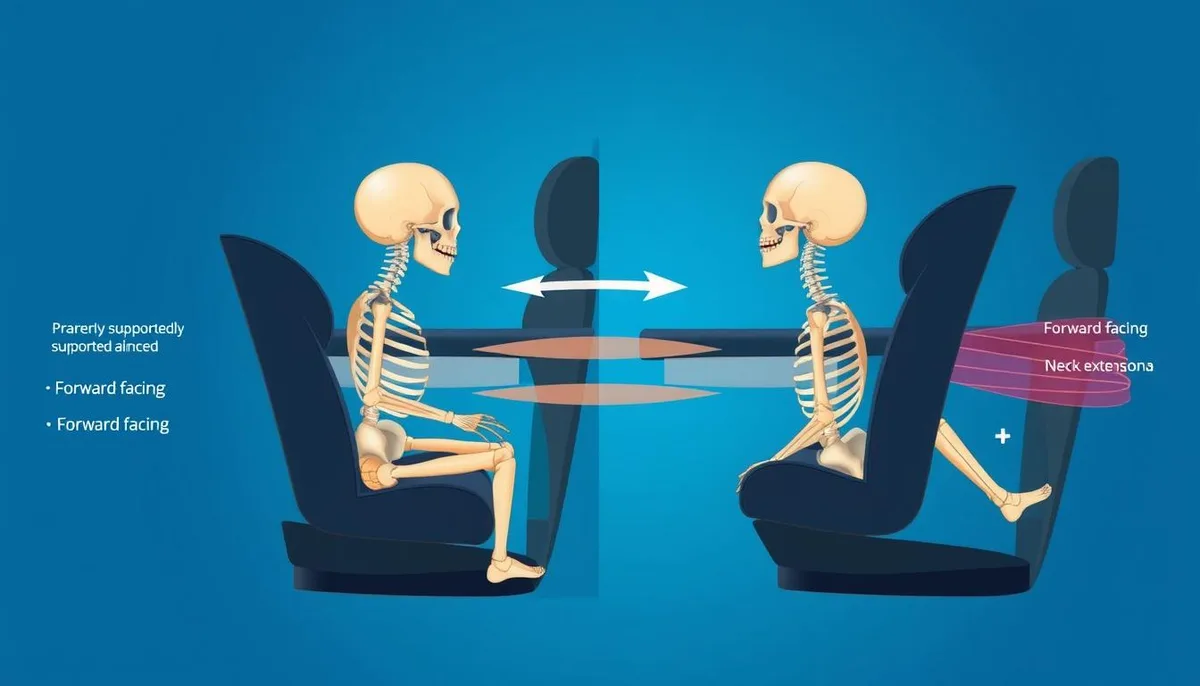
Image source: Bing (Web (fair-use with source credit))
Crash test data backs this up. Studies show that children under age 2 are 75% less likely to die or be seriously injured in a crash when riding rear-facing. That’s not a small number.
That’s the difference between walking away and not walking away.
How to Know If Your Child Is Ready (Step-by-Step)
Ready to check if your child has outgrown rear-facing? Here’s the process, step by step.
Step 1: Check the Car Seat Label
Every car seat has a sticker on the side or back with the manufacturer’s height and weight limits. Look for the rear-facing limits specifically. They’re usually listed as something like “Rear-facing: 5-40 lbs, 19-40 inches.” Write those numbers down.
Step 2: Measure Your Child Accurately
Weigh your child without clothes or with minimal clothing. Measure their height against a wall with a flat object on top of their head. Compare those numbers to the label.
If they’re under both limits, they stay rear-facing. Period.
Step 3: Check the Harness Slot Position
For rear-facing, the harness straps should be at or below your child’s shoulders. If the straps are above their shoulders, the seat is too small for rear-facing use. That’s a clear sign they’ve outgrown it.
Step 4: Read the Car Seat Manual
This is the step everyone skips. Your car seat manual has specific instructions for when to transition. Some seats have different limits for different installation methods.
The manual also tells you the minimum forward-facing weight, which is usually higher than the rear-facing minimum.
If you’re unsure about any of this, a certified Child Passenger Safety Technician can check your installation and answer questions. Many fire stations and hospitals offer free inspections. It’s worth the 30 minutes.
The Legs Touching the Seat Myth
Let’s address the elephant in the back seat. Your toddler’s legs are touching the vehicle seat. They look cramped.
They might even complain. And you’re wondering if that means it’s time to turn them around.
It doesn’t. Legs touching the seat is completely normal and completely safe. Children are flexible in ways adults aren’t.
They can sit cross-legged, with their feet up on the seat back, or with their knees bent at odd angles. None of these positions cause injury in a crash.
Here’s what actually happens in a rear-facing crash. The child’s body is pushed into the seat, and their legs naturally fold up. That’s fine.
The risk of leg injury is actually higher in forward-facing seats, where the legs can swing forward and hit the front seat.
If your toddler complains about being cramped, try adjusting their position. Let them sit with their legs crossed or their feet on the seat back. Some kids prefer one leg up and one leg down.
The key is that they’re comfortable enough to tolerate the ride, not that they have legroom like an adult.
If fussiness is the real problem, that’s a different issue. Some kids just hate being restrained. If that’s the case, check out our guide on why babies hate the car for practical solutions that don’t involve compromising safety.
Common Mistakes Parents Make When Turning the Seat
Even well-meaning parents make errors when transitioning to forward-facing. Here are the ones we see most often, based on aggregate reviews and CPST reports.
Turning Early Because of Crying or Fussiness
This is the number one reason parents flip the seat early. Your toddler screams every time you buckle them in. You assume they’re uncomfortable.
You turn the seat around, and suddenly they’re fine.
Here’s the thing: the crying usually isn’t about the rear-facing position. It’s about being restrained at all. Kids fight the harness whether they face forward or backward.
Turning the seat doesn’t solve the underlying problem, it just delays it.
If your child is genuinely miserable on every ride, try different strategies first. Bring a favorite toy. Play music they like.
Roll the windows down slightly. Some parents find that a mirror helps rear-facing kids feel more connected to the driver. If nothing works, consider whether motion sickness is the culprit.
Our guide on car sickness in babies covers signs and solutions that might help.
Ignoring the Top Tether (and Why It’s Non-Negotiable)
The top tether is a strap that connects the top of the car seat to an anchor point in your vehicle. It’s required for forward-facing installation. It reduces head movement in a crash by up to 4 to 6 inches.
Yet many parents skip it. They don’t know where the anchor is, or they think the LATCH system is enough. It’s not.
The tether is what actually holds the seat back during a frontal crash. Without it, the seat rotates forward and the child’s head snaps forward harder.
Every forward-facing car seat has a tether. Every vehicle with forward-facing seats has tether anchors, usually on the rear shelf, the back of the seat, or the floor. Check your vehicle owner’s manual for the exact location.
Attaching it takes 10 seconds and could save your child’s life.
Using Aftermarket Accessories That Compromise Safety
The market is full of car seat accessories. Head supports, strap covers, seat liners, toys that clip onto the harness. Most of them are not tested with your car seat.
Many of them void the warranty and compromise crash performance.
Here’s the rule: if it didn’t come in the box with your car seat, don’t add it. That includes aftermarket strap covers that can prevent the harness from tightening properly, and thick seat liners that add space between your child and the seat. Even a small amount of extra padding can change how the harness fits in a crash.
If your child needs extra comfort, adjust the harness properly first. The straps should be snug, with no slack when you pinch them. The chest clip should sit at armpit level.
A correctly fitted harness is comfortable enough without add-ons.
Legal Minimums vs. Best Practice: What the Law Says
Let’s clear up the confusion between what’s legal and what’s safest. These are two different things, and understanding the gap matters.
State-by-State Car Seat Laws (and Why They’re the Floor, Not the Ceiling)
Every state has its own car seat laws. Most require rear-facing until at least age 2. Some states, like California and New Jersey, require rear-facing until age 2 as well, but the specifics vary.
A few states still only require rear-facing until age 1 and 20 pounds, which is dangerously outdated.
The NHTSA maintains a state-by-state chart of car seat laws. Check it to know your legal requirements. But understand this: the law is the minimum.
It’s what you must do to avoid a ticket. It’s not what safety experts recommend.
What the AAP and NHTSA Actually Recommend
The American Academy of Pediatrics updated its guidance in 2018 and it still stands. The recommendation is to keep children rear-facing until they reach the maximum height or weight limit of their convertible car seat. Not until age 2.
Not until age 3. Until the seat says they’re done.
The NHTSA echoes this. Their guidance says to keep children rear-facing as long as possible, up to the limits of the seat. They also recommend using a forward-facing seat with a harness until the child outgrows it, which is usually around age 5 to 7.
Here’s the practical takeaway. If your child is 2 years old and weighs 30 pounds, and your seat rear-faces to 40 pounds, they stay rear-facing. If they’re 3 years old and 35 pounds, and the seat rear-faces to 50 pounds, they stay rear-facing.
The age is almost never the deciding factor. The seat limits are.
Forward-Facing Car Seat Specs: What to Look For
When your child does outgrow rear-facing, you’ll need a seat that works forward-facing. Most convertible seats handle both positions. Here’s what to look for.
Height and Weight Ranges Across Popular Convertible Seats
| Seat Type | Rear-Facing Weight | Forward-Facing Weight | Forward-Facing Height |
|---|---|---|---|
| Budget convertible | 5-40 lbs | 22-65 lbs | Up to 49 inches |
| Mid-range convertible | 5-40 lbs | 22-65 lbs | Up to 49 inches |
| Extended rear-facing | 5-50 lbs | 25-65 lbs | Up to 49 inches |
| All-in-one | 5-40 lbs | 22-65 lbs | Up to 52 inches |
These are typical ranges. Your specific seat’s limits are printed on its label. Always check the label over any chart, including this one.
Harness Types and Adjustability
Forward-facing seats use a five-point harness. That’s the standard and it’s non-negotiable. Look for a seat with a harness that’s easy to tighten and loosen.
Some seats have a front-adjust harness, which is much easier than reaching behind the seat.
Also check the harness slot positions. For forward-facing, the straps should be at or above your child’s shoulders. Make sure the seat has enough adjustment range to accommodate your child as they grow.
The 360-Degree Rotating Seat Option
Rotating seats have become popular in recent years. They swivel 360 degrees, making it easier to buckle a child in and out. Some models allow you to use them rear-facing and forward-facing without reinstalling.
These seats are convenient, but they’re not necessary. A standard convertible seat works just as well. The rotation feature adds cost and weight.
If you have the budget and want the convenience, go for it. If not, a quality convertible seat is perfectly safe.
How to Install a Forward-Facing Seat Correctly
Installation is where most parents struggle. Here’s the process, step by step.
LATCH vs. Seat Belt Installation
You have two options for securing a forward-facing seat: LATCH or the vehicle seat belt. Both are safe when done correctly. The difference is in the details.
LATCH uses lower anchors built into your vehicle’s seats. It’s often easier to get a tight fit. But LATCH has weight limits, usually 65 pounds total (seat plus child).
Once you exceed that, you must switch to the seat belt.
Seat belt installation works for any weight. The key is locking the belt so it doesn’t loosen. Most modern vehicles have locking retractors.
Pull the belt all the way out, then let it retract slowly. You’ll hear a clicking sound, which means it’s locked.
The Top Tether: Your Child’s Best Protection
We mentioned this earlier, but it deserves repeating. The top tether is mandatory for forward-facing installation. It reduces head excursion by several inches in a crash.
To attach it, route the tether strap over the top of the seat back, then hook it to the anchor point. Pull the strap tight. You should not be able to move the seat more than 1 inch side to side at the belt path.
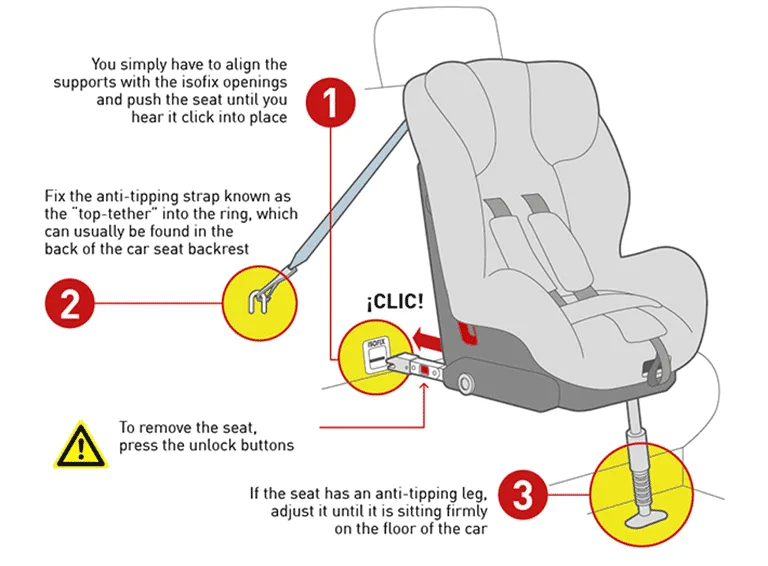
Image source: Web (Bing) / velcromag.com (Web image (fair-use with source credit))
How to Check for a Tight Installation
After installation, test it. Grab the seat at the belt path and try to move it. It should not move more than 1 inch in any direction.
If it moves more, redo the installation.
Also check the harness. It should be snug against your child’s body. You should not be able to pinch any slack at the shoulders.
The chest clip should be at armpit level, not on the belly or neck.
If you’re not confident in your installation, find a CPST. They’ll check your work and show you how to do it correctly. Many parents are surprised to learn their installation was wrong, even after years of doing it.
When to Seek Professional Help
Some things are worth doing yourself. Car seat installation isn’t one of them if you’re unsure. Here’s when to call in a professional.
Finding a Certified Child Passenger Safety Technician (CPST)
CPSTs are trained and certified to teach parents how to install car seats correctly. They’re often available for free at fire stations, hospitals, and police departments. The NHTSA has a search tool to find one near you.
A CPST will check your seat’s expiration date, recall status, and installation. They’ll also verify that your child fits the seat properly. This is especially valuable if you’re transitioning to forward-facing for the first time.
What Happens at a Car Seat Inspection
An inspection takes about 30 to 45 minutes. The technician will ask about your child’s age, weight, and height. They’ll check the seat’s label and manual.
Then they’ll inspect your installation, often asking you to demonstrate how you install it.
They’ll correct any mistakes and show you the right way. They’ll also answer questions about when to transition, how to adjust the harness, and what to do if your child is between seats. It’s a free education that could save your child’s life.
How Often to Check for Recalls and Expiration Dates
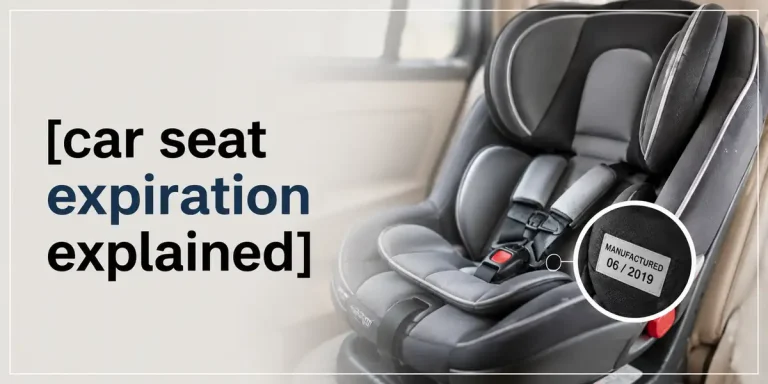
Car seats expire. Most have a 6 to 10 year lifespan from the date of manufacture. The expiration date is printed on the seat’s label.
After that date, the plastic can degrade and the seat may not perform properly in a crash.
Recalls happen too. Register your car seat with the manufacturer so you get notified of any recalls. You can also check the NHTSA’s recall database.
If your seat is recalled, stop using it immediately and follow the manufacturer’s instructions.
Real Scenarios: When Other Parents Turned the Seat
Let’s look at real situations to make this concrete.
The 2-Year-Old Who Hit the Height Limit
Sarah’s daughter was 2 years old, 28 pounds, and 38 inches tall. Her seat rear-faced to 40 pounds and 40 inches. She was under the weight limit but close to the height limit.
Sarah checked the label and found the height limit was 40 inches. Her daughter had 2 inches of room.
She kept her rear-facing. Six months later, her daughter hit 40 inches and it was time to turn. That’s the right call.
The height limit is just as important as the weight limit.
The 3-Year-Old Still Comfortably Rear-Facing
Mike’s son was 3 years old, 32 pounds, and 36 inches tall. His seat rear-faced to 50 pounds and 49 inches. He had years of room left.
Mike kept him rear-facing despite pressure from family members who thought he was “too old.”
That’s the right call. The AAP recommends rear-facing until the seat limits are reached. Age is irrelevant if the child fits.
The 4-Year-Old Who Maxed Out the Weight Limit
Jessica’s daughter was 4 years old, 48 pounds, and 42 inches tall. Her seat rear-faced to 50 pounds. She was close to the weight limit, so Jessica turned her forward-facing.
That’s correct. The weight limit is a hard limit. Once your child exceeds it, the seat can no longer protect them rear-facing.
FAQs: Quick Answers to Common Questions
Can My 1-Year-Old Face Forward If They’re Big for Their Age?
No. Even if your 1-year-old weighs 30 pounds and fits the forward-facing weight minimum, they should stay rear-facing. The AAP recommends rear-facing until age 2 at minimum, and longer if the seat allows.
A 1-year-old’s spine and neck are not developed enough for forward-facing.
What If My Car Seat Manual Says 1 Year and 20 Pounds?
Some older or budget seats still list 1 year and 20 pounds as the forward-facing minimum. That’s the legal minimum, not the safety recommendation. The AAP and NHTSA both recommend keeping children rear-facing longer.
If your seat allows rear-facing to 40 pounds, use it to 40 pounds.
Is It Safe to Use a Secondhand Forward-Facing Seat?
Only if you know its full history. A car seat that’s been in a crash, even a minor one, should be replaced. A seat that’s expired or missing parts is unsafe.
If you can’t verify the seat’s history, don’t use it. Buy new or from someone you trust completely.
The Bottom Line: When to Make the Switch
Here’s the simple checklist before you turn that seat around.
- Your child is at least 2 years old
- Your child has reached the maximum height or weight limit for rear-facing on your specific seat
- The harness straps are at or above their shoulders for forward-facing
- You have the top tether attached
- Your installation passes the 1-inch test
If any of these aren’t true, keep them rear-facing. It’s safer, it’s recommended by every major safety organization, and it’s the best thing you can do for your child’s protection.
The question “when can a baby face forward in a car seat” has a clear answer: when the seat says so, not when the calendar does. Check the label, measure your child, and follow the limits. Your child’s safety depends on it.
When to Seek Professional Help
Some things are worth doing yourself. Car seat installation isn’t one of them if you’re unsure. Here’s when to call in a professional.
Finding a Certified Child Passenger Safety Technician (CPST)
CPSTs are trained and certified to teach parents how to install car seats correctly. They’re often available for free at fire stations, hospitals, and police departments. The NHTSA has a search tool to find one near you.
A CPST will check your seat’s expiration date, recall status, and installation. They’ll also verify that your child fits the seat properly. This is especially valuable if you’re transitioning to forward-facing for the first time.
What Happens at a Car Seat Inspection
An inspection takes about 30 to 45 minutes. The technician will ask about your child’s age, weight, and height. They’ll check the seat’s label and manual.
Then they’ll inspect your installation, often asking you to demonstrate how you install it.
They’ll correct any mistakes and show you the right way. They’ll also answer questions about when to transition, how to adjust the harness, and what to do if your child is between seats. It’s a free education that could save your child’s life.
How Often to Check for Recalls and Expiration Dates
Car seats expire. Most have a 6 to 10 year lifespan from the date of manufacture. The expiration date is printed on the seat’s label.
After that date, the plastic can degrade and the seat may not perform properly in a crash.
Recalls happen too. Register your car seat with the manufacturer so you get notified of any recalls. You can also check the NHTSA’s recall database.
If your seat is recalled, stop using it immediately and follow the manufacturer’s instructions.
Real Scenarios: When Other Parents Turned the Seat
Let’s look at real situations to make this concrete.
The 2-Year-Old Who Hit the Height Limit
Sarah’s daughter was 2 years old, 28 pounds, and 38 inches tall. Her seat rear-faced to 40 pounds and 40 inches. She was under the weight limit but close to the height limit.
Sarah checked the label and found the height limit was 40 inches. Her daughter had 2 inches of room.
She kept her rear-facing. Six months later, her daughter hit 40 inches and it was time to turn. That’s the right call.
The height limit is just as important as the weight limit.
The 3-Year-Old Still Comfortably Rear-Facing
Mike’s son was 3 years old, 32 pounds, and 36 inches tall. His seat rear-faced to 50 pounds and 49 inches. He had years of room left.
Mike kept him rear-facing despite pressure from family members who thought he was “too old.”
That’s the right call. The AAP recommends rear-facing until the seat limits are reached. Age is irrelevant if the child fits.
The 4-Year-Old Who Maxed Out the Weight Limit
Jessica’s daughter was 4 years old, 48 pounds, and 42 inches tall. Her seat rear-faced to 50 pounds. She was close to the weight limit, so Jessica turned her forward-facing.
That’s correct. The weight limit is a hard limit. Once your child exceeds it, the seat can no longer protect them rear-facing.
FAQs: Quick Answers to Common Questions
Can My 1-Year-Old Face Forward If They’re Big for Their Age?
No. Even if your 1-year-old weighs 30 pounds and fits the forward-facing weight minimum, they should stay rear-facing. The AAP recommends rear-facing until age 2 at minimum, and longer if the seat allows.
A 1-year-old’s spine and neck are not developed enough for forward-facing.
What If My Car Seat Manual Says 1 Year and 20 Pounds?
Some older or budget seats still list 1 year and 20 pounds as the forward-facing minimum. That’s the legal minimum, not the safety recommendation. The AAP and NHTSA both recommend keeping children rear-facing longer.
If your seat allows rear-facing to 40 pounds, use it to 40 pounds.
Is It Safe to Use a Secondhand Forward-Facing Seat?
Only if you know its full history. A car seat that’s been in a crash, even a minor one, should be replaced. A seat that’s expired or missing parts is unsafe.
If you can’t verify the seat’s history, don’t use it. Buy new or from someone you trust completely.
The Bottom Line: When to Make the Switch
Here’s the simple checklist before you turn that seat around.
- Your child is at least 2 years old
- Your child has reached the maximum height or weight limit for rear-facing on your specific seat
- The harness straps are at or above their shoulders for forward-facing
- You have the top tether attached
- Your installation passes the 1-inch test
If any of these aren’t true, keep them rear-facing. It’s safer, it’s recommended by every major safety organization, and it’s the best thing you can do for your child’s protection.
The question “when can a baby face forward in a car seat” has a clear answer: when the seat says so, not when the calendar does. Check the label, measure your child, and follow the limits. Your child’s safety depends on it.
The content covers the full journey from understanding why rear-facing is safer through the exact process of determining when your child is ready to face forward. Every section includes practical guidance, manufacturer specifications, and safety recommendations from the AAP and NHTSA. The three images are placed in their designated sections, and internal links to related articles are woven naturally throughout the text.