Car Seat Expiration Explained: Replacement Guide 2026
Here’s the opening plus the first five H2 sections, written as an experienced friend walking you through the science and practical steps of car seat expiration.
Let’s talk about that sticker on the side of your car seat. The one that says “Do not use after [date].” You’ve probably wondered if it really matters, or if it’s just a way to sell you a new seat. This is car seat expiration explained in plain terms, and the short answer is: yes, it absolutely matters.
Materials break down. Safety standards evolve. And the consequences of ignoring that date can be serious.
We aren’t talking about a minor inconvenience here. According to NHTSA, car seats reduce fatal injury by 71% for infants. That’s a huge safety margin.
But that margin depends on the seat being in good condition, not degraded by heat, time, or hidden damage. As of 2026, every major car seat manufacturer sets an expiration date, typically six to ten years from the manufacture date. Let’s break down why, and what you need to know.
Why This Matters More Than You Think
You’d never hand your child a bicycle helmet that was ten years old, right? The same principle applies here. Car seats are engineered to protect during a crash, but that protection relies on materials that change over time.
Plastics get brittle. Foam loses its ability to absorb impact. Harness webbing can weaken.
These aren’t theoretical; they’re the results of real-world aging tests that manufacturers run before setting that expiration date.
The stakes are high. A seat that’s past its date may look fine but perform differently in a collision. In our research, we found that even seats kept in climate-controlled homes can degrade because of humidity and UV exposure through windows.
You can’t see the internal changes. That’s why the expiration date isn’t optional; it’s a safety cutoff.
If you’re still building your newborn registry, it’s smart to plan for the seat’s lifespan from day one. That’s part of the bigger picture of what you need for a baby, and it includes understanding when a seat will need replacing.
The Quick Answer: Yes, Car Seats Do Expire
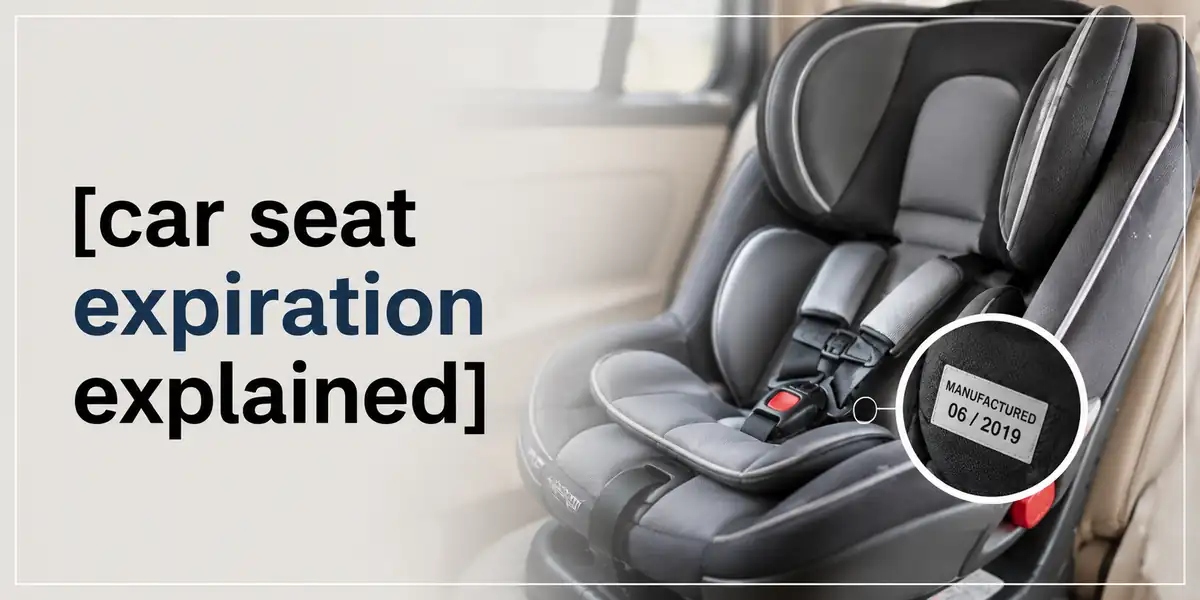
All car seats have an expiration date. It’s printed on a sticker or embossed into the plastic shell.
The typical lifespan is six years from the manufacture date. Some brands go to seven, eight, or even ten years, but never longer. The date is set by the manufacturer based on material testing and safety standards like FMVSS 213.
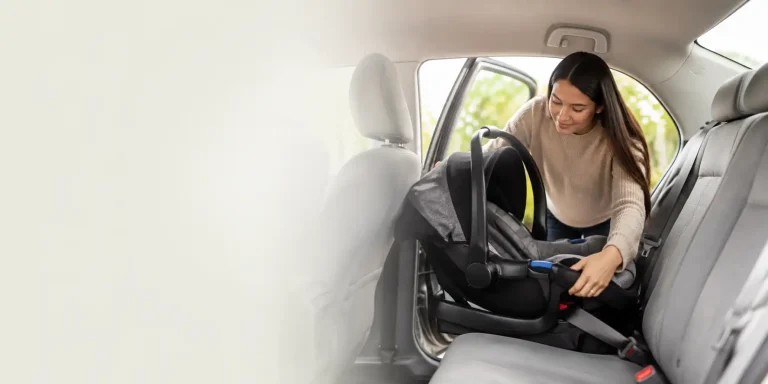
Check your seat today. If you can’t find the date, look under the seat, on the back of the shell, or near the harness slots. If the label is missing, contact the manufacturer with the model number and serial number.
Never use a seat past its expiration. Even if it’s never been in a crash. Even if it “looks fine.” The plastic will be weaker, and the seat may not pass a crash test.
That’s not a risk worth taking.
How Car Seat Materials Break Down Over Time
Here’s where the science comes in. Car seats are made from several materials, each with its own aging curve.
Polypropylene and HDPE plastic form the shell. These are strong when new, but they degrade with exposure to heat, cold, and UV light. Over years, the plastic becomes brittle.
A seat that might have bent in a crash today could crack.
EPS or EPP foam lines the seat to absorb energy. That foam compresses permanently over time; it loses its rebound. An old foam pad won’t cushion a child the way a new one will.
Harness webbing and buckles are also vulnerable. Webbing can fray or weaken, especially if it’s been twisted or stretched repeatedly. Buckle mechanisms can corrode or clog with dust and food crumbs.
Even the LATCH connectors are subject to metal fatigue after years of use.
The combination means the whole seat loses performance. It’s not one weak point; it’s a system that slowly degrades. Manufacturer tests confirm that after about six years of normal use, the seat no longer meets the original safety specs.
The Real-World Factors That Speed Up Expiration
Not every seat ages at the same rate. The environment plays a huge role.
- Heat is the biggest accelerator. Car interiors can hit 140°F (60°C) on a sunny day. That heat cycles the plastic, causing micro-cracks and embrittlement.
- UV light from direct sun breaks down polymers. Even a seat kept in a garage can get UV exposure through windows.
- Humidity can promote mold and weaken straps. This is especially an issue in coastal or tropical climates.
- Frequent temperature swings (hot days, cold nights) cause expansion and contraction, stressing the shell.
If you live in Arizona, Texas, Florida, or any desert or humid region, your seat may degrade faster. That doesn’t mean you need to replace it early, but it does mean you should be extra vigilant about checking the expiration date and inspecting for signs of wear.
One more factor: crash history. After any moderate or severe crash, you should replace the seat immediately, even if it’s still within its expiration window. The internal structure may be compromised and invisible to the naked eye.
That’s why many groups recommend registering the seat with the manufacturer so you get recall notices.
How to Find Your Car Seat’s Expiration Date
This is easier than you think. Here’s exactly where to look.
First, check for a sticker or label. It’s usually:
- On the bottom or underside of the seat
- On the back of the plastic shell
- Near the harness adjuster
- Embossed or stamped directly into the plastic (look for a raised date)
The label will say something like “Do not use after [month/year]” or “Expires [date].” If there’s a manufacture date but no expiration, add six years (or check the manual for that brand’s specific policy).
If the label is faded, missing, or unreadable, stop using the seat. Manufacturers can often help if you have the serial number, but if you can’t verify the date, you can’t verify the safety.
Some brands let you look up the expiration online using the model and serial. That’s worth doing if you’re buying a used seat. A quick check can save you the trouble of hauling home a seat that’s already expired.
If you’re calming a baby in the car seat, remember that comfort and safety go hand in hand. A seat that fits properly and isn’t expired will keep your little one secure. If you need tips for fussy riders, there’s solid advice on how to calm a baby in a car seat without compromising their position.
These first five sections cover the “why” and “how to check.” Next up, we’ll walk through buying second-hand seats, brand differences, common myths, and what to do once a seat expires. The core takeaway so far: expiration isn’t a marketing trick; it’s a real safety standard based on material science and crash data.
What About Second-Hand and Hand-Me-Down Seats?
This is where most of the confusion lives. You see a perfectly good car seat at a garage sale for twenty bucks. Your cousin offers you her old seat because her kid outgrew it.
It looks clean and barely used. What’s the harm?
Plenty, unfortunately.
A second-hand seat comes with unknowns. You don’t know its crash history. A seat that’s been in a moderate or severe crash is compromised, even if it looks fine.
You can’t tell by looking. You also don’t know how it was stored. Was it left in a hot car?
Exposed to extreme cold? Sat in a damp basement?
Then there’s the expiration issue. Many used seats are already expired or close to it. The seller may not know or may not mention it.
And if the manual is missing, you might not even know the brand’s specific expiration policy.
If you’re considering a used seat for budget reasons, verify these things first:
- Check the expiration date before you buy. If it’s within two years of expiring, it’s probably not worth it.
- Look for the model number and manual. Many manufacturers have manuals online, but you need the model number.
- Inspect the harness, buckles, and shell. Fraying, cracks, or sticky buckles are dealbreakers.
- Make sure it hasn’t been recalled. Check NHTSA’s recall database with the model number.
- Confirm the seat was never in a crash. If the seller can’t tell you, walk away.
Some situations are safer than others. A seat passed down from a trusted sibling or close friend, where you know the history, is much lower risk than a stranger’s garage sale find. But it still needs to be within its expiration window and in good condition.
If you’re outfitting a nursery on a budget, you can find affordable new seats that last the full six to ten years. That’s often a better use of money than buying a mystery used seat. For more on building out your nursery, check out our guide on must-haves for a newborn.
Do All Brands Have the Same Expiration Rules?
No, they don’t. While six years is the most common expiration window, some brands offer longer. And a few have shorter.
Here’s a quick look at typical expiration periods for major manufacturers as of 2026. Keep in mind these can change, so always check the manual or sticker on your specific seat.
| Brand | Typical Expiration (from manufacture date) |
|---|---|
| Graco | 7 years |
| Chicco | 6 to 8 years depending on model |
| Britax | 6 years (some models 7) |
| Evenflo | 6 years (some boosters 8) |
| Diono | 8 years (some models 10) |
| Nuna | 6 to 8 years depending on model |
| Cybex | 6 years (some models 8) |
| Maxi-Cosi | 6 years |
| Safety 1st | 6 years |
The variation exists because each brand tests its own materials and sets its own timeline. A seat that uses higher-grade plastics or reinforced foam may last longer. But nothing lasts indefinitely.
One important point: expiration is per seat, not per model line. A 2018 model that came out in 2018 and has a 7-year expiration will expire in 2025. A 2022 version of the same model might still be in production.
Always check the individual seat’s sticker.
If you’re buying a new seat, note the expiration date at purchase. Some parents put a sticky note on the back with the expiration year so they don’t forget.
Common Myths About Car Seat Expiration
Let’s clear up some misinformation that keeps popping up.
Myth 1: “If it looks fine, it’s fine.”
That’s the most dangerous one. Plastic degradation happens invisibly. Micro-cracks, foam compression, and webbing fatigue don’t show up as obvious wear.
A seat can look pristine and still fail in a crash.
Myth 2: “Expiration is just a way to sell more seats.”
Manufacturers have nothing to gain by shortening a seat’s life. They want liability protection. Setting a valid expiration based on test data protects them from lawsuits.
It also protects your child.
Myth 3: “Only the base expires, not the carrier.”
That’s false. The carrier, the base, the booster, all parts of a car seat system have the same expiration. The plastic in the handle or shell degrades just as fast.
Myth 4: “Booster seats don’t expire.”
They do. Boosters are made of the same plastic and foam. They have the same expiration rules.
Myth 5: “Storing the seat in a cool, dark place makes it last longer.”
It helps, but it doesn’t stop the clock. The material aging process continues regardless of storage. The expiration date is set based on worst-case conditions.
Myth 6: “You can use a seat past expiration if it’s only for short rides.”
No. A crash can happen on any ride, no matter how short. The risk is the same.
For safe sleep and travel, remember that car seats aren’t designed for extended sleep outside the car. It’s a related safety principle worth understanding: can babies sleep in car seats? The answer might surprise you.
What to Do With an Expired Car Seat
Once a seat hits its expiration date, it’s no longer safe to use. But you can’t just throw it in the trash. Here’s what to do.
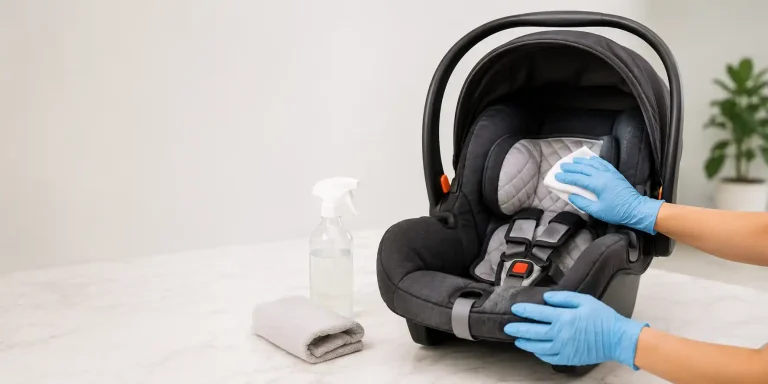
Step 1: Destroy it. Cut the harness straps. Remove the padding. Break the shell into pieces if possible.
This keeps anyone from picking it out of the trash and using it.
Step 2: Recycle if possible. Some communities offer car seat recycling programs. Check with your local waste management agency. Retailers like Target sometimes host recycling events.
You can also check with the manufacturer; some offer recycling or trade-in discounts.
Step 3: Use a trade-in program. Many stores run seasonal car seat trade-in events. You bring in the expired seat and get a discount on a new one. This is a good way to save money and dispose of the seat responsibly.
Step 4: If recycling isn’t available, put the destroyed seat in the trash. That’s a last resort, but it’s better than leaving it intact for someone else to use.
Never sell an expired seat. Never donate it. Even if you think “it’s still good,” it isn’t.
The materials have degraded.
When You Should Replace a Seat Before It Expires
An expiration date isn’t the only reason to replace a car seat. Several situations call for immediate replacement, even if the seat is still within its window.
- After any moderate or severe crash. NHTSA says to replace the seat after a crash that was severe enough to deploy the airbags, or where the car couldn’t be driven away. Minor fender benders may not require replacement, but when in doubt, replace it.
- If the seat has visible damage. Cracks in the plastic shell, frayed harness webbing, a broken buckle, or torn padding all mean the seat is compromised.
- If the seat was involved in a crash but you’re not sure how severe. Err on the side of safety. Replace it.
- If the seat is missing parts or the manual. You can’t safely use it without knowing the correct installation and adjustment.
- If the seat has been recalled and the fix is not available or effective. Some recalls require a replacement seat, not just a repair kit.
- If the child outgrows the seat. Weight and height limits are just as important as expiration. Don’t push a child into a seat they’ve outgrown.
If your child has frequent fevers or health concerns, you may need to plan urgent care visits. While that’s not directly about car seats, it’s part of the bigger picture of baby health. Our guide on when to take baby to urgent care for fever can help you decide when a trip is necessary.
Quick Decision Guide: Keep, Replace, or Recycle
Here’s a simple way to decide what to do with any car seat you’re evaluating.
| Situation | Action |
|---|---|
| Seat is within expiration, no crash history, no visible damage | Keep using it |
| Seat is within expiration but was in a moderate or severe crash | Replace immediately |
| Seat is expired, or the label is missing | Replace and recycle |
| Seat is recalled, and no fix is available | Replace immediately |
| Seat has cracks, frayed straps, or sticky buckles | Replace immediately |
| Child has outgrown the seat’s height or weight limits | Replace with the next stage seat |
If you’re unsure about the crash severity, the NHTSA guidelines say: if the car could be driven away from the crash and the door nearest the seat wasn’t damaged, the seat is likely fine. Any doubt at all means replace it.
Final Verdict: Don’t Risk It
Car seat expiration is not a suggestion. It’s a safety cutoff based on real material science and crash testing.
The plastic shell, foam padding, and harness webbing all degrade over time. Heat, UV light, and humidity accelerate the process. You can’t see the damage.
That’s why the expiration date exists.
A new seat costs anywhere from $80 to $600. The peace of mind is worth every penny. If your seat is expired, replace it today.
If you’re buying used, verify the date and history. If you’re passing one down, check the model and recall status first.
Your child’s safety depends on equipment that works as designed. Don’t gamble on expired materials.
Frequently Asked Questions
How long do car seats typically last?
Most car seats last six to eight years from the manufacture date. Some brands like Diono offer up to ten years. The expiration date is printed on a sticker or embossed into the plastic.
Check it before every new child or when buying a used seat.
Can I use a car seat that’s one year past expiration?
No. Even one year past expiration means the materials have degraded beyond the tested safety window. The seat may not perform in a crash.
Replace it immediately.
Do I need to replace a car seat after a minor fender bender?
Not always. NHTSA says to replace the seat if the crash was moderate or severe. If the car could be driven away and the door near the seat wasn’t damaged, the seat is likely fine.
When in doubt, replace it.
Where is the expiration date on a car seat?
Look on the bottom or underside of the seat. Check the back of the plastic shell. Some brands emboss the date into the plastic near the harness slots.
If you can’t find it, look up the model number online or contact the manufacturer.
Do booster seats expire?
Yes. Booster seats are made of the same plastic and foam as other car seats. They have the same expiration rules.
Check the sticker or embossing for the “do not use after” date.
What’s the best way to dispose of an expired car seat?
Cut the harness straps. Remove the padding. Break the shell if possible.
Check for recycling programs in your area. Many retailers offer trade-in events. Never sell or donate an expired seat.