When Do Babies Outgrow Infant Car Seat? A Guide
Every parent hits this moment. You’re buckling your baby into the infant car seat, and suddenly their head is brushing against the top of the shell. Or their legs are scrunched up against the back seat.
You start wondering when do babies outgrow infant car seat limits, and whether it’s time to make the switch.
The short answer is that most babies outgrow their infant car seat by height before they hit the weight limit. The average infant seat accommodates babies up to 30 to 35 pounds and 28 to 32 inches. But the real deciding factor is the 1-inch headroom rule.
As of 2026, the American Academy of Pediatrics recommends keeping babies rear-facing until they reach the maximum height or weight limit of their specific seat. That means checking the manual, not guessing.
Quick Answer
Most babies outgrow infant car seats between 9 and 15 months. The height limit is usually hit first. The 1-inch headroom rule is the key measurement.
If your baby’s head is less than 1 inch from the top of the shell, it’s time to switch. Weight limits matter, but height limits are typically the deciding factor.
Why Getting This Wrong Is a Big Deal
Car seat safety isn’t about following the law. It’s about physics. When a baby rides rear-facing, the car seat shell absorbs the crash forces and distributes them across the baby’s entire back, head, and neck.
That’s why rear-facing is so much safer for young children. Their spinal bones are still soft and not fully ossified. A forward-facing crash can put dangerous stress on those developing vertebrae.
The American Academy of Pediatrics has been clear on this. They recommend keeping children rear-facing until age 2 at minimum, and longer if the seat allows. The National Highway Traffic Safety Administration echoes that guidance.
But here’s the catch. Once a baby outgrows the infant seat, they don’t automatically get to face forward. They move to a convertible car seat, still rear-facing, with higher limits.
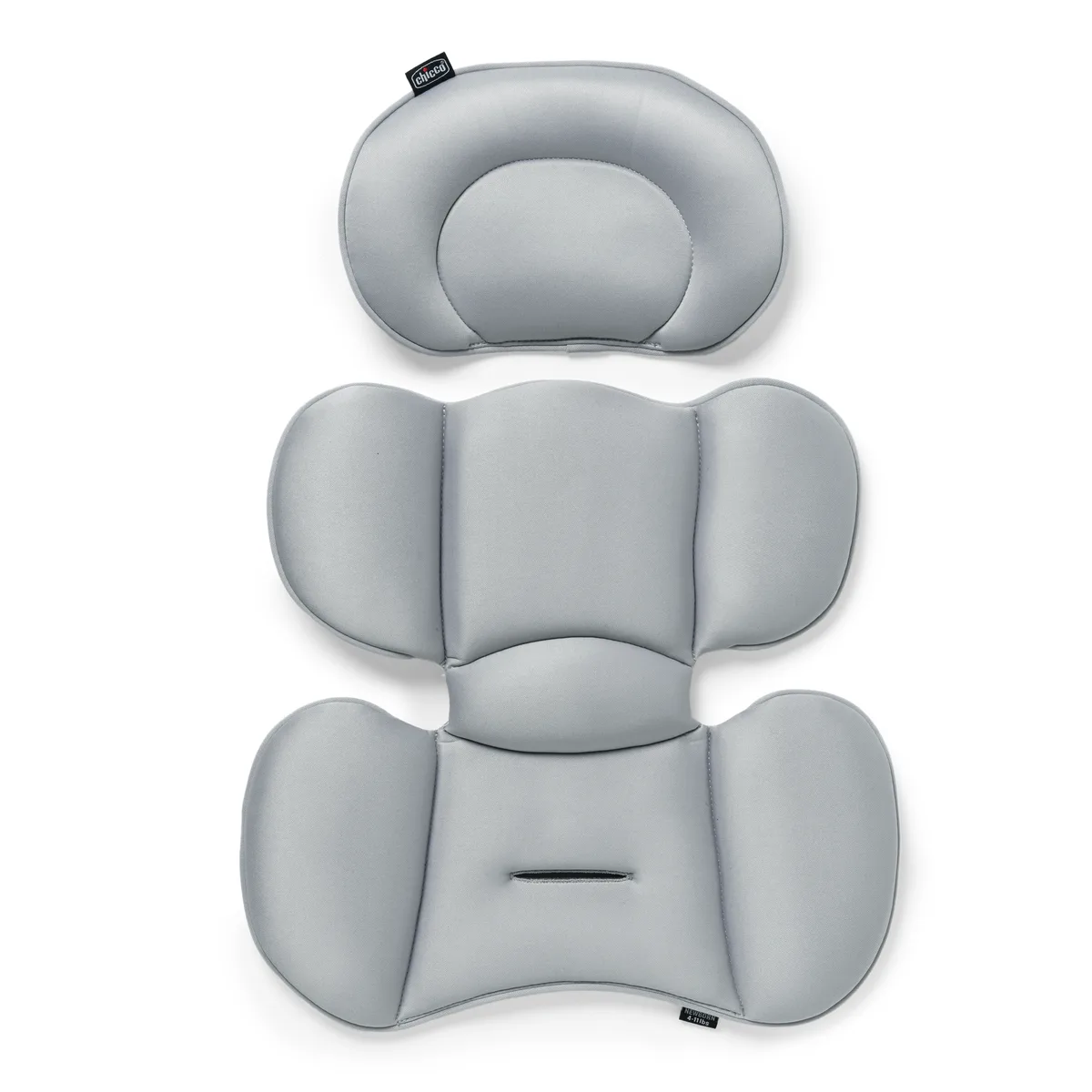
Image source: Web (Bing) / chiccousa.com (Web image (fair-use with source credit))
The stakes are real. A 2018 study in the Journal of Pediatrics found that children under age 2 are 75% less likely to die in a crash when riding rear-facing. That’s not a small number.
That’s the difference between walking away and not. So when you’re tempted to turn your baby around early because they look cramped, remember that discomfort is temporary. The safety benefit is permanent.
Many parents also worry about leg injuries. They see their baby’s legs touching the back of the vehicle seat and assume it’s unsafe. But pediatric safety experts agree that leg contact is completely normal.
Babies are flexible. They’ll find a comfortable position, often crossing their legs or propping them up on the seat back. Leg injuries in rear-facing crashes are extremely rare and almost always minor.
Head and neck injuries in forward-facing crashes are not.
The Two Numbers That Matter Most
Every infant car seat has two published limits. The weight limit and the height limit. Both are printed on the side of the seat and in the manual.
But they don’t work the same way.
The weight limit is straightforward. Once your baby hits that number, the seat is outgrown. Period.
Most infant seats max out between 30 and 35 pounds. Some newer models go up to 40 pounds. But here’s the thing.
Most babies hit the height limit before they ever reach the weight limit.
The height limit is where parents get confused. It’s not just about how tall your baby is overall. It’s about the relationship between your baby’s seated height and the car seat shell.
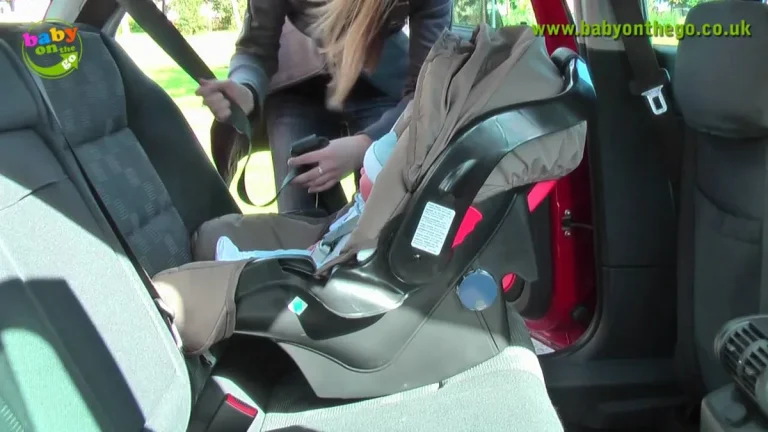
The critical measurement is the 1-inch headroom rule. Place your hand flat on top of your baby’s head. If you can’t fit at least one finger width of space between their head and the top of the shell, the seat is outgrown.
| Measurement | Typical Infant Seat Limit | What It Means |
|---|---|---|
| Weight | 30–35 lbs | Baby exceeds the maximum safe weight |
| Height | 28–32 inches | Baby’s head is within 1 inch of the shell top |
| Headroom | 1 inch minimum | The critical safety clearance |
| Harness slots | At or below shoulders | Straps must sit at or below shoulder level |
Manufacturer specifications vary by model. A Graco SnugRide might have different limits than a Chicco KeyFit. That’s why the manual is the ultimate authority.
Don’t rely on what your friend’s car seat allows. Check your own seat’s labels and documentation.
The height limit matters because of a phenomenon called ramping. In a rear-facing crash, the baby’s body is pressed deeper into the seat. If there’s not enough headroom, the head can slide up and over the top of the shell.
That exposes the neck to dangerous forces. The 1-inch rule ensures there’s enough shell above the head to contain it during impact.
How Infant Car Seats Actually Work
Infant car seats are designed for one specific job. Carrying newborns and young babies safely and conveniently. They’re sometimes called bucket seats because of their shape.
The seat has a handle that lets you carry the baby without waking them. It clicks into a base that stays installed in the car. That portability is the main reason parents love them.
But that convenience comes with a trade-off. Infant seats are smaller than convertible seats. They have lower height and weight limits.
And they’re designed to be replaced once your baby outgrows them. That’s not a flaw. It’s intentional.
The seat is engineered to protect a smaller, less developed body.
The shell of an infant seat is relatively shallow. It needs to be, so you can carry it. But that shallow shell means there’s less room for a growing baby.
The harness slots are also positioned for smaller bodies. Once your baby’s shoulders rise above the lowest harness slot, the straps won’t fit correctly. That’s another sign the seat is outgrown.
Convertible car seats work differently. They’re bigger, heavier, and designed to stay in the car. They have higher rear-facing limits, often 40 to 50 pounds.
And they can be converted to forward-facing later. That’s why they’re the natural next step after an infant seat. They’re not portable, but they offer extended rear-facing protection.
The key difference is the shell height. Convertible seats have taller shells. That means more headroom for a growing toddler.
A 2-year-old who has outgrown their infant seat will typically have plenty of room in a convertible seat, still rear-facing. That’s exactly what the AAP recommends.
The 4 Signs Your Baby Has Outgrown the Seat
You don’t need to guess. There are four clear signs that your baby has outgrown their infant car seat. If any one of them applies, it’s time to switch.
Sign 1: Less than 1 inch of headroom. This is the most important sign. Place your hand flat on top of your baby’s head. If there’s less than one finger width of space between their head and the top of the shell, the seat is outgrown.
This rule exists because of crash physics. Without enough shell above the head, the baby’s head can ramp up and over the top during impact.
Sign 2: Shoulders above the lowest harness slot. The harness straps must sit at or below your baby’s shoulders when rear-facing. If the shoulders are above the lowest slot, the straps won’t hold the body correctly in a crash. This is a common issue for tall babies who are still under the weight limit.
Sign 3: Weight exceeds the manufacturer’s limit. This one is simple. If your baby weighs more than the seat’s published weight limit, the seat is outgrown. Don’t try to squeeze in one more trip.
The seat wasn’t tested beyond that weight.
Sign 4: Height exceeds the manufacturer’s limit. Some seats list a maximum height. If your baby is taller than that number, the seat is outgrown. Even if they still have headroom, the manufacturer’s testing didn’t cover that height.
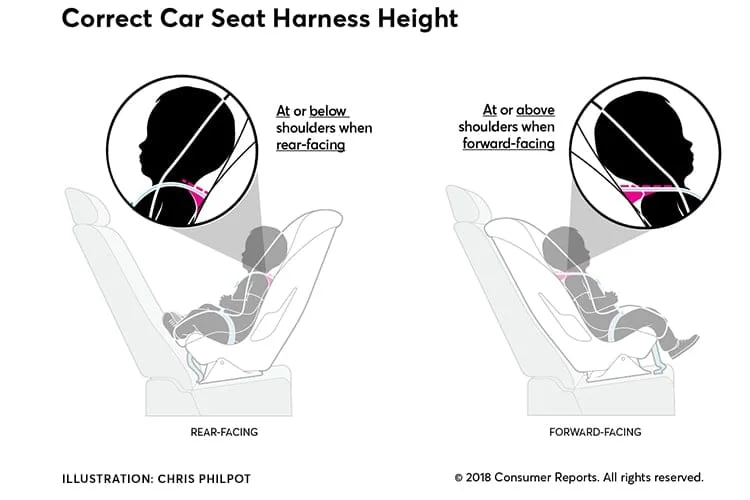
Image source: Bing (Web (fair-use with source credit))
Here’s a common scenario. Your baby is 14 months old, weighs 28 pounds, and is 31 inches tall. The seat’s limits are 35 pounds and 32 inches.
They’re under both limits. But when you check the headroom, there’s less than an inch. That means the seat is outgrown, even though the numbers say otherwise.
The headroom rule always takes priority.
Another scenario. Your baby is 10 months old and weighs 22 pounds. They’re under the weight limit.
But they’re tall, and their head is brushing the top of the shell. Time to switch. The height limit doesn’t care about age.
It cares about fit.
Step-by-Step: How to Check If It’s Time to Switch
Checking whether your baby has outgrown their infant car seat takes about five minutes. Here’s exactly how to do it.
Step 1: Read the manual. I know, nobody reads the manual. But this is the one time you should. The manual lists the exact weight and height limits for your specific model.
It also explains the headroom rule and harness slot requirements. Keep it in the car or take a photo of the relevant pages.
Step 2: Measure the headroom correctly. Place your baby in the seat with the harness buckled. Then place your hand flat on top of their head. Don’t press down.
Just rest your hand there. If you can’t fit at least one finger width between their head and the shell, the seat is outgrown. Some parents use a credit card as a gauge.
If the card fits, you’re good. If not, it’s time.
Step 3: Check the harness slot position. Look at where the straps come through the shell. They should be at or below your baby’s shoulders. If the shoulders are above the lowest slot, the seat is outgrown.
This is a common issue for babies with long torsos.
Step 4: Weigh and measure your baby. Use a reliable scale and a measuring tape. Compare the numbers to the seat’s published limits. Remember that the height limit is about seated height, not overall height.
But most parents use overall height as a rough guide.
Step 5: Test the fit one last time. If you’re still unsure, do a final check. Buckle your baby in and look at the overall fit. Does the harness sit snugly?
Is the chest clip at armpit level? Does your baby look cramped? Trust your instincts.
If something feels off, it probably is.
Once you’ve confirmed the seat is outgrown, don’t panic. You have time to shop for a convertible seat. But don’t keep using the infant seat in the meantime.
That’s a safety risk. If you need to use the car before you have a new seat, consider borrowing a convertible seat from a friend or family member. Just make sure it’s not expired and hasn’t been in a crash.
The transition to a convertible seat is a big milestone. It’s also a sign that your baby is growing and developing. That’s a good thing.
And with a convertible seat, you’ll get months or even years of additional rear-facing protection. That’s exactly what the experts recommend.