Can Newborn Sleep in a Stroller? Safety Tips for Parents
So, can newborn sleep in stroller? The short answer is yes, but only under the right conditions. The longer answer involves understanding the difference between a stroller bassinet and a car seat, knowing how long a supervised nap can safely last, and recognizing when it’s time to move your baby to a flat, stationary sleep surface.
Get this wrong, and the risks go beyond a cranky baby; we’re talking about airway obstruction and positional asphyxiation.
The American Academy of Pediatrics (AAP) recommends that infants under 12 months always sleep on a flat, firm surface on their backs. As of 2026, that guidance hasn’t changed. But real life happens.
You’re on a walk, and your newborn finally dozes off. The question isn’t whether you should wake them immediately. It’s whether you’ve set up the stroller in a way that makes that nap as safe as possible.
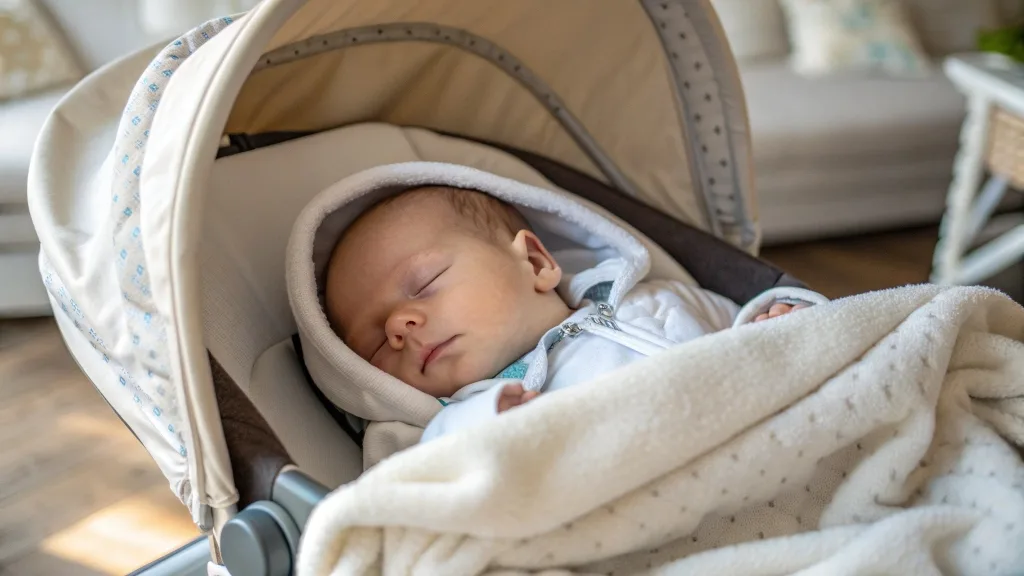
Image source: Bing (Web (fair-use with source credit))
Quick Answer
Yes, a newborn can sleep in a stroller, but only in a fully reclined bassinet mode. Never let them sleep in a car seat attached to a stroller frame. Keep the nap supervised and under 60 minutes.
Move your baby to a flat crib or playard for longer sleep.
The Real Question: Bassinet Mode vs. Car Seat Mode
Here’s the thing most parents don’t realize. A stroller isn’t a single sleeping surface. It’s two completely different setups that get lumped together.
Bassinet mode means the stroller has a lie-flat attachment or a fully reclined seat that creates a flat, crib-like surface. This is the safest option for newborn naps. It keeps your baby’s airway open and allows for natural breathing without any obstruction.
Car seat mode means you’ve clicked an infant car seat onto the stroller frame. This is a travel system setup. And it’s a completely different story when it comes to sleep.
The problem with car seats is the angle. Infant car seats are designed to sit at a 30 to 45 degree incline. That’s perfect for car travel, where the seat absorbs impact and keeps your baby secure.
But it’s terrible for sleep. At that angle, a newborn’s head can flop forward. When their chin presses against their chest, it pinches their airway closed.
The medical term is positional asphyxiation. And it can happen silently, without any struggle or noise.
This distinction matters because so many parents treat both setups the same way. They see their baby sleeping peacefully in the car seat base, assume it’s fine, and let them snooze. But the mechanics underneath are completely different.
If you have a stroller with a lie-flat bassinet attachment, you’re working with a safe sleep surface. If you only have a travel system with a car seat, you need to be much more careful about when and how long your baby sleeps.
Yes, But Only If: The Conditions That Make Stroller Sleep Safe
Let’s get practical. What exactly makes a stroller nap safe? There’s a checklist, and every single item needs to be checked off.
Condition 1: The surface must be flat. The stroller seat needs to be fully reclined. Not almost flat. Not at a slight angle.
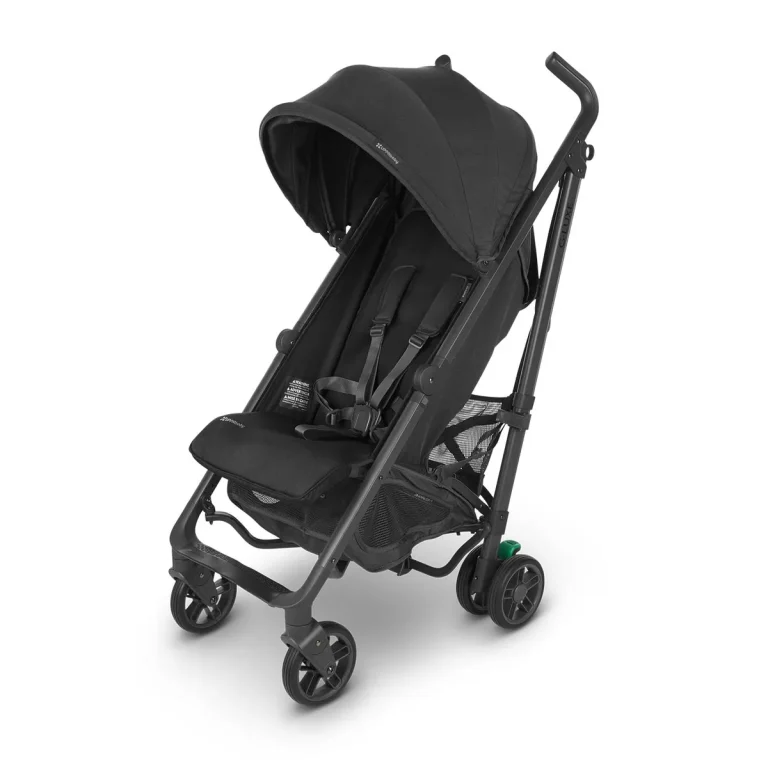
Completely flat. Check your stroller’s manual for the exact recline specifications. Many brands like UPPAbaby and Bugaboo market their bassinet attachments as “suitable for overnight sleep” because they meet the flat-surface standard.
Condition 2: Your baby must be supervised. This means you’re within arm’s reach. You’re watching for head position, breathing patterns, and any signs of distress. You’re not inside a store while your baby sleeps outside.
You’re not chatting with a friend while turned away for ten minutes. Full, continuous supervision.
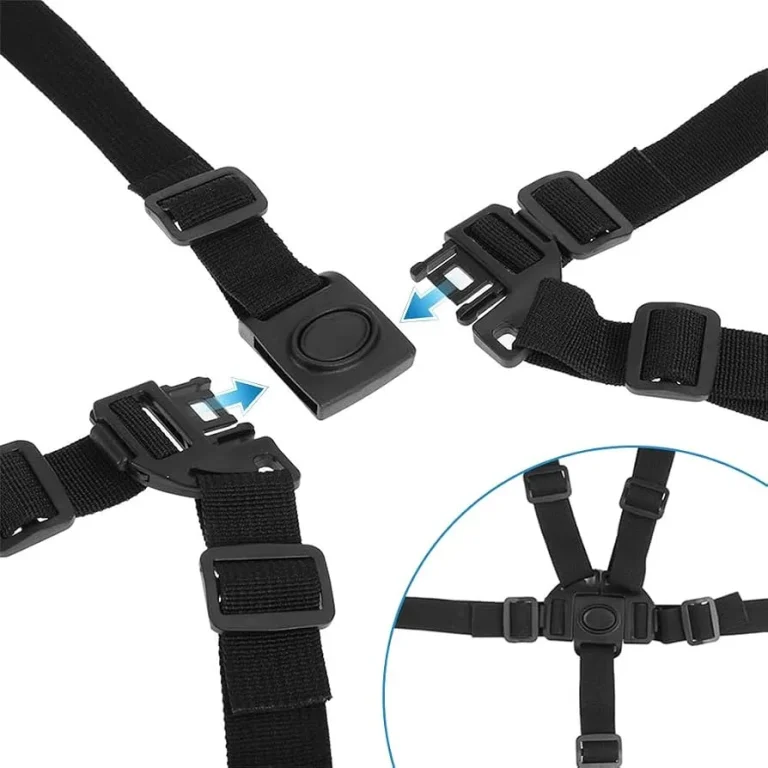
Condition 3: The harness should be secured. Yes, even for sleep. A loose harness means your baby could shift position and slide down into an unsafe angle. The 5-point harness keeps them in a stable, neutral position where their airway stays open.
Condition 4: No loose bedding. Skip the blankets, pillows, and rolled-up towels. These are suffocation hazards. If your baby needs warmth, dress them in a onesie or use a stroller-specific sleep sack that clips into the harness.
Condition 5: Set a nap time limit. Keep stroller naps under 60 minutes. This isn’t arbitrary. Research on sleep position and breathing patterns shows that prolonged sleep in any device other than a flat crib increases risk.
A 30 to 45 minute catnap is ideal. Longer than an hour, and you should transfer your baby to a flat surface.
Those five conditions cover the basics. But there’s one more factor that often gets overlooked.
What’s Safe for a Newborn: Understanding the Sleep Surface Rules
Newborns are not mini-adults. They have weak neck muscles, small airways, and zero ability to reposition themselves if something blocks their breathing. That’s why the AAP safe sleep guidelines are so strict about surface type.
The AAP recommends that babies sleep on a firm, flat surface that meets Consumer Product Safety Commission (CPSC) standards. For cribs, that means a snug mattress, fitted sheet, and nothing else. For strollers, the same principles apply.
The surface needs to be firm enough that your baby doesn’t sink into it. It needs to be flat enough that their head stays in a neutral position.
Here’s what a safe sleep surface looks like in a stroller:
- A properly certified bassinet attachment that clicks into place securely
- A firm base with no sagging or give in the middle
- Breathable fabric that allows air circulation
- No gaps between the mattress and the sides of the bassinet
Manufacturer standards matter here. The ASTM F833 standard covers carriages and strollers sold in the US. It tests for stability, braking, and other safety features.
When you’re choosing a stroller for newborn sleep, look for models that explicitly mention compliant bassinet attachments.
There’s also a difference between a stroller bassinet and a portable bassinet. Portable bassinets like the HALO Bassinest or a travel crib are designed specifically for overnight sleep. Stroller bassinets are designed for strolling.
That doesn’t make them unsafe for napping. But it does mean you should treat stroller naps as temporary, not as a substitute for a proper sleep environment.
The key takeaway: a flat, firm, breathable surface with your baby on their back is the only safe way for a newborn to sleep anywhere. The stroller is fine as long as it provides those exact conditions.
The Car Seat Problem: Why Angle Matters More Than You Think
Let’s dig deeper into the car seat issue because this is where most parents make the biggest mistake.
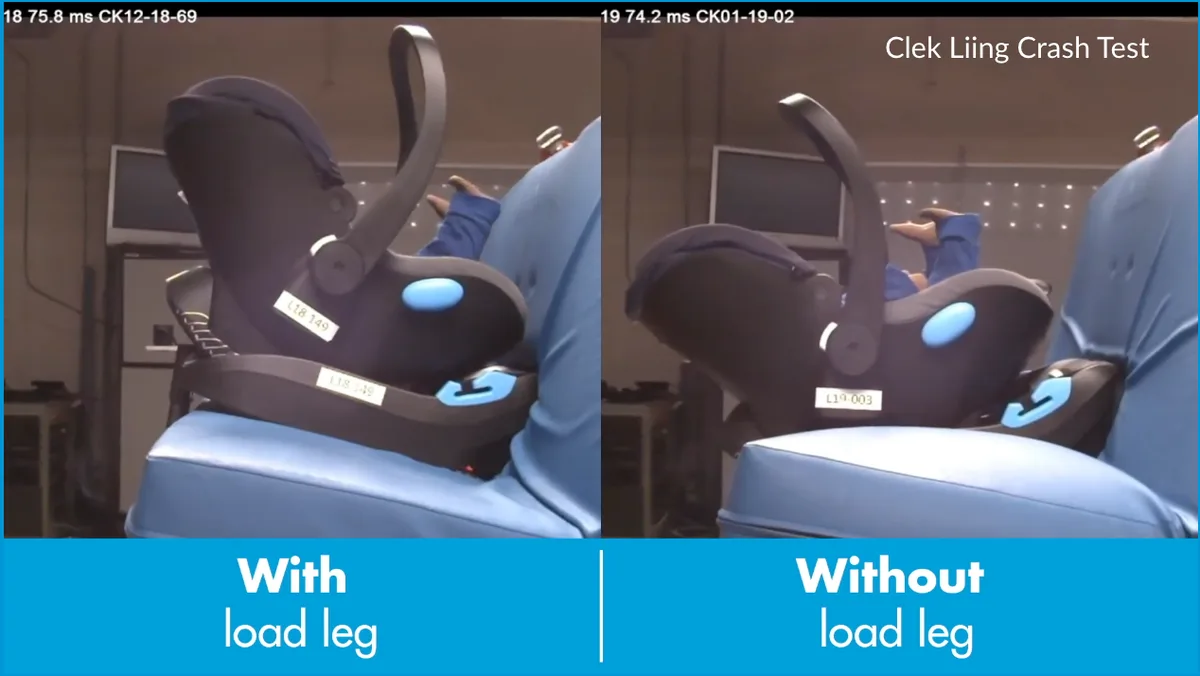
Image source: Web (Bing) / storage.googleapis.com (Web image (fair-use with source credit))
An infant car seat is engineered for one specific purpose: keeping your baby safe during a crash. The recline angle is calibrated to keep the baby’s head back against the seat, protecting the neck and spine. That angle works because the car seat is installed on a car seat base, which sits at a relatively fixed angle.
But when you move that car seat onto a stroller frame, the angle can change slightly. The stroller frame might be tilted, or the car seat might click in at a slightly different position. Even a few degrees of difference can create problems for a sleeping newborn.
Here’s what happens during a car seat nap. Your baby’s head falls forward as they relax into sleep. Their chin presses against their chest.
This compresses the trachea and restricts airflow. The baby doesn’t cry or fuss because they’re asleep. They simply breathe less and less until oxygen levels drop.
This is called positional asphyxiation, and it’s a leading cause of sleep-related deaths in car seats. A 2024 study published in Pediatrics found that a significant percentage of infant deaths in sitting devices involved car seats being used for unsupervised sleep.
The official guidance is clear. The AAP recommends that infants not sleep in car seats for extended periods. The general rule is 30 minutes for newborns, with a maximum of 2 hours per 24-hour period.
Let me be clear about what this means for your stroller setup. If you have a travel system with a car seat that clicks onto the stroller, you can use it for quick errands. But when your baby falls asleep, you need to either:
- Move them to a flat bassinet attachment
- Transfer them to your arms if you’re stationary
- Wake them up if the nap is stretching past 30 minutes
There’s a reason car seats have that 2-hour cutoff. Even in a properly installed car seat during actual car travel, prolonged sleep increases the risk of breathing issues. Add the stroller angle changes, and the risk goes up further.
Some strollers have a “car seat adapter” that clips the car seat onto the frame in a specific position. This is fine for transport. It’s not fine for sleep.
The safest approach: reserve car seat stroller naps for emergencies only. If you’re at the mall and your baby falls asleep in the car seat, that’s okay for 20 to 30 minutes. But don’t plan your day around it.
And never let them sleep that way overnight.
Common Mistakes Even Experienced Parents Make
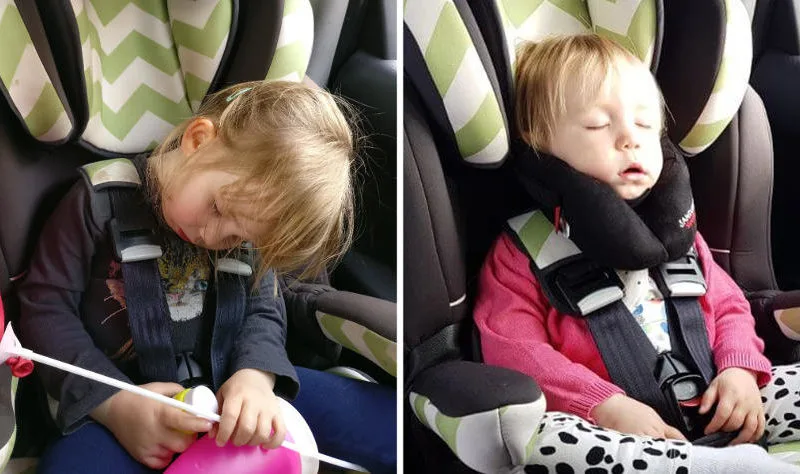
Image source: Web (Bing) / kidtransit.co.uk (Web image (fair-use with source credit))
You’d be surprised how many well-meaning parents make these errors. They don’t come from neglect. They come from not knowing the specific mechanics of newborn breathing.
Mistake 1: Loosening the harness “so they’re comfier.” This is a natural instinct. You see your baby scrunched up in the car seat, and you think they need more room. But a loose harness allows your baby to slide down and forward, which puts their chin closer to their chest.
Keep the straps snug. Tight enough that you can’t pinch any fabric between the strap and your baby’s shoulder.
Mistake 2: Using rolled blankets for head support. Parents often wedge a blanket or receiving cloth around their baby’s head to keep it from flopping. This is extremely dangerous. Not only does it create a suffocation hazard if it shifts, but it can also force the baby’s head into a forward position.
The blanket becomes the thing that blocks their airway.
Mistake 3: Keeping the canopy fully closed. You want to block out the sun or create a dark environment for sleep. That’s understandable. But a fully closed canopy traps heat and reduces airflow around your baby’s face.
Overheating is a known SIDS risk factor. Instead, angle the canopy to block sun while leaving some ventilation.
Mistake 4: Letting a car seat nap stretch past 2 hours. We covered this above, but it bears repeating. The 2-hour rule exists for a reason. Even in a car seat installed correctly, the angle creates risk over time.
Mistake 5: Transferring a sleeping baby from a stroller to a crib incorrectly. This one is subtler. You see your baby asleep in the stroller, and you want to move them to a crib without waking them. That’s fine.
But the way you do it matters. Pick them up gently, supporting their head and neck. Place them in the crib on their back.
Don’t let them roll onto their side. Don’t add any extra blankets because you’re worried they might be cold from the transition.
Mistake 6: Assuming a stroller bassinet is the same as a certified bassinet. Some stroller bassinets are tested and approved for overnight sleep. Others are only approved for strolling. Check the manufacturer documentation.
If the bassinet doesn’t have a certification like ASTM F2194, treat it as a napping-only surface.
Mistake 7: Letting the stroller be the primary sleep spot. This is the big one. Stroller naps are convenient. They’re part of daily life.
But they should never become your baby’s main sleep environment. Newborns need a consistent, flat, stationary sleep space for their primary naps and overnight sleep. Using the stroller for every nap trains your baby to need motion and promotes lighter, less restful sleep.
If you see yourself in any of these mistakes, don’t panic. Parenting is a learning curve. The important thing is to adjust your habits moving forward.
Your baby’s safety depends on consistent, informed choices.