What Type of Nurse Cares for Newborns?
What Type of Nurse Cares for Newborns?
When you have a newborn in the hospital, especially one who needs extra medical attention, the number of people walking through the room can feel overwhelming. You are trying to rest, recover, and bond with your baby, but you also need to know who is actually qualified to handle your little one's care. The question of what nurses take care of babies is one every parent should understand long before discharge day arrives.
The short answer is that several types of nurses care for babies, and each one has a different level of training, certification, and scope of practice. A neonatal intensive care nurse, for example, holds specialized credentials that a well-baby nursery nurse does not. And a lactation consultant fills yet another role entirely.
As of 2026, the American Academy of Pediatrics continues to recommend that hospitals assign the most highly trained nurses to the most fragile infants, but understanding those distinctions yourself is still your best safety net. Let's walk through exactly who does what, so you know what to expect and whom to ask for.
Quick Answer
Four main types of nurses care for babies. Neonatal intensive care nurses work with premature and critically ill newborns. Well-baby nursery nurses handle healthy full-term infants.
Pediatric nurses care for babies beyond the newborn period. Lactation consultants specialize in breastfeeding support.
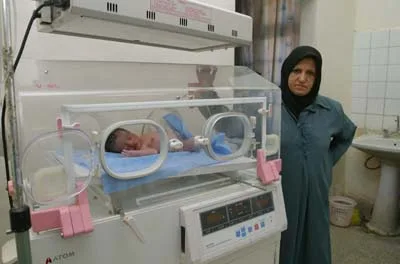
Image source: Wikimedia Commons / Headlock0225
Core Explanation: The Different Types of Baby Nurses
Understanding the difference matters because it directly affects your baby's care plan. Each nursing role requires a specific education path, certification, and hospital setting. Let's break them down one at a time.
Neonatal Intensive Care Nurses (NICU)
These are the nurses you see in the NICU, and they handle the highest-acuity babies. Their patients include premature infants born at 24 weeks, full-term babies with respiratory distress, and infants recovering from surgery.
The training is intense. A NICU nurse must hold basic RN licensure, then pass the RNC-NIC exam through the National Certification Corporation. They also maintain Neonatal Resuscitation Program (NRP) certification, which is mandatory and renewed every two years.
In a Level III or IV NICU, each nurse typically cares for one or two babies at a time. That ratio exists because these infants need constant monitoring, medication adjustments, and life-support management. If your baby is in the NICU, this nurse is your primary point of contact for daily updates and hands-on care.
Well-Baby Nursery Nurses
These nurses work in the general postpartum unit where healthy full-term babies room in with their mothers. Their job involves routine newborn assessments, weight checks, bilirubin screening for jaundice, circumcision care, and helping parents with basic infant care like diapering and swaddling.
Well-baby nursery nurses are typically RNs, but they may not hold the additional neonatal certification that NICU nurses carry. That is perfectly appropriate for healthy newborns. The scope of care here is lower acuity, so the credential requirements reflect that.
One thing to note: if your baby develops a complication after birth, like respiratory distress or a suspected infection, the hospital will transfer them to the NICU. That is when the NICU nurses take over.
Pediatric Nurses
Pediatric nurses care for children from infancy through adolescence, but they are not the same as neonatal nurses. A pediatric nurse may work in a general pediatric unit, an outpatient clinic, or a pediatrician's office. They handle well-baby checkups, vaccinations, and common illnesses like fevers and ear infections.
The key difference is age and acuity. Pediatric nurses do not typically manage the high-risk needs of a newborn in the first 28 days of life. That is a neonatal specialty.
However, after your baby leaves the newborn period, the pediatric nurse becomes the one you see most often.
Lactation Consultants
A lactation consultant is a healthcare professional certified by the International Board of Lactation Consultant Examiners. They hold the IBCLC credential, which requires specific clinical hours, anatomy coursework, and a rigorous exam.
These specialists help mothers and babies with breastfeeding challenges. That includes latch difficulties, low milk supply, tongue-tie assessment, and pumping guidance. In hospitals, lactation consultants often round in both the postpartum unit and the NICU.
Premature babies, in particular, need specialized feeding support, and the NICU lactation consultant helps coordinate that care.
If you are struggling with breastfeeding, you do not need a doctor's referral to see a hospital lactation consultant. You can request one directly from the nursing staff.

Image source: YouTube / wikiHow (YouTube thumbnail (fair-use with source credit))
Here is a quick reference table summarizing the four primary roles:
Nurse Type Primary Setting Typical Patients Key Certification
NICU nurse Level III/IV NICU Premature, surgical, critically ill newborns RNC-NIC, NRP
Well-baby nursery nurse Postpartum unit Healthy full-term newborns RN license
Pediatric nurse Pediatric unit, clinic Infants and children (beyond newborn period) CPN (optional)
Lactation consultant Hospital, outpatient Breastfeeding dyads (any acuity) IBCLC
Credentials That Matter: Licenses, Certifications, and What They Mean
Credentials are not just alphabet soup. They tell you exactly what a nurse is trained to do and how much oversight they require.
RN vs. APRN
A registered nurse (RN) holds either an associate degree or a bachelor of science in nursing. They pass the NCLEX exam and are licensed by their state board. RNs perform assessments, administer medications, monitor vital signs, and execute physician orders.
An advanced practice registered nurse (APRN) holds a master's or doctoral degree. A neonatal nurse practitioner (NNP) is an APRN who can diagnose conditions, order tests, and prescribe medications independently within their collaborative agreement with a physician. If your baby is in the NICU, the NNP may handle medical decision-making overnight or on weekends when the neonatologist is not immediately present.
RNC-NIC, CPN, IBCLC
The RNC-NIC is the gold standard certification for NICU nurses. It is administered by the National Certification Corporation and must be renewed every three years. Hospitals with high-quality NICUs often require this certification within two years of hire.
The CPN (Certified Pediatric Nurse) is a general pediatric certification offered by the Pediatric Nursing Certification Board. It is useful for pediatric floor nurses but is not specific to neonatal care.
The IBCLC is the highest credential for lactation professionals. As of 2026, the International Board of Lactation Consultant Examiners requires at least 90 hours of didactic education and 1,000 hours of supervised clinical practice before you can sit for the exam. That level of training matters when you need complex breastfeeding support.
NRP Certification
The Neonatal Resuscitation Program is not optional. Every NICU nurse must hold current NRP certification. It teaches the step-by-step algorithm for resuscitating a newborn who is not breathing effectively or has a low heart rate.
The course includes hands-on simulation and is updated every few years to reflect new evidence.
A nurse whose NRP certification lapses cannot legally work in the NICU. That is how seriously hospitals take this credential.
Where Care Happens: Matching the Nurse to the Setting
Your baby's location in the hospital determines which nurse you see. The setting is not just a room number. It reflects the level of care available.
Level I Nurseries
These are well-baby nurseries in community hospitals. They are designed for healthy infants born at 35 to 37 weeks or later with no medical complications. The nurses here are comfortable with routine assessments and basic newborn care but are not equipped to handle serious issues like respiratory distress, sepsis, or surgical conditions.
If a complication develops, the hospital transfers the baby to a higher-level NICU. This is standard procedure and does not mean anyone made a mistake. It means the baby's needs exceed what the current setting can provide.
Level III and IV NICUs
A Level III NICU provides comprehensive care for infants born at 32 weeks or earlier, as well as those with serious medical or surgical conditions. A Level IV NICU adds the capability for complex surgeries and advanced life support, such as ECMO (extracorporeal membrane oxygenation).
In these units, the NICU nurses are highly experienced with ventilators, central lines, and total parenteral nutrition. The nurse-to-patient ratio is often 1:1 for the most critical babies. If your baby is in a Level III or IV unit, you are in the hands of a specialized team with the highest level of training available.
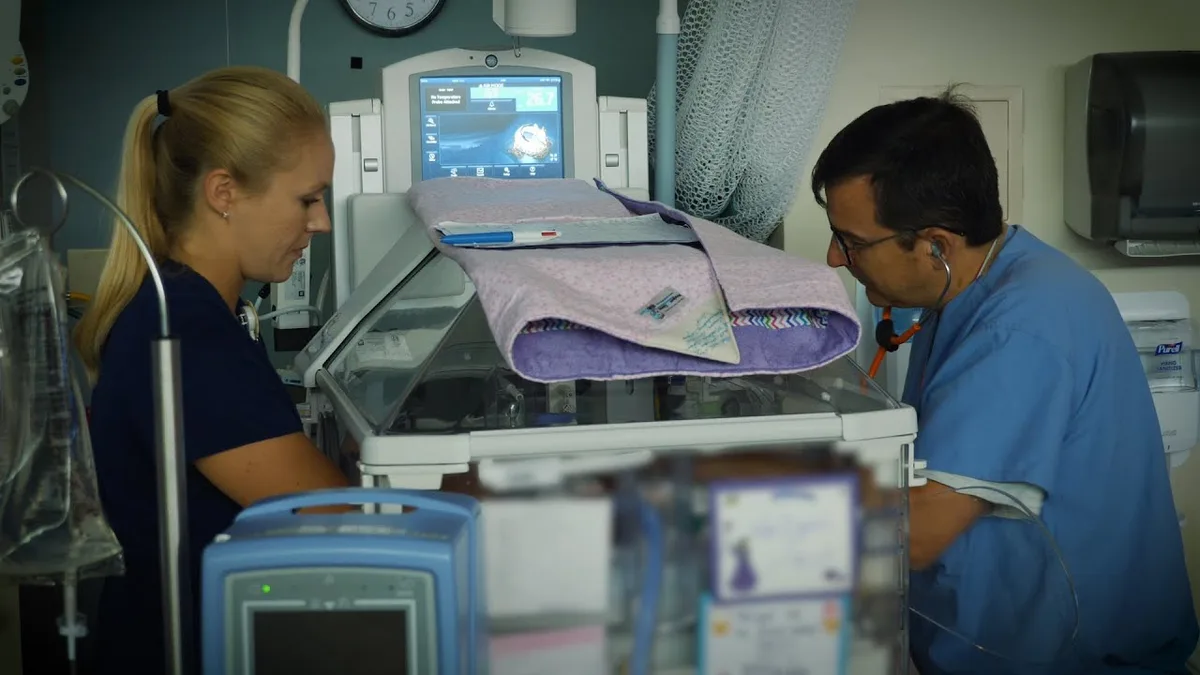
Image source: YouTube / MWHCConnection (YouTube thumbnail (fair-use with source credit))
Pediatric Home Health Nurses
Some babies leave the hospital but still need medical care at home. That might mean a baby who requires supplemental oxygen, a feeding tube, or a cardiac monitor. Pediatric home health nurses are RNs who visit the home to provide that ongoing care.
They help with medication administration, feeding support, and parent education.
This setting is less acute than the NICU but still requires specialized knowledge. If you are bringing a medically fragile baby home, ask the hospital discharge planner about arranging home nursing ahead of time.
Comparing Nurses: Which Type Is Right for Your Baby's Situation
You do not get to choose which nurse walks into your baby's room in most hospital settings. But understanding the differences helps you know what to expect and when to speak up.
There is a deeper explanation of what each nursing role entails and how their specific training shapes baby outcomes in our article on the taking care babies method and how it applies in hospital settings. It is worth reading alongside this one for a fuller picture of newborn nursing care principles.
NICU Nurse vs. Well-Baby Nursery Nurse
The biggest difference is acuity. A NICU nurse has seen babies on ventilators, babies withdrawing from opioids, and babies with heart defects. They notice subtle changes in color, breathing patterns, and heart rate that a general nurse might miss.
The well-baby nursery nurse is excellent at routine care, but they are not trained to manage crises.
If your baby is admitted to the NICU, even briefly for observation, you are getting a higher level of expertise. That is a good thing.
Lactation Consultant vs. Postpartum Nurse
Postpartum nurses can offer basic breastfeeding advice. They help with initial latch, positioning, and hand expression. But their training in lactation varies widely.
Some have personal experience but no formal credential.
A lactation consultant brings over a thousand hours of clinical training to the bedside. If you are having significant pain, your baby is not gaining weight, or you suspect a tongue or lip tie, ask for the IBCLC. Do not settle for general advice that leaves you frustrated.
Neonatal Nurse Practitioner vs. Neonatologist
This is one of the most common points of confusion for parents. The NNP is an advanced practice nurse who manages day-to-day medical care in the NICU. The neonatologist is a physician who completed medical school, a pediatric residency, and a three-year neonatal fellowship.
In practice, the NNP manages the medical plan, writes orders, and adjusts medications. The neonatologist oversees the entire team and handles the most complex decisions, especially regarding surgery or life support. Both are critical members of the team, and they work together closely.
If you have a question about your baby's medical plan, either one can answer it, but the neonatologist ultimately holds the highest authority.
Comparison Best For Key Limitation
NICU nurse vs. well-baby nurse NICU nurse for any infant needing monitoring or intervention Well-baby nurse cannot manage critical instability
Lactation consultant vs. postpartum nurse IBCLC for complex breastfeeding problems Postpartum nurse has limited lactation training
NNP vs. neonatologist NNP for daily management; neonatologist for complex decisions NNP cannot perform surgery or override neonatologist's decisions
Common Mistakes Parents Make When Identifying Baby Nurses
It is easy to confuse the different nursing roles, especially when you are exhausted and surrounded by hospital staff in scrubs. But mixing them up can lead to frustration or missed opportunities for the right kind of help.
Assuming all nurses in the maternity unit are the same. Your postpartum nurse may be wonderful, but she is not a NICU nurse. If your baby develops breathing issues, the staff will transfer care to the neonatal team. Do not expect the postpartum nurse to manage that level of acuity.
Calling a private duty "baby nurse" a nurse at all. Some families hire a night nanny or newborn care specialist who uses the term "baby nurse." These individuals are rarely licensed RNs. Their training varies wildly. If you need medical care for your baby, you want a licensed nurse, not a caregiver with a weekend certification.
Forgetting to ask for the lactation consultant directly. Many parents assume the hospital will send one automatically. That is not always the case. If you are having trouble breastfeeding, request the IBCLC specifically.
The floor nurse can only do so much. The official credential matters.
Overlooking the difference between an NNP and an RN. In the NICU, both wear scrubs and both care for your baby. But the NNP can prescribe medications and adjust the ventilator. The RN cannot.
If you want a medical plan change, ask for the NNP or the neonatologist.
Safety, Legal, and Compliance: What Parents Should Know
Hospitals follow strict guidelines about who can do what. Understanding these boundaries helps you trust the system and speak up when something feels off.
Scope of practice is not negotiable. An RN cannot perform procedures outside their license. They cannot diagnose, prescribe, or change a medical plan without an order. If a nurse offers to adjust your baby's oxygen settings without checking with the NNP or neonatologist, that is a red flag.
Mandatory certifications are not optional. NRP certification expires every two years. RNC-NIC renewal happens every three years. Hospitals track these credentials.
If a nurse is out of compliance, they cannot work in the NICU. The National Certification Corporation maintains the official registry, and you can ask the charge nurse if you have concerns.
Infection prevention is everyone's job. NICU protocols require strict hand hygiene, limited visitors, and isolation precautions when needed. These rules exist to protect fragile immune systems. Follow them, and do not hesitate to remind visitors to wash their hands.
The CDC publishes detailed guidelines for healthcare-associated infection prevention in NICUs, and hospitals are expected to follow them.
Parental consent is required for most procedures. Before your baby gets a blood transfusion, surgery, or even a peripherally inserted central catheter line, you should be asked for written consent. If a nurse starts a procedure without it, ask them to stop and request the attending physician.
The hospital's NICU level determines what care is available. A Level I nursery cannot legally keep a baby who needs a ventilator. They must transfer. That is not a failure.
It is the standard of care. You can verify your hospital's level on the American Academy of Pediatrics website.
When to Seek Specialist Care: Red Flags and Escalation Points
Most parents trust the nurses, and they should. But there are moments when you need to push for a higher level of expertise.
Your baby is not feeding and losing weight. A well-baby nursery nurse can offer basic latch help. But if your baby has lost more than seven percent of birth weight or is not wetting enough diapers, request a lactation consultant. If that does not resolve things, ask the pediatrician for a feeding evaluation.
Breathing changes or color changes. If your baby seems to be working hard to breathe, pulling their ribs in, or turning blue around the lips, hit the call button immediately. That is a NICU-level situation. Do not wait for rounds.
You are being dismissed or ignored. If you raise a concern and the nurse brushes it off without checking, escalate. Ask to speak to the charge nurse. Then the NNP.
Then the neonatologist. You are your baby's best advocate. The Institute for Patient Safety has long emphasized that parent intuition is a valuable clinical signal.
The nurse cannot answer basic credential questions. If you ask "are you RNC-NIC certified?" and they hesitate or say "I'm not sure," that is a legitimate concern. You are not being rude. You are being informed.
You can also check the NCC website to verify a nurse's certification.
Discharge feels rushed or incomplete. Before you leave the hospital, make sure you understand the follow-up plan. Who will see your baby next? What warning signs should you watch for?
If the nurse seems to be rushing through discharge teaching, ask for a written summary. You can also request a home health nurse referral if your baby needs ongoing monitoring.
Expert Tips for Parents: Questions to Ask About Your Baby's Nurse
You do not need to interrogate every staff member. But asking a few targeted questions can give you peace of mind and improve your baby's care.
In the hospital during daily rounds. Ask: "Who is the primary nurse today? Are they NRP certified? How long have they worked in this unit?" These are normal questions.
Good nurses answer them directly. You can also ask about the nurse-to-patient ratio. In the NICU, 1:2 or better is typical for stable babies. 1:1 is standard for critical infants.
Before a procedure or medication change. Ask: "Is this within your scope of practice? Who else is involved in this decision?" If you are uncomfortable, you can request a second opinion from the NNP or attending.
At discharge or when arranging home care. Ask: "Will a pediatric home health nurse visit us? What certifications should that nurse hold? How do we contact them after hours?" If you are unsure about the specific nursing role your baby needs, check the detailed article we wrote on what each baby nurse is called and how they differ.
It covers the full breakdown of titles that many parents find confusing.
If you suspect a breastfeeding issue. Ask: "Is there an IBCLC on staff today? Can we schedule a consult before discharge?" Do not wait until you are home and struggling. Hospital lactation consultants are typically included in your stay.
Frequently Asked Questions
Can a pediatric nurse work in the NICU?
Only if they have completed additional neonatal training and hold NRP certification. Most pediatric nurses work on general pediatric units, not the NICU. The credentialing requirements are different.
What is the difference between a neonatal nurse and a neonatal nurse practitioner?
A neonatal nurse is an RN who provides bedside care. An NNP is an APRN who diagnoses, prescribes, and manages the medical plan. Both are critical, but the NNP has a higher scope of practice.
Do I need to request a lactation consultant separately?
Usually yes. While some hospitals automatically send one, many require you to ask. If you are struggling with latch, pain, or low supply, request an IBCLC specifically.
How can I verify a nurse's certifications?
You can check the National Certification Corporation website for RNC-NIC credentials. For lactation consultants, the International Board of Lactation Consultant Examiners has a public registry. Ask the nurse for their certification number.
How do I know if my hospital's NICU is adequately staffed?
Ask the charge nurse about the nurse-to-patient ratio. For Level III/IV NICUs, the standard is 1:1 for critical infants and 1:2 for stable infants. You can also look up the hospital's NICU level online.
What should I do if I disagree with a nurse's recommendation?
Ask to speak to the charge nurse or the NNP. You have the right to a second opinion. Never feel guilty about advocating for your baby.
Verified Summary: A Parent's Decision Guide to Nursing Care for Babies
Know your setting, and you will know your nurse. In a well-baby nursery, the RN handles routine care. In the NICU, you are looking for RNC-NIC certified nurses with current NRP credentials.
For breastfeeding trouble, skip the general advice and request an IBCLC directly.
If your baby needs ongoing medical support at home, a pediatric home health nurse can bridge the gap between hospital and family life. Ask about discharge planning early. The most important thing is to trust the expertise around you while staying informed enough to speak up when something does not feel right.
That combination keeps your baby safe and gives you real peace of mind.