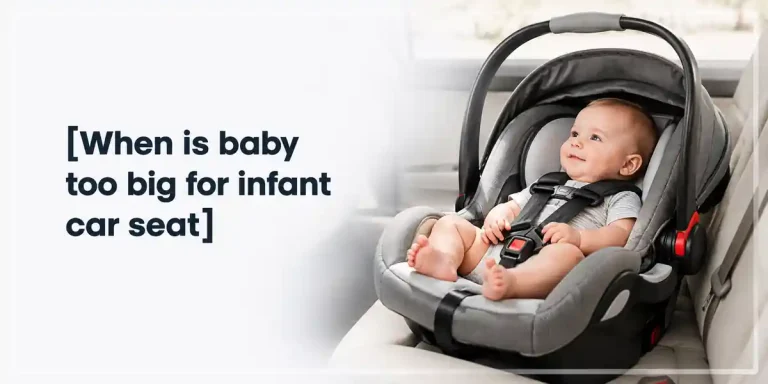
Guide to What Side Should Baby Car Seat Be On
Wondering what side should baby car seat be on? You're not alone. It's one of the most common questions new parents ask.
And the answer isn't as simple as "left" or "right."
The safest spot is the center rear seat, according to expert guidance. Manufacturer specifications and federal testing under FMVSS 213 support that position. But the "best" side also depends on your car, your car seat, and your daily routine.
Let's break it down so you can make an informed choice.
The Short Answer: Where Should the Baby Car Seat Go?
Use the center rear seat whenever possible. It's farthest from side impacts. If the center won't give a tight install, use the passenger side rear seat.
Avoid the driver side unless it's your only option. A tight fit beats a convenient spot every time.
This recommendation comes straight from crash data. The center position gives your child the most distance from any collision point. It also reduces the risk of injury if something intrudes through a door.
If the center position works in your vehicle, that's your answer.
Why the "Right Side" Isn't a One-Size-Fits-All Answer
Here's the thing: the right side depends on your vehicle, your seat, and your seat belts. There's no universal rule that fits every car. What works in a minivan might not work in a coupe.
Check your vehicle owner's manual first. It tells you which rear positions have LATCH anchors and which ones allow car seat installation. Some cars only have lower anchors on the outboard seats.
Others have them in all three positions.
The condition-based logic looks like this:
- If the center seat is flat and wide enough, start there.
- If the center seat has a hump or the base rocks, move to an outboard seat.
- If the passenger side gives a tighter install, use that side.
- If the driver side is the only spot that works, that's acceptable.
The real goal is a rock-solid installation. A seat that shifts more than an inch is dangerous, no matter where it's placed. Many parents also find that leaving the driver side open makes it easier to drive, especially if you travel with kids who need comfort on long car rides.
Crash Dynamics: Why the Center Rear Seat Is the Gold Standard
Side-impact crashes are the most dangerous type of collision for a child in a car seat. Your child sits low, and their head is close to the door. That's why seat position matters so much.
The center rear seat offers the most protection because it puts distance between your child and the impact point. In a side crash, the door panel and side structure can crush inward. The center position gives your child extra space before anything reaches them.
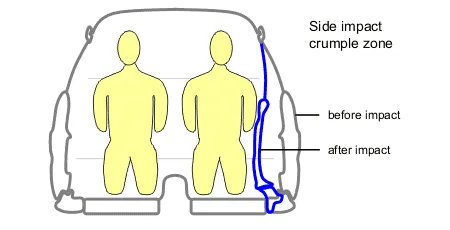
The National Highway Traffic Safety Administration recommends that children ride in the rear seat until they outgrow their car seat. Within the rear seat, the center position is considered the best when it's usable. This isn't just a suggestion.
It's backed by decades of crash research and real-world data.
That said, an outboard rear seat is still safe when installed correctly. The center isn't the only acceptable choice. It's just the gold standard.
If you can't achieve a tight center install, a correctly installed outboard seat is far better than a loose center installation.
When the Center Seat Won't Work: Narrow Benches, Humps, and Missing LATCH Anchors
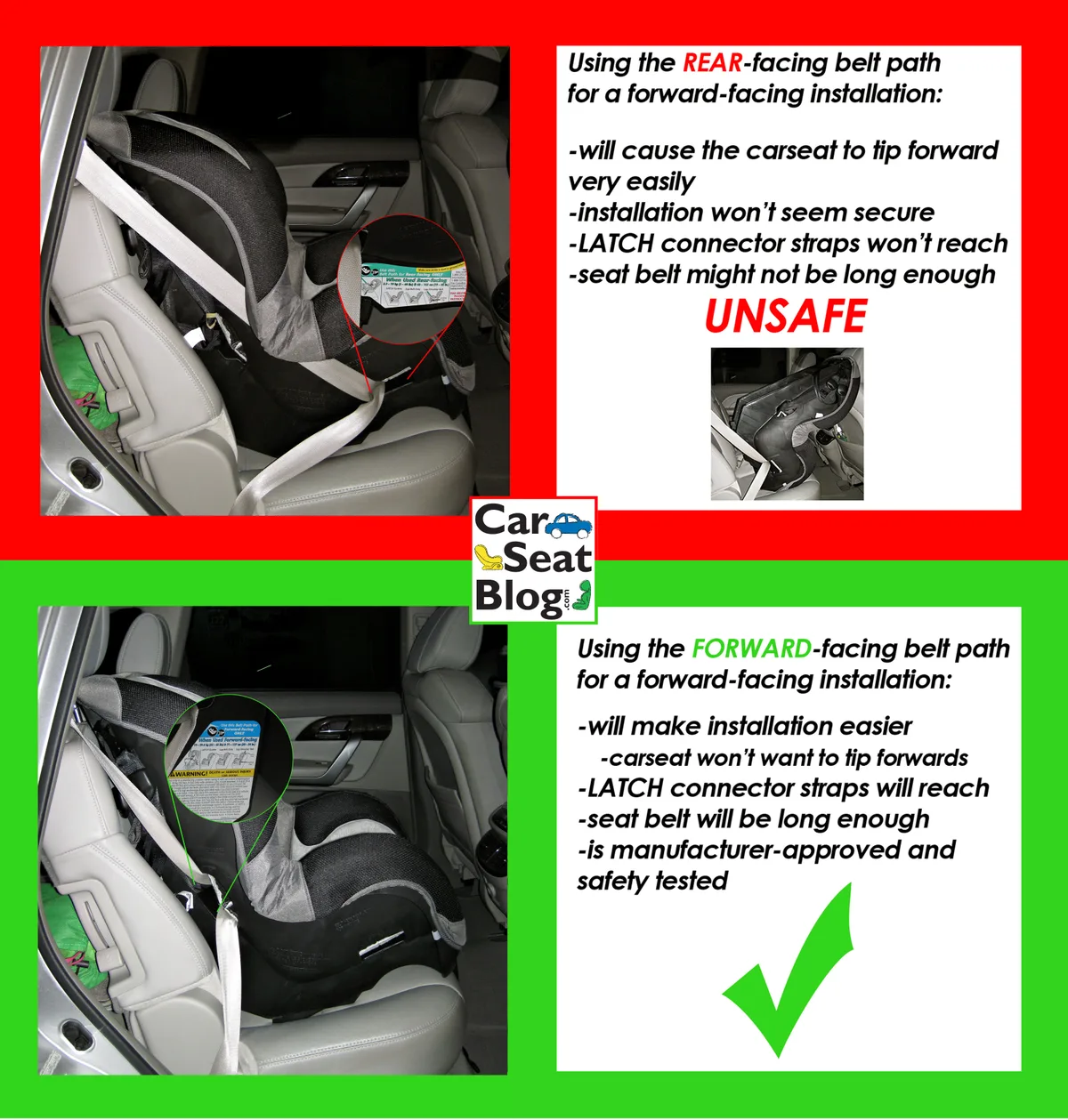
The center seat doesn't always cooperate. Many vehicles have a raised hump in the middle rear position. That hump can make the car seat base hover in the air, which is a hard no for safe installation.
Here are the most common reasons the center fails:
- The seat is too narrow for your car seat's footprint.
- There's a center hump that prevents a flat base.
- The lower LATCH anchors aren't available in the center.
- The seat belt is too short to reach the belt path properly.
- The car seat rocks or shifts more than the one-inch limit.
Just because a car seat fits in the center on paper doesn't mean it fits in your vehicle. You have to physically test it. Place the seat, tighten it, and push it side to side at the belt path.
If it moves more than one inch, move to another position.
And don't assume the center is safe just because it's the center. A loose install is dangerous in any position. Also, keep in mind that babies facing the right direction matters as much as placement.
Keep your child rear-facing until they reach the maximum height or weight limit of their seat.
The Outboard Options: Passenger Side vs. Driver Side
If the center won't work, you're choosing between the two rear outboard seats. Both are considered safe when installed correctly. The difference comes down to convenience, not crash protection.
The passenger side rear seat is the most popular choice. It lets you load and unload your child from the sidewalk instead of standing in traffic. That's a huge advantage when you're parked on a busy street.
It also keeps your child closer to you when you park on the left side of the road, which matters in right-hand drive markets.
The driver side rear seat is less common, but it has its moments. If you're the only adult and need to pass something back while driving, it can feel closer. Some parents also prefer it because it keeps the child on the same side as the rearview mirror, making it easier to glance at them.
Here's a quick comparison:
| Factor | Passenger Side Rear | Driver Side Rear |
|---|---|---|
| Curbside loading | Safer when parked on the street | You step into traffic to unload |
| Reaching the child | Natural from the sidewalk | Awkward from the driver's side |
| Crash protection | Identical when installed tightly | Identical when installed tightly |
| Backseat visibility | Good | Slightly better for the driver |
| Three-across setups | Easier to leave the center open | Easier to leave the center open |
If you park on the street daily, choose the passenger side. If your car seat only fits tightly on the driver side, don't stress. That's fine.
What matters is that the seat doesn't move.
For parents dealing with a crying baby on every ride, the loading convenience can make a real difference. A calmer start to the trip sets the tone for the whole drive. And if your child tends to get motion sickness, you'll want them somewhere you can reach them quickly.
Remember, whichever side you pick, stay consistent. Moving the seat around increases the risk of reinstallation errors. Once you find a position that gives you a rock-solid install, leave it there.
How to Test Each Rear Seat Position Before You Decide
Testing is the only way to know for sure. You can't judge fit by looking at a seat. You have to install it, tighten it, and push on it.
Start by reading both the vehicle owner's manual and the car seat manual. Manufacturer instructions override generic advice. Some vehicles forbid car seats in certain positions, and you need to know that before you begin.
Then physically place the car seat in each rear spot. Tighten it following the instructions. Push it side to side and front to back at the belt path.
It should not move more than one inch in any direction. If it moves more, the install isn't tight enough.
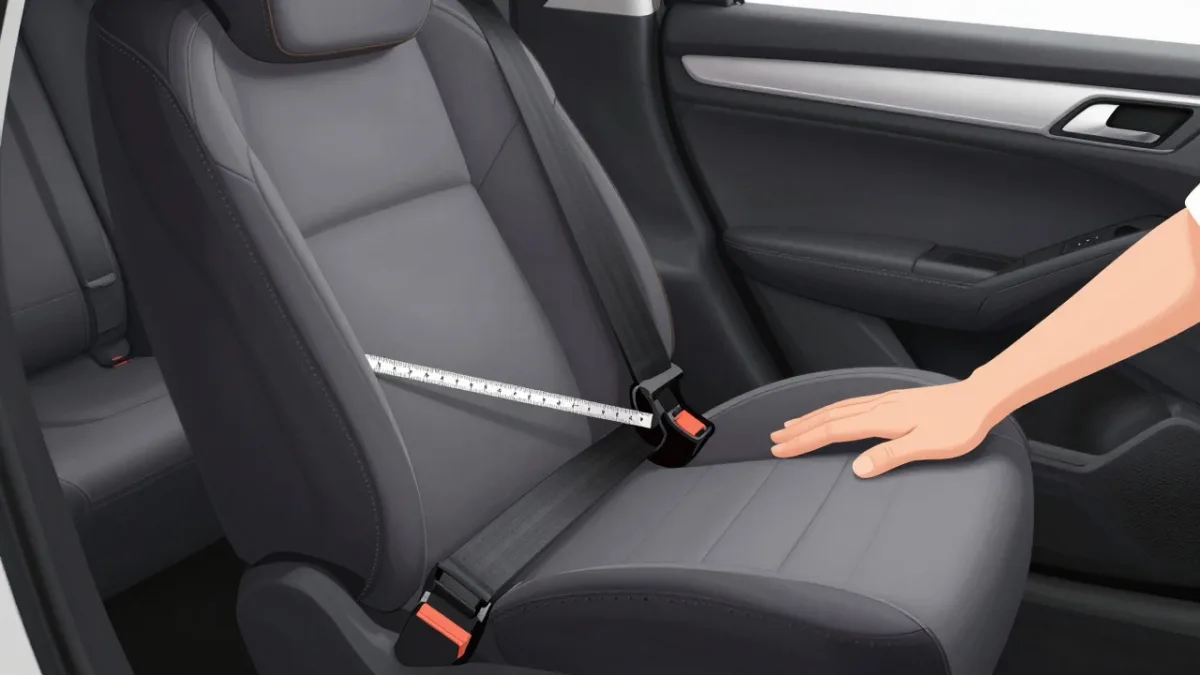
Check the recline angle too. Many infant carriers need a specific angle for safe sleep. The vehicle floor slope can change that angle.
A center hump can tilt the base and make the whole seat wobble.
Here's the if/then logic that matters:
- If the seat rocks or twists more than an inch, move to another position.
- If the base hovers over a hump, the install is not safe.
- If the seat belt doesn't lock at the retractor, try LATCH or another position.
- If the angle is off and you can't fix it with a towel, move on.
Try the center first. Move to the passenger rear seat next. The driver side is your last option, not because it's unsafe, but because loading and unloading there puts you in traffic.
Our research shows that parents who follow this order find a safe install faster than those who start on a random side.
Center vs. Passenger Side vs. Driver Side: A Practical Comparison
Each position has trade-offs. The center is safest, but it's not always practical. The passenger side is the best outboard option for daily life.
The driver side works, but it should be your fallback.
Here's a clean comparison:
| Factor | Center Rear | Passenger Side Rear | Driver Side Rear |
|---|---|---|---|
| Distance from side impact | Best | Good | Good |
| Curbside loading ease | Awkward | Best | You stand in traffic |
| Visibility to the driver | Medium | Low | High |
| LATCH anchor availability | Often missing | Usually present | Usually present |
| Three-across seating | Takes the middle slot | Leaves center open | Leaves center open |
Our research shows that missing LATCH anchors are the most common reason parents skip the center. Many vehicles only have lower anchors on the two outboard seats. If that's your car and the seat belt won't lock tight in the center, the middle spot is out.
If you must use an outboard seat, pick the passenger side. It keeps your child on the sidewalk side when you're parked on the road. That small convenience matters when you're holding a diaper bag and a sleepy toddler.
It also keeps you out of traffic when you're getting a restless child out of the seat. If you're dealing with a baby who hates the car, reducing the stress of loading and unloading helps more than you'd think.
Common Mistakes Parents Make When Choosing a Car Seat Side
The biggest mistake is choosing a side before testing the installation. Convenience never beats safety.
Here are the errors we see most often:
- Putting the seat behind the driver just because it feels closer. That's not a safety reason.
- Moving the seat around every time you switch cars. Reinstallation mistakes are more likely when you change positions.
- Ignoring the vehicle owner's manual. If the manual says no LATCH in the center, believe it.
- Skipping the one-inch test. A seat that moves is not installed correctly.
- Dressing the baby in a bulky winter coat before buckling. The straps must be snug. A safe winter strategy is dressing thin and layering blankets over the harness.
- Using the front seat, even for a short trip. Airbags can kill rear-facing children.
Another common one: some parents pick the driver side because they think the steering wheel adds extra protection. That's not how crash dynamics work. The rear seat is the safe zone, and the center of the vehicle is the farthest point from any intrusion.
Also, don't let an older sibling dictate the placement. We see families put the baby on the passenger side so a big brother can sit behind the driver. That's backward thinking.
The infant needs the safest install. The sibling can ride in the middle or on the other side.
LATCH vs. Seat Belt: Does the Installation Method Change Which Side You Use?
Yes, sometimes it does. LATCH availability can decide which positions are even possible.
LATCH uses lower anchors built into the vehicle seat. It's convenient and often gives a rock-solid install on the first try. But every anchor set has a weight limit, usually around 65 pounds combined child and seat.
Check the vehicle manual and the label printed on the car seat itself.
Seat belt installation is just as safe, but it needs a locking retractor. Most modern vehicles have them. Some don't, and some lock only when pulled all the way out.
If the belt won't stay tight at the belt path, that position won't work.
Here's the thing: lower anchors are common on outboard seats and rare in the center. If your child is on the heavier side, a seat belt install might be your only option. That can push you to the passenger side instead of the center.
Either method, the test stays the same. The seat must not move more than one inch at the belt path. If it passes, the method doesn't matter.
If it fails, try the other method before changing sides.
Safety Standards, Airbag Warnings, and State Laws That Affect Your Choice
Federal safety standards set the minimum bar for car seat performance. The National Highway Traffic Safety Administration enforces FMVSS 213, the standard that covers crash testing, labeling, and harness requirements. Every rear-facing and convertible seat sold in the US meets it.
That standard applies no matter which rear seat position you choose.
Airbag warnings matter just as much. Never place a rear-facing car seat in the front passenger seat. A deploying airbag hits with enough force to cause severe injury or death.
The same goes for forward-facing children who are still too small for the front seat. Keep all kids under 13 in the back.
NHTSA recommends keeping children in the rear seat for as long as possible. That guidance is based on decades of crash data. The rear seat is consistently safer than the front in every crash type we studied.
State laws vary on age, weight, and rear-facing rules. Some states require rear-facing until age 2. Others go further.
As of 2026, most jurisdictions follow the American Academy of Pediatrics guidance: keep kids rear-facing until they exceed the seat's height or weight limit.
Laws are minimums, not best practices. Even if your state allows forward-facing at 12 months, the safest choice is keeping your child rear-facing as long as possible. The same applies to moving them out of the back seat.
When in doubt, check your state's child passenger safety program. A short phone call can save you from a dangerous mistake.
When to Call a Certified Child Passenger Safety Technician
If you've tried every position and nothing feels right, get help. Certified Child Passenger Safety Technicians are trained to spot what you can't. They work at hospitals, fire stations, police departments, and community safety events.
Most checks are free or low cost.
You don't need to be in a crisis to book one. Aggregate data shows that nearly half of all car seats are installed incorrectly. That's not a parenting failure.
It's a design reality. Car seats and vehicle seats don't play nicely together without a few tries.
Call a technician if your seat moves at all. Call if you can't find a locking belt. Call if you're just unsure about the one-inch test.
The whole appointment takes about 20 minutes, and it can give you total peace of mind. Many parents leave with their original installation completely rearranged.
Frequently Asked Questions
Is the center rear seat always the safest choice?
The center is safest when the car seat installs tightly there. If the base rocks or shifts more than an inch, the center isn't your safest position anymore. A secure outboard install beats a loose center install every time.
Can I put the car seat behind the driver?
Yes, if that's where you get the tightest fit. It's not unsafe. It's just less convenient because you'll load and unload your child from the traffic side.
If the passenger side gives an equally tight install, choose that instead.
Do I need LATCH anchors to install a car seat in the center?
No. A locked seat belt is just as safe as LATCH when installed correctly. Many vehicles lack lower anchors in the center position.
If the seat belt locks tight at the belt path, you're good to go.
Does the installation side matter for rear-facing vs. forward-facing?
The same logic applies to both. Center first, then the passenger side rear seat. Keep your child rear-facing until they hit the maximum height or weight limit of their seat.
That's the best protection regardless of position.
Why does my car seat keep coming loose in the center?
A raised center hump is usually the culprit. The base can't sit flat, so every bump loosens it slightly. Try a rolled towel under the base if the manual allows it.
If it still shifts, move to the passenger side rear seat.
Final Decision Guide: Pick the Safest Side for Your Car
Start in the center rear seat. Install the car seat and test it. Push at the belt path using your dominant hand.
If it moves more than one inch, stop and try the passenger side.
Here's the decision path we recommend:
- If the center gives a tight, level install, leave it there. Done.
- If the center fails, try the passenger side rear seat. Tighten and test again.
- If the passenger side also fails, try the driver side. Use it only when nothing else works.
- If every position fails, book a check with a certified technician.
Your car seat should not rock, twist, or shift. The harness should be snug enough that you can't pinch a fold at the shoulder. The chest clip should sit at armpit level.
And your child should stay rear-facing until they outgrow the seat.
Once you find a working position, keep it consistent. Reinstall the seat the same way every time. Check for movement before every ride.
And check the car seat registration card to stay updated on recalls.
That's the whole strategy. Center when possible, passenger side when practical, tight install always. Your child will be safe on every trip, no matter which side you land on.