When Can Babies Face Forward in Car?
Your car seat is one of the most important safety tools you’ll ever use. If you're asking "when can babies face forward in car", you're not alone, it’s the most common question new parents bring to pediatricians and child passenger safety technicians. The short answer is simpler than you think, and getting it right matters more than most people realize.
The American Academy of Pediatrics (AAP) has been clear since 2018: keep children rear-facing to at least age 2, and longer if their car seat allows. As of 2026, every major health and safety organization agrees, waiting longer is safer. But age alone isn't the full picture.
Let's walk through exactly what you need to know to make the safest call for your child.
Quick Answer: When Can Your Baby Face Forward? (The Short Version)
Children should ride rear-facing until they reach the maximum height or weight limit of their specific car seat model. For most convertible seats, that means rear-facing until at least age 2 to 4 years old. Do not turn them based on age alone.
Check your car seat’s label for its rear-facing weight and height limits. State laws set a minimum, often age 1 and 20 pounds, but that is a bare legal floor, not a safety recommendation. Best practice: keep them rear-facing as long as the seat allows.
Why This Decision Matters More Than You Think

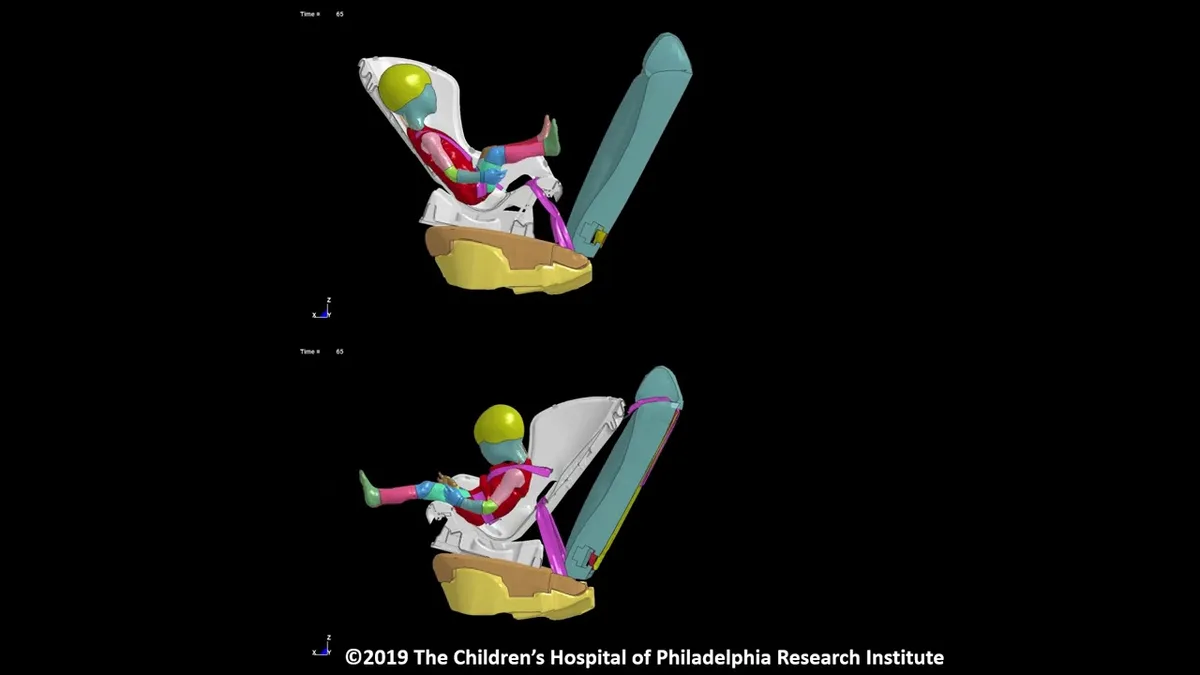
Car crashes are the leading cause of death for children in the US. The way your child faces in the car directly determines how their body absorbs crash forces. In a rear-facing seat, the shell cradles the head, neck, and spine, distributing the impact across the entire back.
In a forward-facing seat, the harness holds the torso, but the head and neck are thrown forward, putting tremendous strain on still-developing vertebrae.
Research published by the National Highway Traffic Safety Administration (NHTSA) shows that children under 2 are up to five times safer in a rear-facing seat than a forward-facing one. The AAP’s policy statement confirms that the risk of serious injury drops by more than 70% when kids stay rear-facing through age 2. That’s not a small difference.
The real danger is that the bones in a toddler’s neck haven't fully ossified. Their spinal ligaments are stretchy, and the spinal cord has room to slide inside the vertebrae. In a forward-facing crash, that stretching can cause internal cord damage, even if there are no broken bones.
This is called “spinal cord injury without radiographic abnormality” (SCIWORA), and it’s devastating.
Waiting isn't about comfort or convenience. It's about giving your child's skeleton time to mature. Every extra month rear-facing adds a measurable safety buffer.
The Real Answer: It’s Not Just About Age or Weight
Many parents hear “1 year and 20 pounds” and assume that’s the green light. That number came from older guidelines, and it’s outdated. Modern car seats have much higher rear-facing limits, often 40 to 50 pounds and up to 44 or 49 inches tall.
You very likely have room to keep your child rear-facing well past age 2.
The Three Key Factors: Age, Weight, Height (In That Order)
Age is a starting point, not a finish line. The AAP says at least 2 years, but “at least” means “longer is better.” Weight matters because the car seat is tested at certain limits, never exceed the max rear-facing weight printed on the seat’s sticker. Height is often the limiting factor. Your child’s head must be at least 1 inch below the top of the car seat shell when rear-facing.
Once the top of their head reaches that line, it’s time to turn even if they haven’t hit the weight limit.
Check all three against your seat’s manual. Every model is different. Some seats rear-face to 35 pounds, others to 50.
Know your seat.
State Laws vs. Best Practice – The Critical Difference
State car seat laws are minimum requirements, not safety recommendations. Many states only require rear-facing until age 1 or weight 20 pounds. A few, like California and New York, have raised the minimum to age 2.
But even the strictest state law still lags behind what the experts advise.
Think of it like speed limits. Driving 70 mph may be legal on a highway, but that doesn't mean it's the safest choice in heavy rain. Similarly, turning your child at the legal minimum may keep you out of a ticket, but it doesn't keep your child as safe as possible. Always follow the car seat manufacturer’s limits and the AAP’s guidelines, not just your state law.
What the Experts Actually Recommend (AAP, NHTSA)
The American Academy of Pediatrics recommends children remain rear-facing until they reach the maximum height or weight allowed by their car seat's manufacturer. NHTSA echoes that: “Keep your child in a rear-facing car seat as long as possible.” Both organizations explicitly say age 2 is the minimum, not the target.
Transport Canada uses the same language: wait until the child outgrows the rear-facing limits. In Europe, i-Size regulations require rear-facing until at least 15 months, and most experts there also encourage longer.
The message is consistent across borders: rear-facing is safer, and the longer you do it, the better.
How to Know Your Child Is Ready to Turn – A Simple Checklist
Before you even think about turning that seat around, run through this checklist with your car seat manual in hand:
- Does your child exceed the rear-facing weight limit on the seat's sticker?
- Does your child's head reach within 1 inch of the top of the seat shell when rear-facing?
- Have you confirmed your child's age is at least 2 years old (and ideally older)?
If the answer to any of these is "no", keep them rear-facing. You only turn when all three conditions are met, and even then, you can wait longer. There is no rush.
Many parents worry their child's legs are too cramped. That's a common myth. Pediatric orthopedic specialists confirm that children can comfortably sit cross-legged, with legs splayed or bent.
They do not suffer leg or hip damage from being rear-facing. In fact, legs are thrown less violently in a rear-facing crash than in a forward-facing one.
If your toddler complains about leg position, try adjusting their seat recline a notch (within the allowed range) or give them a small cushion for their feet. But don't let discomfort drive a safety decision.
Step-by-Step: How to Safely Switch to Forward-Facing
When your child has genuinely outgrown the rear-facing limits, follow these steps closely. Mistakes in installation are extremely common, studies show nearly half of all car seats are installed incorrectly.
1. Read your car seat manual. Seriously, don't skip this. Every seat has specific instructions for forward-facing mode.
The manual will tell you which belt path to use, whether you need the recline foot in a certain position, and how to route the harness.
2. Remove the seat from the vehicle. If you’ve been using the lower anchors (LATCH), you may need to switch to the seat belt for forward-facing if your child’s combined weight (child + seat) exceeds the lower anchor weight limit, usually 65 pounds total.
3. Re-thread the harness. For forward-facing, the harness straps must be at or above your child’s shoulders. Check the height slots on the back of the seat.
Many seats have a separate forward-facing belt path, don't just reuse the rear-facing path.
4. Install the seat using either the lower anchors or the seat belt. Tighten until the seat moves less than 1 inch side to side at the belt path. A firm installation is critical.
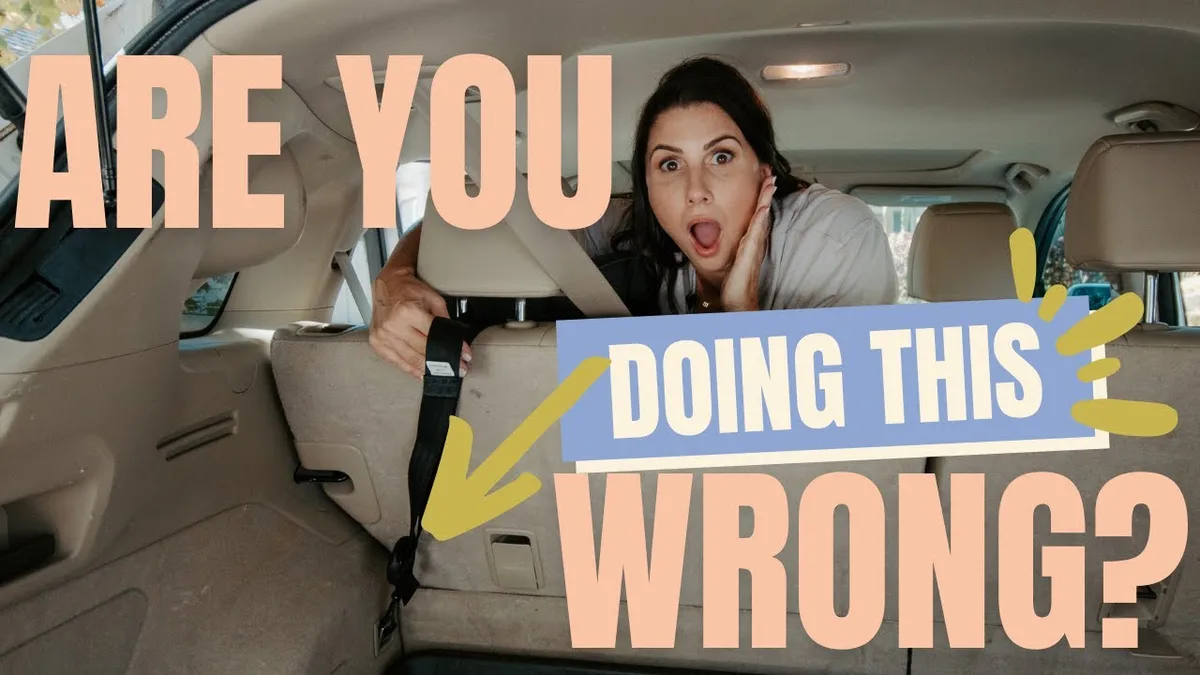
5. Attach and tighten the top tether. This is the step most parents miss. The top tether is a strap that hooks to an anchor point in your vehicle, usually on the back of the seat, ceiling, or floor.
It dramatically reduces forward head movement in a crash. NHTSA requires it for forward-facing seats. Never skip it.
6. Adjust the harness on your child. The chest clip should be at armpit level. The harness should be snug enough that you cannot pinch a fold of webbing at the collarbone.
The “pinch test” is your friend.
If any part of this feels confusing, you're not alone. Certified Child Passenger Safety Technicians (CPSTs) offer free or low-cost checks at hospitals, fire stations, and police departments across the US. You can find one near you through the Safe Kids worldwide locator.
It takes 20 minutes and could save a life.
For more safety insights on keeping your child secure on the go, you might also find our article on how to calm a baby in a car seat helpful, along with our expert advice on whether babies can sleep in car seats. Understanding the full picture of car seat safety goes beyond just the forward-facing question.
Common Mistakes Parents Make (And How to Avoid Them)
Even careful parents slip up. The good news is these mistakes are easy to fix once you know what to look for. Let's run through the big ones.
Switching Too Early Because of “Leg Cramping”
This is the number one reason parents turn their child too soon. A toddler's legs might look cramped. They curl up, dangle over the sides, or press against the vehicle seat.
It looks uncomfortable.
But here is what the research says: children's joints and bones are flexible. They sit cross-legged, with feet tucked, or legs splayed without pain or injury. Pediatric orthopedists have confirmed that there is no evidence of leg or hip damage from extended rear-facing.
In a crash, rear-facing legs actually move less violently than forward-facing legs.
If your child complains, try giving them a small footrest or adjusting the recline angle within the seat's allowed range. Do not turn them early for comfort. Safety outweighs a fussy ride.
Ignoring Height Limits
Many parents focus on weight and forget height. The seat shell has a maximum height limit. For most convertible seats, your child's head must be at least one inch below the top of the shell when rear-facing.
Once their head reaches that line, the seat can no longer protect their head and neck properly in a crash. This limit is printed on the seat label or in the manual. Measure your child's seated height if you're unsure.
Forgetting the Top Tether
Forward-facing seats must use the top tether. This strap hooks to an anchor point in your vehicle and prevents the seat from tipping forward in a crash. NHTSA data shows that tethers reduce head injury risk significantly.
Yet many parents skip this step. They might not see the anchor point, or they think the seat belt is enough. It's not.
Always route and tighten the top tether. Check your vehicle owner's manual for anchor locations. They are usually on the back of the seat, the ceiling, or the floor.
Misreading the Minimum Requirements
State laws say "1 year and 20 pounds." That's the legal floor, not the safety ceiling. Parents see that number and think it's time to turn. But modern seats rear-face to 40, 45, or even 50 pounds.
Your seat's limits are what matter. Check the sticker on the side of the car seat. If it says "rear-facing up to 40 lbs" and your child is 25 pounds, you have plenty of room to wait.
Do not rush to meet the minimum. Aim for the maximum.
For more guidance on keeping your child comfortable and safe during travel, our article on how to calm a baby in a car seat offers practical tips that work whether they face rear or forward.
Extended Rear-Facing: Why Waiting Longer Is Safer
The science is clear: each additional month rear-facing reduces injury risk. A study published in the journal Injury Prevention found that children under 2 are 75 percent less likely to be seriously injured when rear-facing. That protection continues as they get older.
The reason is biomechanical. A toddler's vertebrae are not fully hardened. The spinal column can stretch by up to two inches before breaking.
But the spinal cord itself can only stretch about a quarter of an inch. In a forward-facing crash, the head whips forward, stretching the neck. The cord can tear internally even if no bones break.
Rear-facing eliminates that stretch. The seat cradles the head and neck, distributing force across the entire back. The head does not snap forward.
It moves with the seat.
Extended rear-facing simply means keeping your child rear-facing until they max out the seat's limits. For most kids, that's at least age 3 or 4. Some seats now allow rear-facing up to 50 pounds and 49 inches.
That's a typical 5-year-old.
Don't worry about legs. Kids are incredibly flexible. They will find a comfortable position.
And when they fall asleep, their head stays supported by the seat, not flopping forward like in a forward-facing seat.
If your child seems uncomfortable or cries on long trips, stop and take breaks. But do not turn the seat early. The safety benefits compound over time.
What If Your Car Seat Can’t Rear-Face Long Enough? (Options)
Not all car seats have high rear-facing limits. If you bought a budget seat that only rear-faces to 30 or 35 pounds, you might be forced to turn earlier than ideal. That's frustrating but fixable.
You have three options:
1. Replace the seat with a higher-limit convertible model. Many convertible seats now rear-face to 40, 45, or 50 pounds. Brands like Britax, Graco, Chicco, and Evenflo offer seats with extended rear-facing limits.
This is the most straightforward solution. The cost is typically $150 to $350. Compare that to the cost of a hospital visit.
2. Keep using your current seat until your child outgrows the height or weight limit, even if that means turning sooner than you'd like. This is not ideal, but it's safe if you follow the seat's limits exactly. Do not exceed them.
If the seat says 35 pounds rear-facing, turn at 35 pounds.
3. Check if your seat has a different belt path or recline position for rear-facing at higher weights. Some seats have two recline positions for rear-facing. The more upright position may allow a higher weight limit.
Read the manual carefully.
If you're unsure which seat to buy next, look for one with a rear-facing weight limit of at least 40 pounds and a height limit of at least 44 inches. That gives you the most rear-facing time. Your child's safety is worth the investment.
When to Seek Help from a CPST (Child Passenger Safety Technician)
Car seat installation is famously tricky. Studies show that up to 60 percent of seats are installed or used incorrectly in ways that reduce their effectiveness. You don't have to figure it out alone.
Certified Child Passenger Safety Technicians (CPSTs) are trained professionals who inspect car seat installations for free or a small fee. They work at hospitals, fire stations, police departments, and community events. They can show you exactly how to install your seat correctly and check if your child is ready to turn forward.
You should see a CPST if:
- You're unsure whether your child has outgrown the rear-facing limits.
- You can't get the seat tight enough (less than 1 inch of movement at the belt path).
- You've never used the top tether before.
- You're switching between vehicles or installing the seat for the first time.
- Your child has special medical needs or positioning requirements.
To find a CPST near you, visit the Safe Kids Worldwide website. They maintain a national database of technicians and inspection stations. The check usually takes 20 to 30 minutes.
It's one of the smartest things you can do. A professional set of eyes can catch mistakes you'd never notice. And your child's safety is worth that small time investment.
For another perspective on child care safety, you might also find our guide on how to care for a circumcised baby useful. It's part of the broader picture of keeping your little one safe and healthy in all areas.
Real Scenarios: Case Examples of Safe vs. Unsafe Timing
Let's look at three real-world situations to see how the rules apply.
Scenario 1: Emma, age 18 months, 23 pounds, 30 inches tall
Emma's parents want to turn her because she seems cramped. Her convertible seat rear-faces to 40 pounds and 44 inches. Her head is 3 inches below the shell top.
She is nowhere near the limits. Keeping her rear-facing is the obvious safe choice. Her parents are advised to adjust her leg position and wait until at least age 2, ideally longer.
Scenario 2: Lucas, age 3 years, 32 pounds, 39 inches tall
Lucas has outgrown his seat's rear-facing height limit of 40 inches. His head is less than 1 inch from the top of the shell. He also weighs under the weight limit, but height is the limiting factor.
He is ready to turn forward-facing. His parents install the seat with the top tether and adjust the harness to shoulder level. Safe transition.
Scenario 3: Mia, age 4 years, 42 pounds, 44 inches tall
Mia's seat rear-faces to 50 pounds and 49 inches. She is within both limits. Her parents keep her rear-facing even though other kids her age have turned.
She is comfortable with legs crossed. This is the safest possible choice. Her parents have extended rear-facing to the maximum.
They will not turn until she outgrows the seat's limits.
These scenarios show that age is just one factor. Weight, height, and the seat's specific limits determine the safe timing. If you ever doubt which scenario fits your child, err on the side of staying rear-facing longer.
There is no penalty for waiting too long. There is a very real penalty for turning too soon.
FAQs on Forward-Facing Timing
Can my child face forward at 1 year old if they are 20 pounds?
Legally yes in many states. But safety experts agree that is the absolute minimum, not the target. Keep your child rear-facing until they outgrow the seat's height or weight limit.
That almost always means well past age 2.
What if my child’s legs touch the vehicle seat?
That is completely normal and safe. Children are flexible. They can sit cross-legged or with legs bent.
No research shows leg or hip damage from extended rear-facing. Comfort is not a safety reason to turn.
How do I know if my child has outgrown the rear-facing height limit?
Check the top of the car seat shell. Your child's head must be at least one inch below that hard plastic shell. If their head touches or passes that line, they have outgrown the height limit and must turn forward.
Can I turn my child forward-facing if they cry rear-facing?
Crying is not a safety indicator. Check for other causes. Is the harness too tight?
Is the seat too hot or cold? Is your child bored? Address those issues first.
Do not turn the seat early just to stop crying.
Do I need a new car seat for forward-facing?
Not necessarily. Most convertible seats work in both rear-facing and forward-facing modes. You simply rethread the harness and change the belt path.
Check your manual. If your current seat has a forward-facing weight limit high enough, you can keep using it.
What is the safest age to turn a child forward-facing?
There is no single safest age. The safest time is when your child has fully outgrown the rear-facing limits of their specific car seat. For most children on higher-limit seats, that is between 3 and 5 years old.
Final Verdict: The Safe Decision Guide
Here is the bottom line. Keep your child rear-facing until they reach the maximum height or weight printed on your car seat's sticker. Do not turn them sooner because of age, state law, or comfort concerns.
If your seat has low limits, consider upgrading to one that allows extended rear-facing.
The safest choice is simple: rear-face as long as your car seat allows. Every extra month gives your child's neck and spine more time to strengthen. There is no rush.
There is no reward for turning early. There is only the peace of mind that comes from knowing you made the safest possible choice.
For more on keeping your baby secure and comfortable in the car, check out our guide on can babies sleep in car seats and our article on the taking care babies method for broader infant care tips.