How to When Can a Baby Front Face in a Car Seat
You've probably typed the phrase “when can a baby front face in a car seat” into a search bar while staring at those scrunched-up legs in the back seat. It's one of the most asked parenting questions, and for good reason. You want your kid to be comfortable, but you also don't want to rush safety.
As of 2026, the American Academy of Pediatrics and the National Highway Traffic Safety Administration both recommend keeping children rear-facing as long as possible. That means until they outgrow the seat's height or weight limit, not just until age 2 or 20 pounds. Many modern convertible car seats now allow rear-facing up to 40 or even 50 pounds.
So before you flip that seat around, let's walk through the real guidelines.
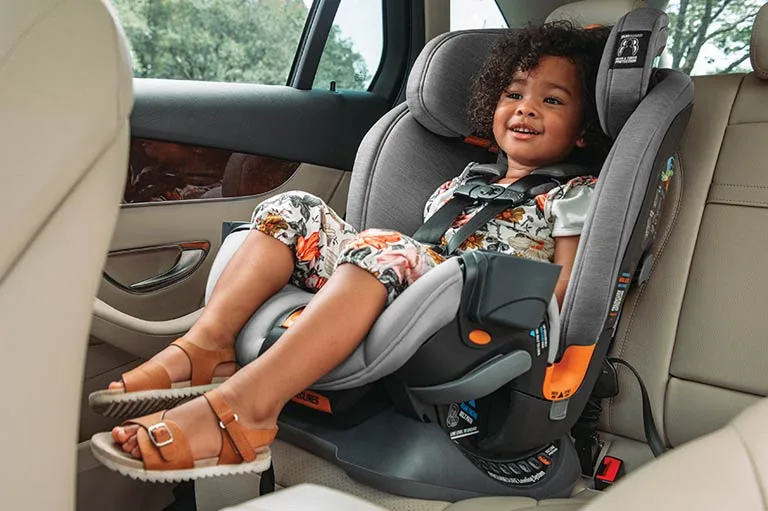
Image source: Bing (Web (fair-use with source credit))
Why This Car Seat Decision Deserves Your Full Attention
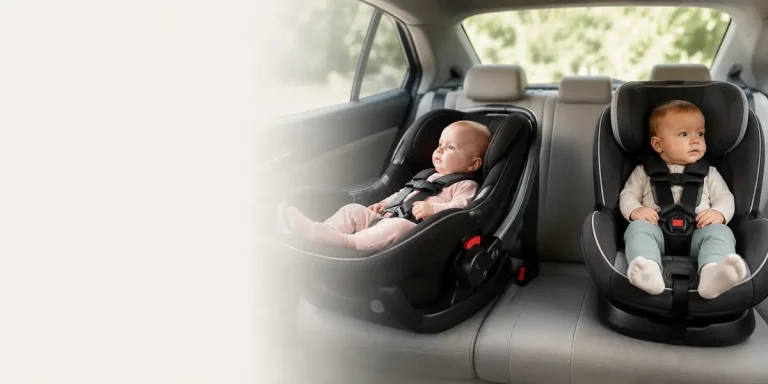
Few choices in early parenting carry more weight than car seat direction. Crash data is clear: rear-facing is dramatically safer for young children. In a front-end collision, the harness holds the child in the seat while the shell absorbs the impact.
The child's head, neck, and spine move as one unit, sliding deeper into the seat. That distributes forces across the entire body, not just the neck.
Forward-facing changes everything. The harness restrains the torso, but the head and neck are still moving forward. For a toddler with a developing spine and a relatively heavy head, that motion can stretch and injure the spinal cord.
This isn't a minor risk. Every pediatric safety organization points to the same evidence.
So this decision isn't about comfort or convenience. It's about protecting your child's developing neck and spine. And yes, your little one will probably protest.
That's normal. But the safety benefit doesn't disappear just because you hear a tantrum in the back seat.
Quick Answer: The Real Rule for Facing Forward
The rule is simple. Keep your child rear-facing until the seat says otherwise. That's the real answer.
Age is just a starting point. Your car seat manual is the final word.
Every car seat has its own rear-facing height and weight limits. Once your child reaches those limits, then and only then is it time to turn around. For most kids, that's past age 2, and often closer to age 3 or 4.
Ignore the outdated advice about a first birthday. The law in most states is a minimum, not a safety recommendation.
How Rear-Facing Protects Your Child: The Neck and Spine Science
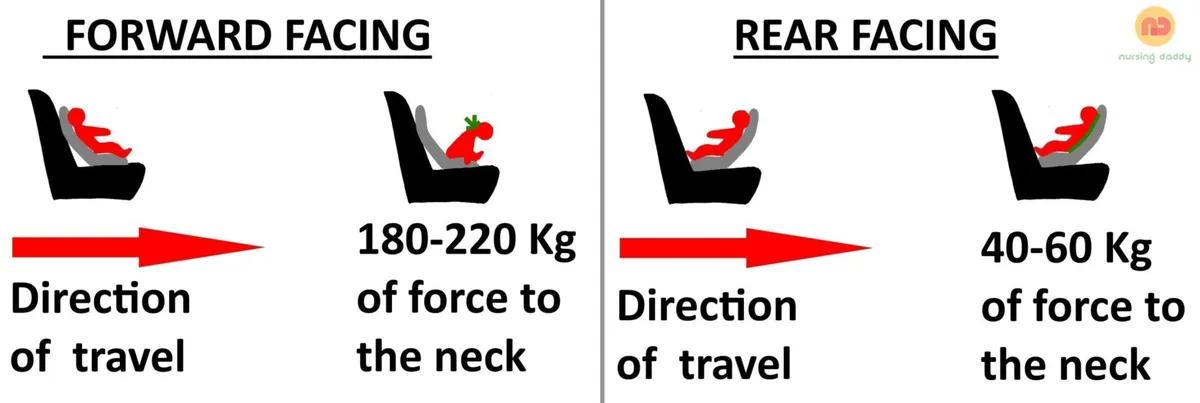
Image source: Bing (Web (fair-use with source credit))
Here's the anatomy lesson you didn't ask for. A baby's head is about 25 percent of their total body weight. An adult's head is about 6 percent.
That's a huge difference, and it matters in a crash.
Before age 2, the vertebrae in the spine are still mostly cartilage. They haven't ossified, or hardened into bone. The spinal cord is still growing within the spinal canal.
When a child is rear-facing, the crash force pushes them into the seat. The shell takes the hit, and the child's head, neck, and torso stay in alignment. When forward-facing, the force yanks the head forward, and the neck has to stop that heavy, unsupported head.
That's how serious neck injuries happen.
Per AAP guidance, the rear-facing skeleton is better equipped to handle crash forces. The official recommendation is not just until age 2, but until the child outgrows the car seat's rear-facing limits. Many parents worry about leg injuries, but studies show leg injuries are actually more common in forward-facing children.
Bent legs in a rear-facing seat are safe and normal.
Age Is Only One Piece: The Actual Height, Weight, and Seat Limits
You can't just go by age. Each car seat model has specific rear-facing limits. These limits are printed on a white label on the side or base of the seat, and also in the instruction manual.
You need to check both.
Most convertible car seats have rear-facing weight limits between 35 and 50 pounds. Height limits are often given as a maximum height, like 40 inches, or as a rule about head clearance. For a rear-facing seat, the child's head must stay at least one inch below the top of the seat shell.
Once that head gets too close to the top, the seat can't properly cradle it in a crash.
Here's a quick look at common ranges for convertible seats:
| Seat Type | Typical Rear-Facing Weight Limit | Typical Rear-Facing Height Limit |
|---|---|---|
| Convertible seat | 35–50 lb | 32–40 inches |
| All-in-one seat | 40–50 lb | 40–49 inches |
| Infant-only seat | 22–35 lb | 29–32 inches |
These numbers are general. Your seat's numbers could be different. And the forward-facing minimums are usually around 2 years old, 20 pounds, and the child able to walk.
But those are bare minimums, not targets.
If you drive long distances and worry about your child's comfort in a rear-facing seat, we get it. There are ways to make it work. Some car seats are specifically designed for long drives with deeper padding and better recline options, so your little one can stay rear-facing without losing comfort.
How to Know Your Child Has Outgrown the Rear-Facing Seat
The manual for your car seat is the absolute authority. But there are four universal signs that a child has outgrown the rear-facing position. If any of these happen, it's time to consider forward-facing.
- Weight limit reached. The child's weight exceeds the rear-facing limit printed on the label.
- Height limit reached. The child's height exceeds the seat's rear-facing height limit.
- Head clearance gone. In a rear-facing seat, there must be at least one inch of shell above the top of the head. If not, it's outgrown.
- Harness slot issues. For most convertible seats, the harness straps must be at or below the child's shoulders when rear-facing. If the straps can't go low enough anymore, the seat is outgrown.
That last one confuses a lot of parents. When rear-facing, the harness comes from behind the child, so it needs to be at or below those little shoulders to hold them snugly. Once the straps are above the shoulders and can't be adjusted down, the seat is done in rear-facing mode.
Also, check the seat's expiration date. Car seats expire, usually six to ten years after manufacture. A crash-damaged seat must be replaced, even if it looks fine.
And if you've been in a moderate or severe crash, the NHTSA says to replace the seat. That's non-negotiable.
One more piece of the puzzle: your child's comfort. If your toddler is complaining about their legs, that's normal. We'll cover that in detail later, but crumpled, crossed, or dangling legs are not a safety reason to turn the seat around.
The American Academy of Pediatrics has repeated this many times, and their guidance hasn't changed.
Before you flip that seat, also think about whether your child is truly ready behaviorally. A forward-facing seat requires the child to stay seated properly at all times. Like with everything else in parenting, you know your kid best.
Step-by-Step: Turning the Convertible Seat to Forward-Facing
You've confirmed your child is ready. Now it's time to actually do the switch. This isn't a one-minute job.
It takes a few minutes of focused work, and the details matter more than you think.
Check the Manual and Labels First
Before touching anything, read the manual. Seriously. Each car seat model has specific forward-facing instructions.
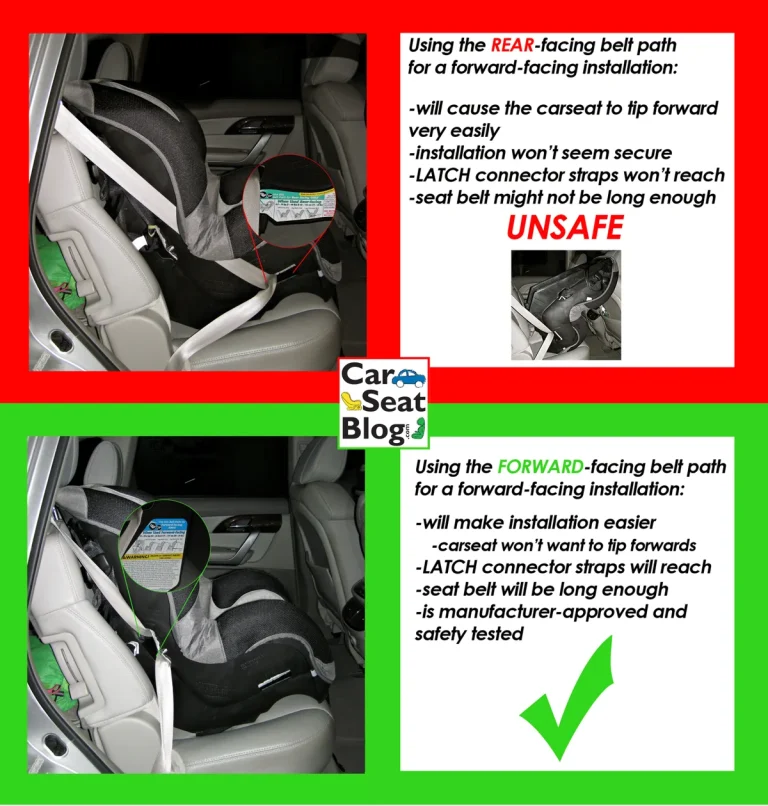
The same seat often needs the harness routed through entirely different slots for forward-facing.
Adjust the Harness and Headrest
In forward-facing mode, the harness straps must sit at or above your child's shoulders. Remove the straps from the rear-facing slots and rethread them through the forward-facing ones. The headrest usually slides or lifts to make this easier.
Install With Seat Belt or LATCH
You have two installation options. The LATCH system and the vehicle seat belt are both safe when installed correctly. Just check the LATCH weight limits in your vehicle.
Many cap out at 40 to 65 pounds for child plus seat combined. Beyond that, switch to the belt.
Always Use the Top Tether
The top tether is non-negotiable. It connects the top of the seat to an anchor in your vehicle. In a front-end crash, it reduces forward head movement by up to 4 to 6 inches.
That distance can prevent a serious head injury.
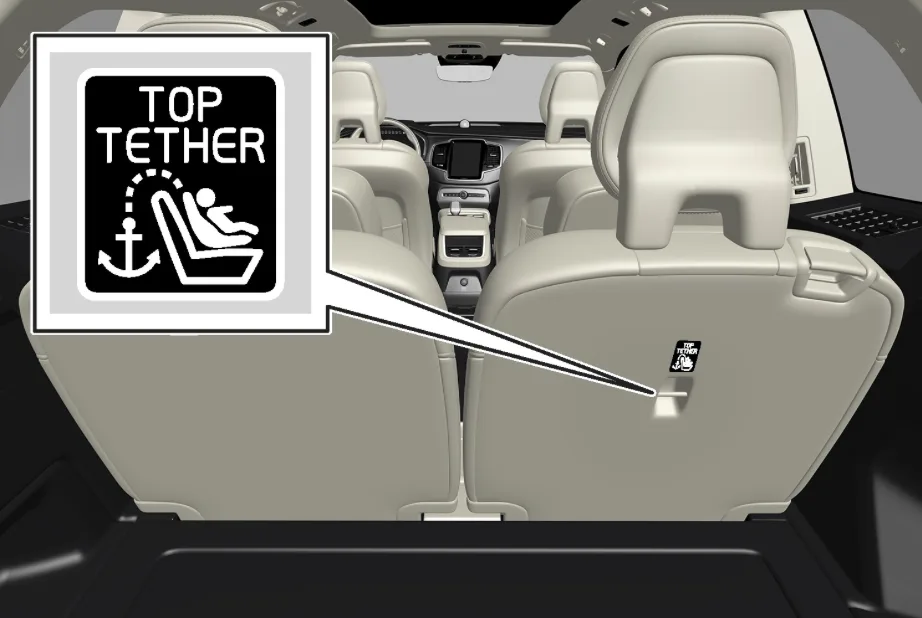
Image source: Bing (Web (fair-use with source credit))
Double-Check the Pinch Test and Chest Clip
After installation, give the seat a firm shake at the belt path. It should not move more than 1 inch. Then buckle your child in and do the pinch test.
If you can pinch any harness webbing at the shoulder, it's too loose. The chest clip should rest at armpit level.
That's the physical side done. But knowing how to install is only half the story. You also need to understand what the law says versus what safety experts actually recommend.
The Legal Minimum vs. the Safest Practice: Know the Difference
State laws set a floor, not a ceiling. Most states require rear-facing until at least age 1 and 20 pounds. Some have moved to age 2.
These are legal minimums, and they lag behind current safety evidence.
Per NHTSA's official guidance, children should ride rear-facing until they outgrow the seat's rear-facing limits. That's a far higher benchmark than any state minimum. If your state allows forward-facing at 1 year, that doesn't make it the safest choice.
Pediatric safety organizations all point to the same conclusion: rear-facing as long as possible.
If you're trying to understand where your state lands, our state-by-state car seat rules break down the specifics. Just remember that meeting the legal requirement isn't the same as meeting the safety recommendation.
Common Mistakes Parents Make When Switching Too Early
Turning the seat is a one-way door. Once you flip it, it takes real effort to go back. So learn from the mistakes other parents make before you do anything.
Turning on the first birthday. The old "1 and 20" rule was a legal floor, not a safety goal. It's outdated advice, and it's the most common reason seats get flipped too early.
Ignoring the height limit. Weight gets all the attention, but height matters just as much. If your child's head is within an inch of the top of the rear-facing shell, the seat has been outgrown.
Skipping the top tether. Your seat can look perfectly installed and still be unsafe without the tether. It limits forward movement of the head in a crash. Not optional.
Rushing the harness straps. Straps that are loose or in the wrong slots reduce crash protection dramatically. The harness should be snug enough that you can't pinch any slack.
Dressing for winter in a puffy coat. A thick coat compresses in a crash, leaving the harness loose. Thin layers and a blanket on top are safer. Our winter car seat wear guide explains what actually works in cold weather.
Extended Rear-Facing: Why It's Okay If Their Legs Look Cramped
The number one reason parents turn the seat around early is the legs. They look folded, squished, or just plain uncomfortable. Here's what the research shows: bent legs are completely safe.
Crossed legs are safe. Dangling legs are safe.
Young children are far more flexible than adults. Their hip joints can handle positions that would leave you groaning on the floor. And there is no evidence that rear-facing causes leg injuries.
In fact, studies suggest forward-facing kids actually have higher rates of leg injuries in crashes because their legs fly forward and hit the seat in front.
So stop staring at their knees. A toddler who can fall asleep folded like a pretzel will be fine for another year or two. The legs will not break.
The child will not be uncomfortable for long. And the safety benefit stays intact the whole time.
What If Your Child Fusses or Complains? Practical Comfort Tips
A toddler complaining from the back seat is a parenting endurance test. But you can survive it without giving in on safety.
Give them something to do. Soft books, small toys, and a car mirror all help. Just keep everything lightweight.
Heavy or hard objects can become projectiles in a crash.
Pack snacks for longer trips. A snack cup with puffs or crackers buys you a solid ten minutes of quiet. Hand them out one piece at a time.
This is non-negotiable from a choking standpoint.
The real question is whether something specific is bothering them. Car sickness hits kids hard at this age, and it's not about seat direction. If your baby gets car sick, a mirror can help them see the horizon.
More frequent breaks help too.
And if you have a child who hates the car ride no matter what you do, remember this: crying is not a safety exception. A properly harnessed, safe child can cry through a 20-minute drive. It's frustrating.
It's exhausting. But it's not a reason to turn the seat around months before your child is ready.
When to Talk to a Certified Child Passenger Safety Technician
If you're second-guessing your install, get help. It's that simple. A Certified Child Passenger Safety Technician (CPST) can check your work in person and show you exactly what needs fixing.
CPSTs are often found at fire stations, police departments, and children's hospitals. The service is usually free, but you may need to call ahead to book an appointment. Appointments typically take 20 to 30 minutes, and appointments are well worth it.
Even experienced parents forget a step sometimes. One study found that roughly half of all car seat installations are done incorrectly. So if you feel even a little uncertain, reach out.
You won't be wasting anyone's time.
Frequently Asked Questions
What is the legal minimum age to forward-face?
In most states, children can legally face forward at age 1 and 20 pounds. Some states have moved the minimum to age 2. But legal minimums are not safety recommendations.
The AAP and NHTSA both advise rear-facing until the child outgrows the car seat's height or weight limit.
When should I use LATCH instead of a seat belt?
Use whichever installs more tightly and is within the weight limits. Check your vehicle and car seat manuals. LATCH often has a combined child-plus-seat weight limit around 40 to 65 pounds.
Once your child exceeds that, switch to the seat belt method for forward-facing installation.
How tight should the forward-facing harness be?
The harness should be snug enough that you cannot pinch any webbing at the shoulder. That's the pinch test. The chest clip must sit at armpit level, and the straps should lie flat without twisting.
A good test is the one-inch rule at the belt path: the seat shouldn't move more.
Can I use a rear-facing-only seat in a forward-facing position?
No. Infant-only car seats are built only for rear-facing use. Convertible and all-in-one seats are designed to flip around.
Always check the manual. If the seat doesn't list forward-facing instructions, it's not designed for that mode. Using the wrong mode is a serious safety risk.
What if my child is too big for a forward-facing harness?
If your child has outgrown the forward-facing harness's height or weight limit, it's time to move to a high-back booster. Most forward-facing harness seats have weight limits between 40 and 65 pounds. Check the label before making the switch.
Final Verdict: Your Checklist Before Turning the Seat Around
Before you flip that seat, run through this short list. Every single item needs a yes.
- The child has outgrown the rear-facing height or weight limit listed on the seat.
- The child's head has less than one inch of shell above it in the rear-facing position.
- You've read the car seat manual section for forward-facing mode.
- The harness straps are routed at or above the child's shoulders.
- The seat is installed with less than 1 inch of movement at the belt path.
- The top tether is attached and tightened.
- The chest clip sits at armpit level.
- The harness passes the pinch test.
If any answer is no, keep the seat rear-facing and fix the issue first. If every answer is yes, you've done the safest, smartest thing for your child. You've followed the evidence, not just the legal minimum.
That's exactly what they deserve.