When Do Babies Face Forward in Car Seat? 2026 Guide
You’re staring at the rearview mirror, and your 2-year-old’s legs are pressed against the seat back. They look uncomfortable. Your mother-in-law says it’s time to turn them around.
Your neighbor did it at 18 months. So when do babies face forward in car seat? The short answer: not yet, and probably not for a while longer.
The longer answer involves crash physics, harness limits, and a hard number that surprises most parents. As of 2026, the American Academy of Pediatrics recommends keeping children rear-facing until they outgrow the maximum height or weight limit on their specific car seat. For most convertible seats, that means age 3 or 4, not age 1 or 2.
Let’s break down exactly what that looks like in practice.
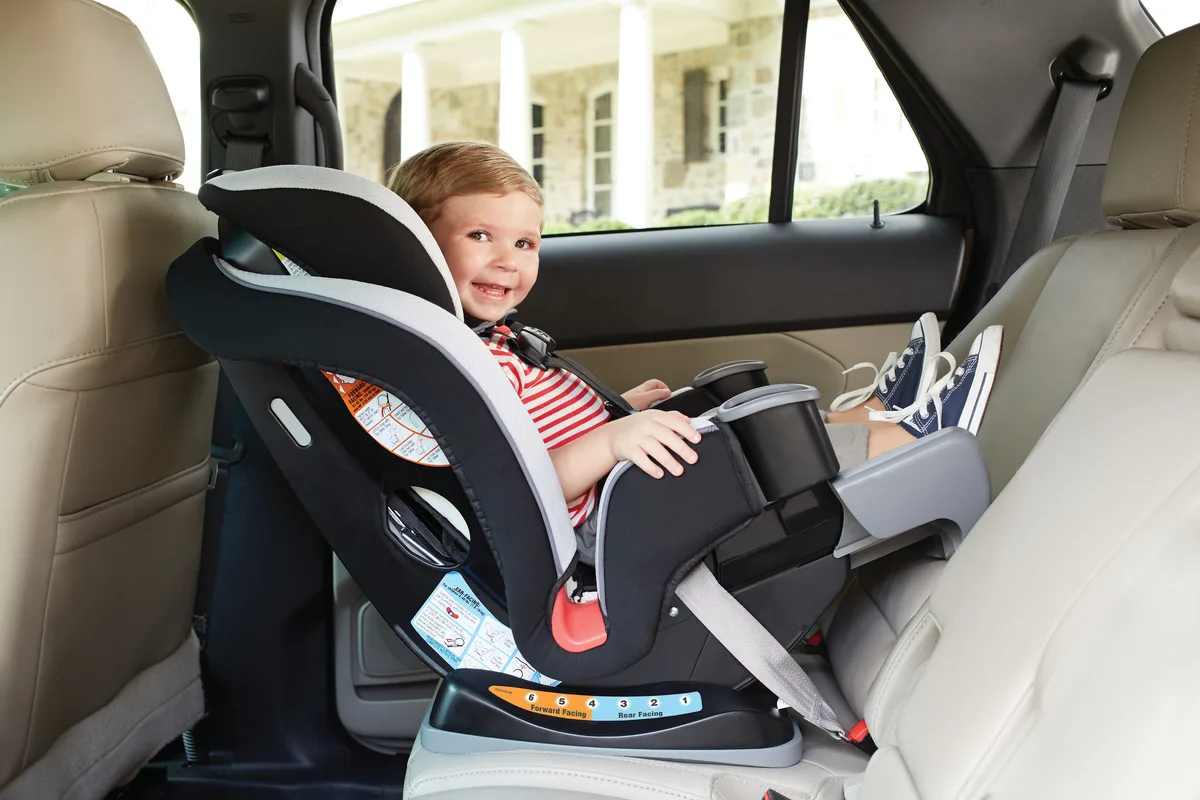
Image source: Web (Bing) / ar.inspiredpencil.com (Web image (fair-use with source credit))
Why This Decision Matters More Than You Think
Here’s the uncomfortable truth about car seats: they’re not about comfort. They’re about distributing crash forces across the strongest parts of a child’s body. And a child’s body is not a miniature adult body.
A toddler’s spine is still mostly cartilage. The vertebrae haven’t fully ossified into bone yet. The spinal cord has more room to move inside the spinal canal than an adult’s does.
That means in a frontal crash, a forward-facing child’s head snaps forward while their torso is held by the harness. The neck takes the brunt of that force. Rear-facing, the same crash pushes the child back into the seat shell, and the head, neck, and spine all move together as one unit.
| Crash Direction | Rear-Facing | Forward-Facing |
|---|---|---|
| Frontal impact | Head, neck, and spine pressed into seat shell | Head snaps forward, neck absorbs force |
| Head excursion | Minimal, shell blocks movement | Significant, harness straps restrain torso only |
| Spinal load | Distributed across entire back | Concentrated on cervical spine |
| Injury risk | Significantly lower | Higher for head and neck injuries |
The numbers back this up. Research published in peer-reviewed journals shows that children under age 2 are 75% less likely to die or suffer serious injury in a crash when riding rear-facing. That’s not a small difference.
That’s the difference between walking away and not walking away.
So when you’re wondering when to turn that seat around, you’re really asking a question about risk tolerance. And the safest answer is: later rather than sooner.
Quick Answer
The minimum legal age to face forward in most states is 1 year and 20 pounds. But legal minimums are not safety recommendations. The American Academy of Pediatrics advises keeping children rear-facing until they outgrow the seat’s height or weight limit.
For most convertible seats, that’s 40 to 50 pounds. Most children reach that limit between ages 3 and 4. Turn the seat only when the child exceeds the manufacturer’s rear-facing limits.
Rear-Facing vs. Forward-Facing: What’s the Real Difference
Let’s talk about what actually happens inside the car during a crash. It’s not pretty, but understanding it makes the decision obvious.
When a car hits something at 30 mph, the vehicle stops almost instantly. The occupants keep moving at 30 mph until something stops them. For a rear-facing child, that something is the car seat shell.
The child’s entire back, head, and neck press into the seat, and the force spreads across the whole body. It’s like being pushed into a padded wall.
For a forward-facing child, the harness stops the torso. But the head keeps moving. It whips forward until the neck reaches its limit, then snaps back.
That’s called head excursion, and it’s the single biggest risk factor for head and neck injuries in young children.
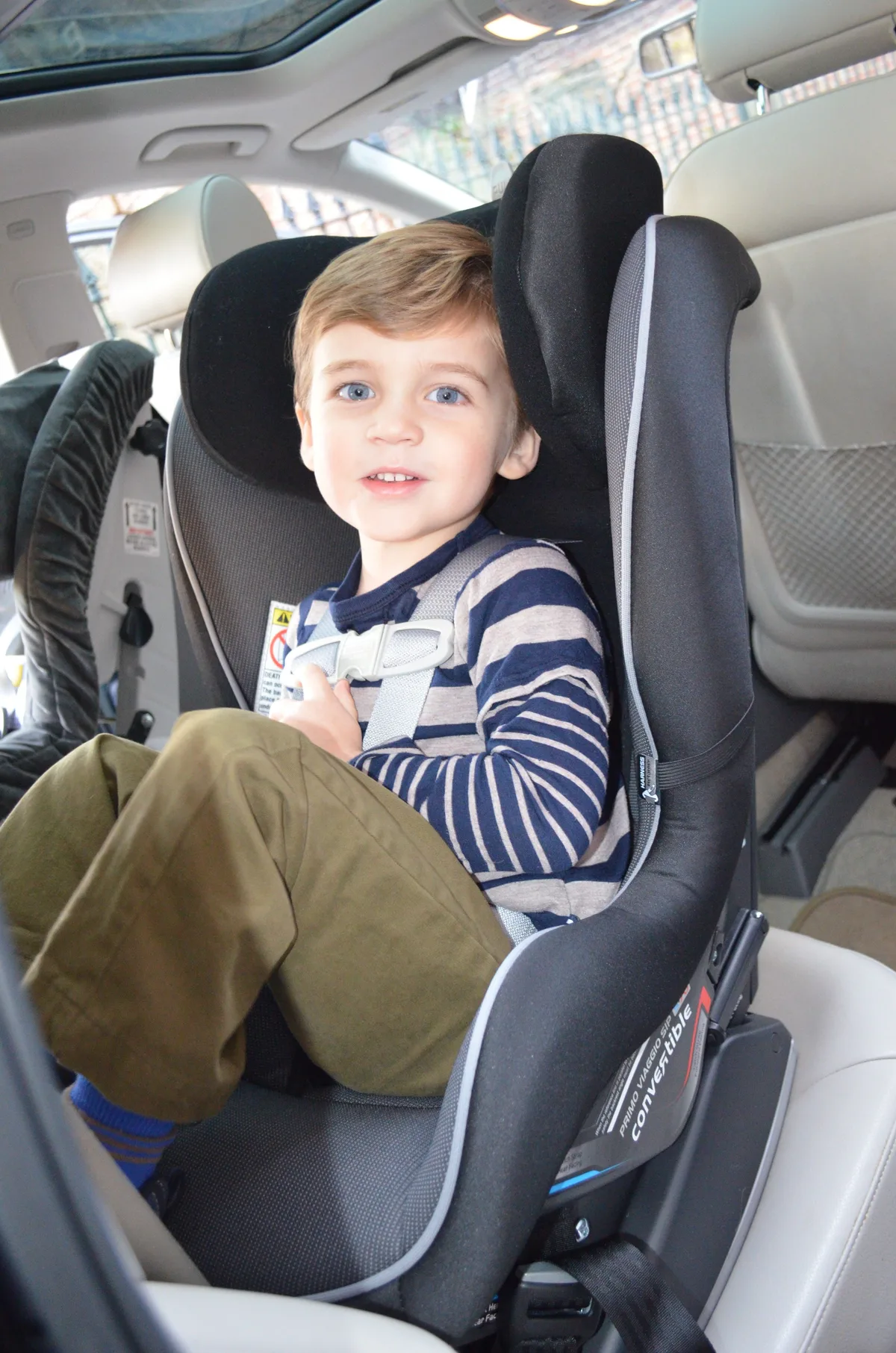
Image source: Web (Bing) / kattazensen.de (Web image (fair-use with source credit))
The harness straps work differently in each direction too. Rear-facing, the straps should sit at or below the child’s shoulders. That way, the harness holds the child down into the seat during a crash.
Forward-facing, the straps need to be at or above the shoulders, so they hold the child back against the seat.
Here’s what most parents don’t realize: the forward-facing position is actually the more complicated one to get right. The top tether must be attached. The recline angle changes.
The harness slots move. And if any of that is wrong, the seat doesn’t perform the way it was designed to.
The Three Limits That Matter (Not Just Age)
Forget the birthday. Forget what your neighbor did. The only numbers that matter are printed on the side of your car seat.
Every seat has a label with specific rear-facing limits, and those are the numbers you need to watch.
The Weight Limit
Most convertible car seats have a rear-facing weight limit between 35 and 50 pounds. Some newer models go up to 50 pounds. This number is non-negotiable.
Once your child hits it, the seat can no longer safely hold them rear-facing.
The Height Limit
Height limits are trickier because they’re not always a single number. Many seats use the “one-inch rule”: your child has outgrown the seat rear-facing when there’s less than one inch of shell above their head. Some seats also list a specific height limit, usually around 40 to 44 inches.
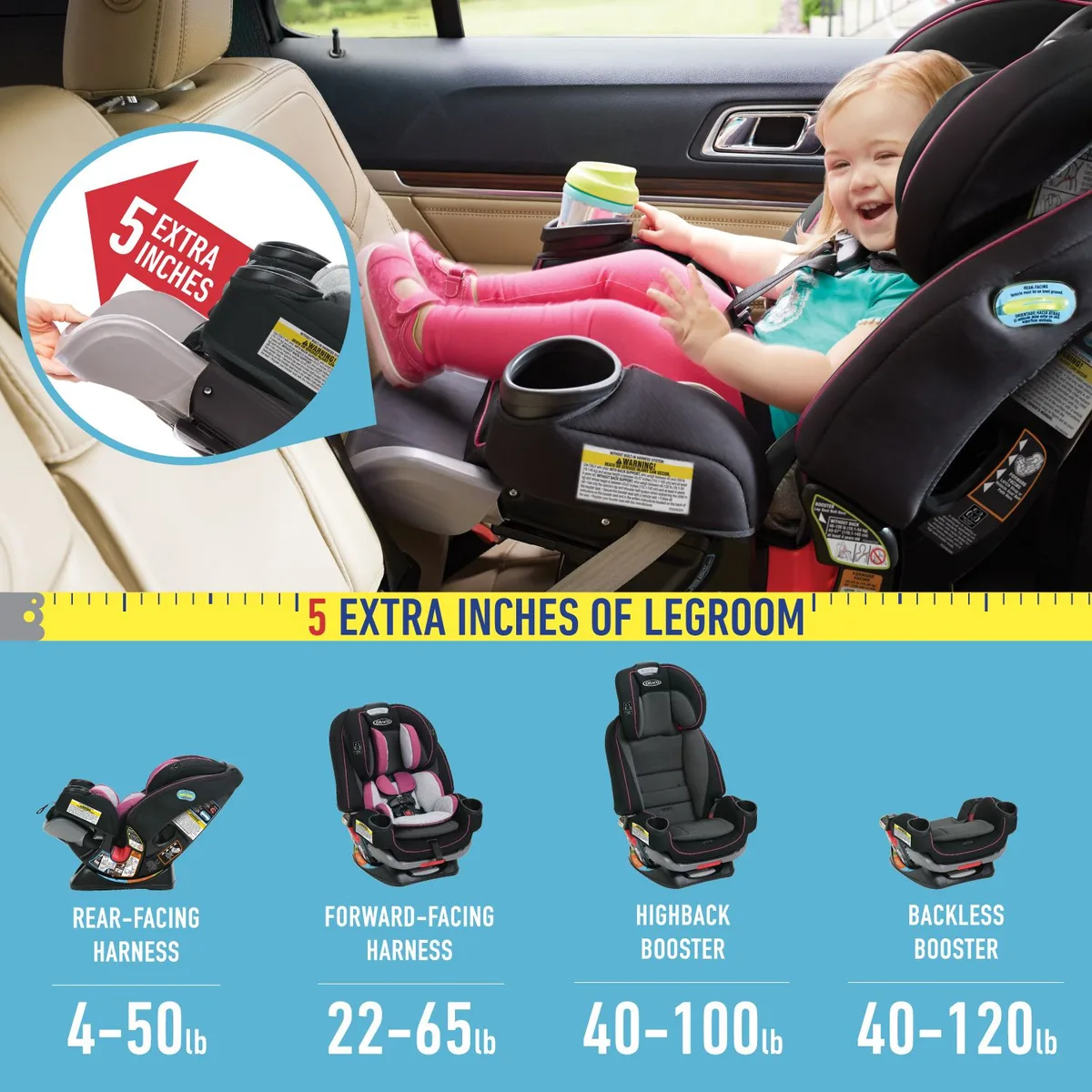
Image source: Web (Bing) / velcromag.com (Web image (fair-use with source credit))
The Harness Slot Position
This one catches a lot of parents off guard. Rear-facing, the harness straps must come from slots at or below the child’s shoulders. If the straps are coming from above the shoulders, the child has outgrown the rear-facing position, even if they haven’t hit the weight limit yet.
Here’s the thing: these three limits work together. You turn the seat forward when the child exceeds any one of them. Not all three.
Any one.
Step-by-Step: How to Know Your Child Is Ready
Ready to check? Here’s the exact process to follow. It takes about five minutes and requires nothing but a tape measure and your car seat manual.
Step 1: Read the manual. I know, nobody reads the manual. But this is the one time it matters. The manual for your specific seat model has the exact rear-facing limits.
Not the general advice you read online. Your seat’s numbers.
Step 2: Weigh your child. Use a home scale or your pediatrician’s office. Write the number down. Compare it to the rear-facing weight limit on the seat label.
Step 3: Measure their height. Have your child stand against a wall. Mark the top of their head. Measure from the floor to the mark.
Compare that to the height limit in the manual.
Step 4: Check the head position. Sit your child in the seat. Look at where their head sits relative to the top of the seat shell. If there’s less than one inch of shell above their head, they’ve outgrown it.
Step 5: Check the harness straps. Look at where the straps come out of the seat. They should be at or below your child’s shoulders. If they’re above, it’s time to turn the seat.
If any of these checks says “outgrown,” it’s time to switch to forward-facing. If all of them say “still fits,” keep them rear-facing. It really is that simple.
One more thing: don’t rush this process. A child who looks cramped with bent knees is not in danger. Their legs are flexible.
Their spine is not. The discomfort you’re worried about is temporary. The spinal injury you’re preventing is permanent.
If you’re dealing with a toddler who fights the seat, we’ve covered some practical solutions for car seat battles that can help without compromising safety.