Pacifier Kids for Jellycats: Is It Legit?
Aggregate reviews of Pacifier Kids paint a mixed picture. As of 2026, the site has been operating for several years and ships from the United States, but it is not listed among the official stockists on Jellycat's own website. That alone raises a yellow flag.
Let's walk through what that means for your purchase decision and how you can protect yourself from a disappointing delivery.
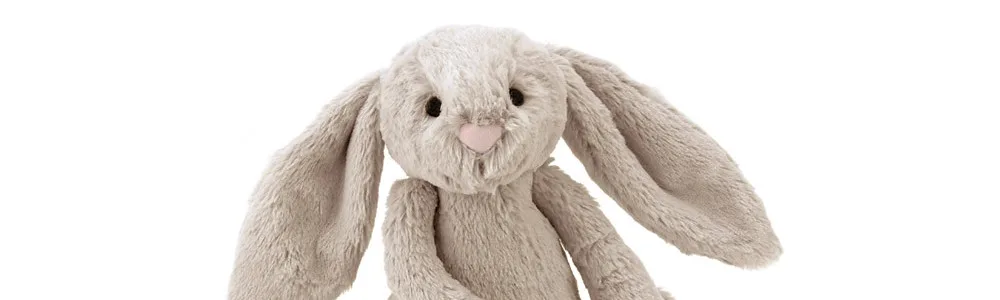
Image source: Openverse / Fleurtations-Nottingham (PDM 1.0)
Quick Answer
Pacifier Kids is a real online store, not a scam. But it is not an authorized Jellycat retailer. That means Jellycat cannot guarantee the authenticity of products sold there.
Some buyers report receiving genuine Jellycats with tags intact. Others describe receiving fakes or items with missing tags. The safest move is to buy from an authorized stockist.
Why This Legitimacy Check Matters for Jellycat Shoppers
Jellycat holds a strong reputation for quality and safety. Their plush toys meet strict standards for small parts and fabric flammability, tested under CPSC guidelines. A counterfeit version may skip those safety checks entirely.
If a baby chews on a fake Jellycat, you have no assurance that the dyes or stuffing are nontoxic.
That's why the legitimacy question goes beyond sticker shock. You're not just risking a few dollars. You're risking a toy that might shed fibers, contain hard plastic eyes that pop off, or carry chemical residues.
Even if you're buying for a collector who won't put it in their mouth, a fake Jellycat loses value fast. The resale market for authentic retired designs is strong. Fakes are worth pennies.
Our research shows that buyers who unknowingly purchased from unauthorized retailers often discover the problem only after the return window closes. That's a costly mistake. Taking five minutes to verify a retailer can save you a lot of frustration.
What Pacifier Kids Actually Is – Retailer Background
Pacifier Kids is an online baby product store based in the United States. They sell a wide range of items, from diapers to car seats to plush toys. The site has been active since at least 2018, with a domain registered in Arizona.
Customer service is handled via email and phone, and they maintain a physical address on their contact page.
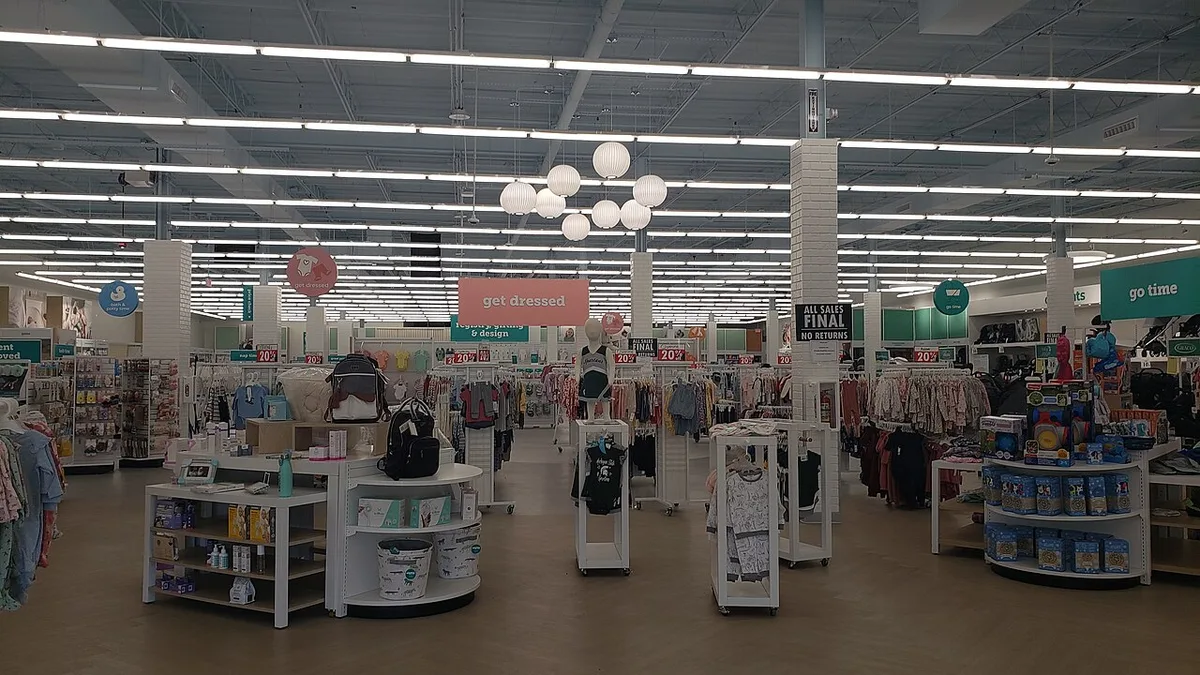
Image source: Wikimedia Commons / 42-BRT (CC BY-SA)
Their Jellycat section carries popular designs like the Bashful Bunny, Fuddlewuddle Puppy, and Smudge Elephant. Prices are often 10 to 30 percent below the Jellycat official retail price. That discount is part of the appeal.
But why can they offer such a markdown? Sometimes it's because they bought overstock from a legitimate distributor. Other times, it's because they source from third-party wholesalers where authenticity is not guaranteed.
The Better Business Bureau lists Pacifier Kids with a modest rating, but a handful of complaints mention receiving used or damaged items. No major fraud alerts exist, but the volume of complaints is higher than typical authorized dealers. For a parent focused on safe baby gear, that's worth noting.
You can also check resources like the CPSC recall database to see if any items from this store have been flagged, though none have as of early 2026. It's always smart to verify your baby's sleep environment too, our guide on whether babies can sleep in car seats covers another common safety question.
The Gold Standard: Buying Directly from Jellycat
The safest way to guarantee an authentic Jellycat is to buy from jellycat.com or an authorized retailer listed on their store locator. Jellycat's official site offers the full current collection, including new releases and restocks. You pay full retail price, but you get every assurance of quality.
What do you get with a direct purchase? The plush arrives in brand‑specific packaging with a hang tag that includes a unique barcode and care instructions. The fabric is consistent with Jellycat's signature ultra‑soft texture.
Stitching is uniform, with no loose threads or uneven seams. If anything is off, Jellycat's customer service handles exchanges promptly.
The downside is availability. Retired designs and limited editions sell out fast. You might wait months for a restock.
That scarcity is what drives collectors to third‑party sites like Pacifier Kids in the first place. But if you want a current model and you can pay full price, the official channel is the gold standard. No guesswork involved.
For new parents figuring out baby gear, you can also learn the taking care babies method to build a solid routine.
Pacifier Kids vs. Official Jellycat – Side-by-Side Comparison
Let's lay the differences out plainly. The table below covers the key factors you care about when deciding where to buy.
| Factor | Pacifier Kids | Jellycat Official |
|---|---|---|
| Authorized stockist | No | Yes |
| Authenticity guarantee | Store policy only | Jellycat‑backed |
| Typical price | 10–30% below MSRP | Full MSRP |
| Return window | 30 days, subject to restocking fee | 30 days, no restocking fee |
| Customer service | Email/phone, mixed reviews | Responsive, direct brand support |
| Rare/retired designs | Sometimes available | Usually sold out |
| Shipping time | 5–10 business days | 3–7 business days |
The most important row is the first one. Because Pacifier Kids is not an authorized dealer, Jellycat cannot step in if something goes wrong. Your only recourse is the store's own return policy.
Some buyers have reported smooth returns, while others describe lengthy email chains and partial refunds. The risk is real but not guaranteed.
If you're buying a common design like a medium Bashful Bunny, and you don't mind a small chance of receiving a fake, the lower price might be worth it. But for a collector's item or a gift you can't replace, the official channel is the safer bet. For parents dealing with a fussy baby during car rides, you might also appreciate tips on how to calm baby in car seat fast and safely.
How to Spot a Fake Jellycat (Even if It Looks Good)
Even experienced collectors can be fooled by a well‑made counterfeit. The differences are subtle but consistent once you know what to look for. Start with the hang tag.
Every genuine Jellycat hangs from a small cardboard tag printed in crisp, bold type. The Jellycat logo uses a specific font with a rounded "J". Fake tags often show blurred printing, off‑center logos, or cheaper cardstock.
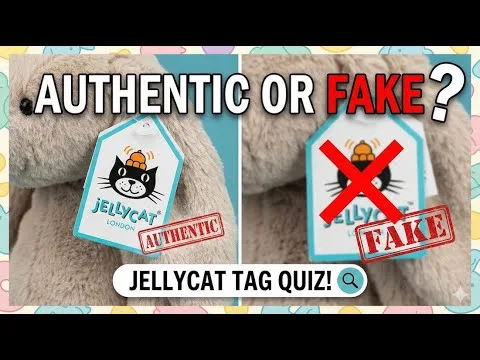
Image source: YouTube / Lin in VIC (YouTube thumbnail (fair‑use with source credit))
Next, feel the fabric. Authentic Jellycat plush uses an ultra‑fine microfiber that is impossibly soft. Counterfeits tend to use a cheaper polyester that feels coarse or slightly greasy.
Rub the fur between your fingers. Real Jellycat fur springs back. Fake fur stays matted.
Check the stitching. Genuine Jellycats have tight, even seams with no loose threads. The nose and eyes are securely anchored.
On a fake, you might see uneven stitches, a crooked nose, or eyes that wiggle slightly. For a baby's toy, that's a safety hazard. Loose eyes can become a choking risk under CPSC testing standards.
Look inside the plush if you can. Authentic Jellycats have a small fabric tag sewn into the seam. It lists the brand name, the collection, and the country of manufacture.
Most genuine plush are made in China or Vietnam. A tag that says "Made in China" is fine. A tag with misspellings or missing care symbols is a red flag.
The Honest Drawbacks of Ordering from Pacifier Kids
Let's be direct about the risks. The biggest one is the authenticity gap. Because Pacifier Kids is not an authorized dealer, Jellycat will not honor warranty claims or authenticity disputes.
You are on your own if the plush arrives looking wrong.
Customer service reports are inconsistent. Some buyers describe quick responses and full refunds. Others share stories of delayed replies, partial refunds, or being asked to pay return shipping plus a restocking fee.
That restocking fee can eat up 15 to 20 percent of the purchase price. For a $50 plush, you could lose $10 just to send it back.
Shipping times also vary more than official channels. While Jellycat ships within a week, Pacifier Kids orders sometimes take ten to fourteen days. A few buyers reported receiving the wrong item entirely and having to fight for a correction.
If you need the plush for a birthday or holiday, the delay is frustrating.
There is also the question of product condition. A handful of reviews mention receiving items that looked returned or shelf‑worn. The tags were missing or the packaging was crushed.
For a collector, that is a dealbreaker. For a gift giver, it is embarrassing.
When Pacifier Kids Might Actually Be a Smart Choice
Not every situation calls for official channels. If you are buying a common, current‑production Jellycat like a medium Bashful Bunny, the discount at Pacifier Kids can be meaningful. Ten to thirty percent off a $45 plush saves you $5 to $15.
For a parent buying several toys, that adds up.
The store also carries designs that are sold out on Jellycat's site. Some buyers report finding retired or limited‑edition items at Pacifier Kids that they could not get anywhere else. If you are chasing a rare Bashful Dragon or a seasonal piece, Pacifier Kids might be your only option outside the resale market.
If you are comfortable with a small risk and you have experience inspecting plush authenticity, the gamble can pay off. Use a credit card with purchase protection. PayPal also offers buyer protection for items that do not arrive or arrive significantly different from described.
That adds a safety net.
Keep the original packaging and take photos when the box arrives. If the item is fake, document it and file a dispute quickly. For a low‑cost purchase where you are willing to accept a small risk, the savings can be worth the hassle.
For parents building a solid routine with baby gear, you might also check the tips on caring for a circumcised baby for other practical advice.
Who Should Avoid Pacifier Kids for Jellycats
If you are buying a gift for someone else, skip third‑party retailers. You do not want to hand over a plush that might be a fake. The recipient will not know you saved money.
They will just see a toy that looks slightly off. That is not worth the discount.
Collectors should also steer clear. A fake Jellycat has no resale value. If you ever decide to sell part of your collection, a counterfeit will be spotted immediately.
It damages your reputation and costs you money. Stick to authorized dealers or trusted resale platforms with authenticity guarantees.
Parents of babies under three years old should be extra cautious. Infants explore toys with their mouths. A counterfeit plush may use dyes or stuffing that are not CPSIA compliant.
The U.S. Consumer Product Safety Commission sets strict limits on lead and phthalates in children's products. An authorized retailer guarantees those standards.
An unauthorized one does not. For more on keeping your baby safe during travel, read up on how to calm baby in car seat fast and safely.
Anyone who hates dealing with returns should also avoid the gamble. If the package arrives wrong or damaged, you will spend time emailing, photographing, and waiting. That is energy you could spend elsewhere.
Paying full price at an authorized store buys you peace of mind.
How to Verify Any Jellycat Retailer Yourself (Step‑by‑Step)
You do not need to trust a single review. You can do your own verification in about ten minutes. Here is the process.
Step 1: Check the Jellycat stockist list. Go to jellycat.com and find the Store Locator. Search for the retailer's name or location. If they are not listed, they are not an authorized dealer.
That is the single most reliable indicator.
Step 2: Search the retailer name plus "authorized dealer" or "Jellycat stockist." Sometimes a store is a legitimate distributor for other brands but not for Jellycat. Their website might list "stockist" pages for other toy lines. If Jellycat is missing from that list, assume they are not authorized.
Step 3: Read recent customer reviews on independent platforms. Look at reviews from the last three months. Sort by newest. Photos from customers are especially useful.
A buyer who posts a picture of their Jellycat with a clear hang tag is a good sign. A review that says "feels different from my other Jellycat" is a warning.
Step 4: Examine the product photos closely. On Pacifier Kids, look at the images. Are they official Jellycat photos or poorly lit smartphone shots? Official product photos from Jellycat show the plush on a white background with clear detail.
If the store uses those photos, they might be dropshipping. If they use their own photos, you can inspect the tag and stitching.
Step 5: Review the return policy before you buy. Look for restocking fees, return windows, and who pays shipping. A store that charges a restocking fee is harder to work with. A store that limits returns to fourteen days is less forgiving.
Know these details before you click purchase.
Step 6: Use a payment method with buyer protection. A credit card or PayPal gives you a second layer of recourse. If the item does not arrive or is significantly different, you can file a dispute. That pressure often makes the retailer more responsive.