What Are the Nurses Called That Take Care of Babies?
If you’ve ever wondered what are the nurses called that take care of babies, you’re not alone. It’s one of the most common questions new parents ask, especially when they’re standing in a hospital hallway trying to figure out who to turn to. The short answer is that there isn’t just one title.
Several different types of nurses care for infants, and which one you’ll see depends entirely on your baby’s health and where you are in the hospital.
According to the National Association of Neonatal Nurses (NANN), more than 500,000 infants are cared for in neonatal intensive care units in the United States each year, and many more pass through well-baby nurseries and postpartum units. That means a lot of nurses with very specific training. Let’s walk through the main roles so you know exactly who does what.
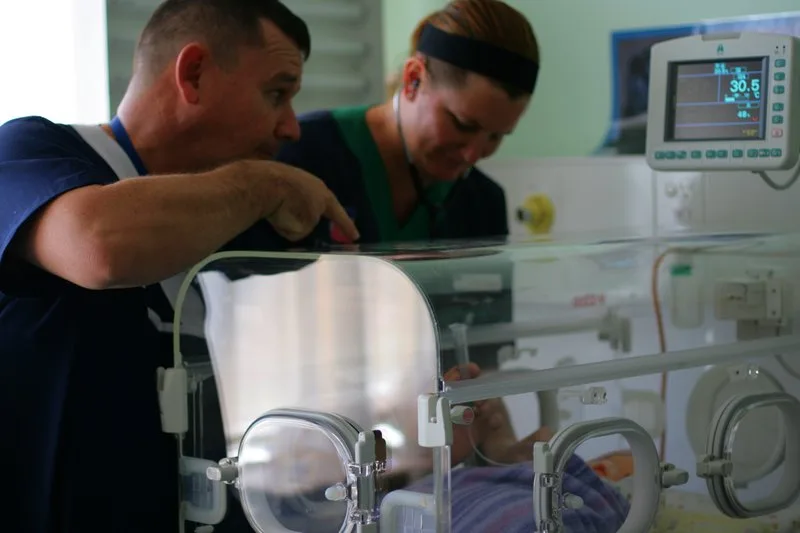
Image source: Wikimedia Commons / Tradimus (CC BY)
Quick Answer
The nurses who take care of babies include neonatal nurses (NICU nurses), well-baby nursery nurses, mother-baby nurses, labor and delivery nurses, and pediatric nurses. Each role has different training, certifications, and responsibilities. The type you encounter depends on your baby’s health and where care happens.
Core Explanation: Every Type of Nurse Who Cares for Babies
To really understand the landscape, you need to know the distinct roles. These aren’t interchangeable titles. Each one reflects a different level of training, a different patient population, and a different setting.
Neonatal Nurse (NICU)
This is the most specialized and commonly referenced role. Neonatal nurses work in the neonatal intensive care unit (NICU). They care for premature babies, infants with birth defects, infections, respiratory distress, or other serious conditions.
These nurses are trained in neonatal resuscitation (NRP certification), ventilator management, and developmental care. Many hold the RNC-NIC certification from the National Certification Corporation.
NICU nurses typically work in Level III or Level IV units. Those are the highest levels of care, meaning they handle the sickest infants. Staffing ratios in the NICU are often 1:1 or 1:2 for critical babies.
That’s intense, focused care.
Well-Baby Nursery Nurse
If your baby is born full term and healthy, you’ll likely see a well-baby nursery nurse. These nurses perform routine newborn assessments, monitor vitals, administer vitamin K shots and hepatitis B vaccines, and help with feeding. They also teach new parents how to bathe, swaddle, and safely put a baby to sleep.
Well-baby nursery nurses are registered nurses (RNs) but may also be licensed practical nurses (LPNs) depending on the hospital’s policy and state scope of practice laws. Their caseload is larger, often 4 to 6 babies per nurse, because these infants are stable.
Mother-Baby Nurse
Also called postpartum nurses, mother-baby nurses care for both the new mother and her newborn in the same room. This is common in hospitals that practice couplet care, where mom and baby stay together. These nurses monitor the mother’s recovery (incisions, bleeding, blood pressure) while also checking the baby’s feeding, jaundice levels, and weight.
Mother-baby nurses are RNs. They need to know both maternal and newborn care. It’s a balancing act that requires broad knowledge.
Labor and Delivery Nurse
Labor and delivery nurses are present during birth. They monitor contractions, manage pain interventions, assist the doctor or midwife, and are the first ones to assess the newborn immediately after delivery. They do the initial APGAR scoring, dry and warm the baby, and facilitate skin-to-skin contact.
Once the baby is stable and moved to the nursery or postpartum room, the labor and delivery nurse’s role ends. They focus on the mother’s immediate postpartum recovery in the recovery room.
Pediatric Nurse (Infants in General Pediatrics)
Pediatric nurses care for children from birth through adolescence. In a hospital setting, they may care for older infants who are admitted for conditions like bronchiolitis, dehydration, or fevers. These nurses hold the Certified Pediatric Nurse (CPN) credential through the Pediatric Nursing Certification Board.
Pediatric nurses are not the same as neonatal nurses. Their training covers a wider age range, and they don’t have the same specialization in newborn physiology or critical neonatal care.
Neonatal Nurse Practitioner (Advanced Practice)
Neonatal nurse practitioners (NNPs) are advanced practice registered nurses (APRNs) with a master’s or doctoral degree. They can diagnose conditions, prescribe medications, order tests, and perform procedures like intubation or umbilical line placement. NNPs often work alongside neonatologists (physicians) in the NICU.
This is the highest level of neonatal nursing. As of 2026, the National Certification Corporation reports that over 8,000 NNPs are certified in the United States. They fill a critical gap, especially in rural hospitals where neonatologists may not be available 24/7.
Comparison: Which Nurse Does What – A Quick Reference Table

Image source: YouTube / NICUCARE BABYS (YouTube thumbnail (fair-use with source credit))
| Nurse Role | Typical Setting | Primary Focus | Typical Patient Acuity | Common Certification |
|---|---|---|---|---|
| Neonatal nurse (NICU) | NICU (levels II–IV) | Critically ill or premature infants | High (1:1 or 1:2 ratio) | RNC-NIC |
| Well-baby nursery nurse | Newborn nursery | Healthy full-term infants | Low (1:4 to 1:6 ratio) | RNC-LRN |
| Mother-baby nurse | Postpartum unit | Mom and newborn together | Moderate | In-hospital training |
| Labor & delivery nurse | Delivery room | Mom during birth, immediate newborn | Variable | In-hospital NRP |
| Pediatric nurse | General pediatric unit | Infants through adolescents | Low to moderate | CPN |
| Neonatal nurse practitioner (NNP) | NICU (all levels) | Advanced care, diagnoses, procedures | High | NCC NNP certification |
This table makes it clear: the nurses that care for babies aren’t one monolithic group. Their training, responsibilities, and the situations you’ll meet them in vary significantly. The image above shows a neonatal nurse working near an incubator, a common scene in any NICU.
Use Cases: Which Nurse You’ll See in Each Situation
Knowing the role names is useful. Knowing when you’ll actually encounter each one is more practical. Here are the three most common scenarios.
Healthy Newborn in the Hospital
You had a full-term pregnancy. Baby came out crying, pink, and breathing fine. After a brief assessment by the labor and delivery nurse, your baby goes to the well-baby nursery or stays in your room with a mother-baby nurse.
The well-baby nursery nurse handles the first bath, the vitamin K shot, the hearing screen, and the bilirubin check. You’ll see them every few hours to check on feeding and vitals.
If your hospital practices couplet care, a mother-baby nurse does all of this right in your room. You get one nurse for both you and your baby. That’s convenient, but it also means that nurse has to split attention between two patients.
Premature or Sick Baby in the NICU
If your baby is born before 37 weeks, has a low birth weight, or develops complications like respiratory distress, jaundice needing phototherapy, or an infection, they’ll go to the NICU. A neonatal nurse takes over. This nurse is likely assigned specifically to your baby, sometimes with a 1:1 ratio in the first days.
The NICU nurse monitors vital signs continuously, adjusts the incubator temperature, manages IV lines or feeding tubes, and documents everything. They are also your main point of contact for updates. You’ll see them daily.
They are the ones who teach you how to do Kangaroo care (skin-to-skin) and how to pump or feed your baby.
Baby at Home with Medical Needs
Some infants go home but still need medical support. This could be a baby with a tracheostomy, a feeding tube, or oxygen dependency. In that case, a home health nurse, often with a neonatal or pediatric background, visits your home.
These nurses are RNs. They monitor the baby’s condition, change dressings, adjust equipment, and train family members.
This is less common but growing. As more premature babies survive, more families need in-home nursing support. Some parents also hire private-duty nurses for overnight care, but those nurses must still be licensed RNs or LPNs depending on state laws.
Common Mistakes to Avoid
A few misunderstandings come up again and again when parents ask about baby nursing roles. Let’s clear them up.
Confusing “Baby Nurse” with a Licensed Nurse
This is the biggest mistake. The term “baby nurse” is often used for non-medical caregivers like newborn care specialists or night nannies. They may have training in infant sleep, feeding schedules, and diaper changes, but they are not registered nurses.
They cannot perform medical assessments, administer medications, or respond to emergencies the way a neonatal nurse can.
If you hire someone who calls themselves a baby nurse, verify their license. An RN has a state-issued license you can check through your state board of nursing. An NNP has additional board certification.
A newborn care specialist typically has no license, just a certificate from a private program.
Assuming All Nursery Nurses Are the Same
Not everyone who works in a nursery is a neonatal nurse. A well-baby nursery nurse is different from a NICU nurse. If your baby is admitted to a Level III NICU, you want a nurse with RNC-NIC certification and NRP training.
A nurse who only works in a well-baby nursery may not have the experience to manage a ventilator or an unstable preterm infant.
When you’re in the hospital, ask. “What’s your background? Are you NICU trained or nursery trained?” It’s a fair question. Most nurses are happy to clarify.
Not Knowing the NICU Level Matters
Hospitals are rated by NICU level, from Level I (basic newborn care) to Level IV (the highest level of intensive care). Not all NICUs are the same. A Level II NICU can handle moderately ill babies, but a baby born at 24 weeks needs a Level III or IV unit.
If your hospital doesn’t have that level, the baby is transferred.
Knowing the level helps you understand what care to expect. It also helps you know what questions to ask. If your baby is in a Level II unit and needs more support, the team will discuss transfer.
The neonatal transport team, which includes a specially trained NICU nurse, handles that move.

Image source: Wikimedia Commons / Kate Greenaway