
How to Choose a Wagon Stroller for Infant and Toddler
You’ve seen them at the park. Those big, four-wheeled behemoths with kids lounging inside like they’re on a royal procession. They look amazing.
They also look confusing as hell if you’re trying to figure out if a wagon stroller for infant and toddler use actually makes sense for your family.
Here’s the honest truth: the answer isn’t simple. It depends heavily on your child’s age, your lifestyle, and what you’re willing to sacrifice. Sure, these wagons have exploded in popularity, but they are not a universal replacement for your standard stroller.
In our research, we’ve found that the moment you stop thinking of them as a stroller and start thinking of them as a versatile cargo-and-kid hauler, the decision gets much clearer.
Manufacturer specifications and aggregate reviews indicate that most wagon strollers support a total weight of 100 to 110 pounds, which is roughly double that of a standard double stroller. However, that cargo capacity comes with a hefty unit weight of 30 to 50 pounds, which you’ll be lifting into your trunk. As of 2026, the market has split into two distinct camps: car-seat compatible wagons for infants and toddler-only models.
Let’s break down how they actually compare so you can make the right call.
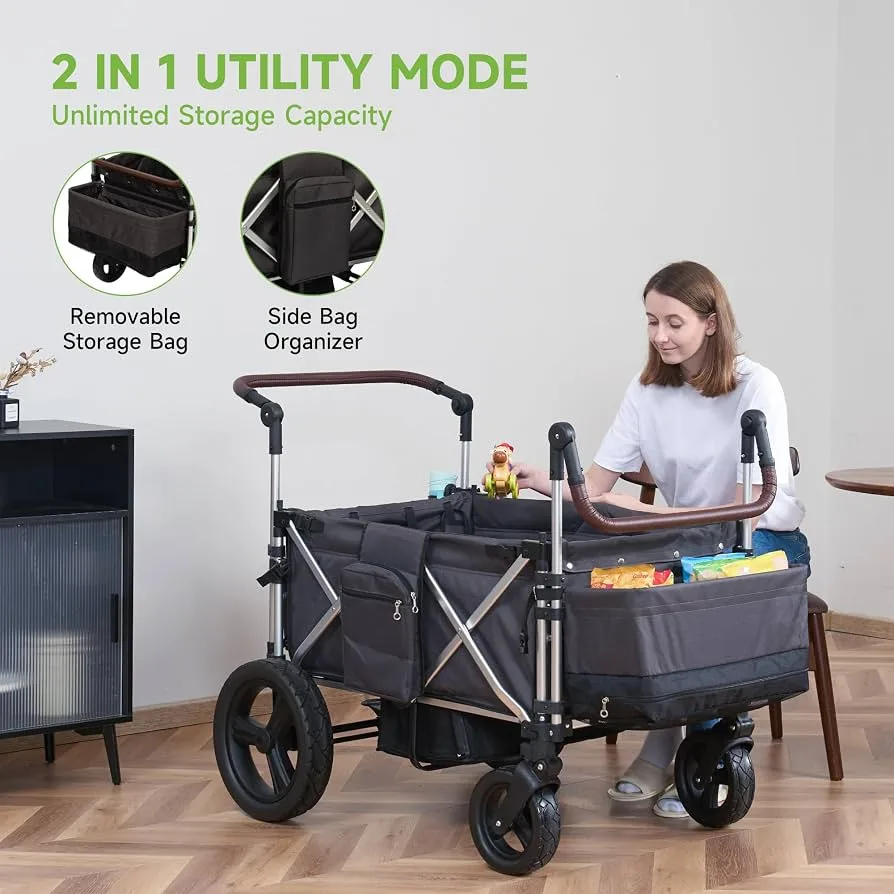
Image source: Bing (Web (fair-use with source credit))
Why This Comparison Matters
The traditional parenting playbook says you get a stroller, then maybe a double stroller when sibling number two arrives. But wagon strollers are rewriting that script, and not always for the better. The core problem is that most parents treat a wagon as a direct substitute for a stroller, which leads to frustration, wasted money, and sometimes unsafe situations.
The real issue is age. A wagon that’s perfect for a 3-year-old is often a terrible choice for a 6-month-old. The seating position, the lack of recline, and the harness design all cater to toddlers who can sit upright unassisted.
Trying to use one for an infant without the proper setup is a safety risk. This isn’t just about comfort; it’s about neck strength, spinal support, and proper positioning.
Aggregate reviews from thousands of verified buyers show a clear pattern: parents who love their wagons either have older babies (12 months+) or they invested in the car seat adapter. Parents who hate their wagons often tried to use them too early. This comparison matters because it helps you avoid that expensive mistake.
You need to know exactly what you’re buying, what your child needs, and whether the tradeoffs make sense for your daily routine.
Quick Answer
A wagon stroller for infant and toddler use works best for families with two or more kids under five. It offers superior cargo space and terrain handling compared to standard strollers. For infants under six months, you must use a manufacturer-approved car seat adapter.
For older toddlers, a wagon with a five-point harness and high weight capacity is ideal. The main tradeoffs are weight, bulk, and price.
What a Wagon Stroller Actually Does (and What It’s Not)
Let’s clear up the terminology first. A wagon stroller is a hybrid product. It looks like a classic children’s wagon but has a push handle, a brake system, and a stroller-style canopy.
Unlike a traditional stroller where the child faces forward or toward you, kids in a wagon typically face each other. That’s a feature for siblings who entertain each other, but it changes the ride dynamics.
These wagons come in two distinct sub-categories, and the difference matters for your decision:
Car-Seat Compatible Wagons
These are the premium models from brands like Veer and Wonderfold. They have a reinforced frame and a dedicated adapter system that allows you to click your infant car seat directly onto the wagon frame. This bridges the gap for parents who need to use a wagon from day one.
The adapter is a separate purchase, usually costing $80 to $120, and it turns the wagon into a massive travel system.
Toddler-Only Wagons
These are simpler designs, often from brands like Radio Flyer or Evenflo. They have a minimum age recommendation of 12 months because the seats don’t recline and the harness assumes your child can sit upright. They’re cheaper, lighter, and easier to fold.
But they’re useless for a newborn or a baby who still needs to nap in a reclined position during outings.
| Feature | Car-Seat Compatible Wagons | Toddler-Only Wagons |
|---|---|---|
| Minimum Age | Birth (with car seat adapter) | 12 months |
| Adapter Included | No (sold separately) | N/A |
| Typical Weight | 40–50 lbs | 20–35 lbs |
| Price Range | $500–$700+ | $150–$350 |
| Recline Function | No (relies on car seat) | No |
| Cargo Capacity | 50–60 liters | 20–40 liters |
So when someone asks “does a wagon stroller really replace a stroller?” our research says: not exactly. It replaces the situations where a stroller works. Heavy grocery runs, trips to the sandbox, zoo days with multiple kids, those are where wagons shine.
Quick trips into a mall or a doctor’s office? A lighter umbrella stroller is still easier.
The Infant Factor: Why 6 Months Is the Magic Number
Here’s the part that confuses most first-time parents. A wagon stroller for infant and toddler use isn’t inherently dangerous for babies. It’s just that the wagon seat itself isn’t safe for them.
Infants need proper head and neck support. They also need to lie relatively flat, especially for naps, to keep their airways clear. Standard wagon seats are upright, rigid, and offer no recline.
Placing a 4-month-old directly into that seat without support is a positioning nightmare. It’s the same reason you don’t stick a newborn in a regular shopping cart seat.
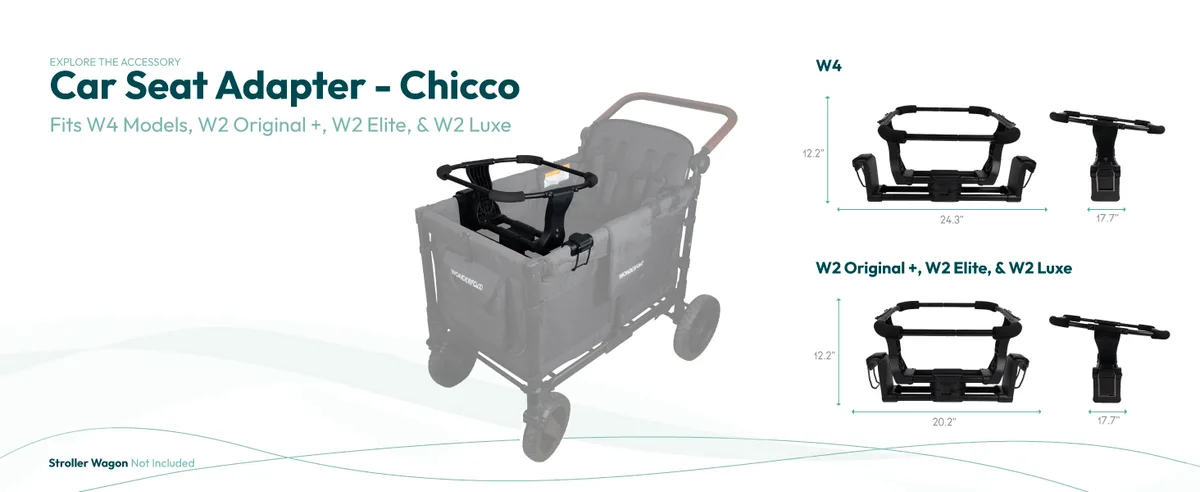
Image source: Web (Bing) / amazon.com (Web image (fair-use with source credit))
The solution is the car seat adapter. This is a plastic or metal frame that locks your infant car seat into the wagon bed. The car seat reclines to the angle your baby needs, and the whole wagon becomes a massive, stable base for it.
It works well, but there are strict rules.
Manufacturer specs for brands like Wonderfold and Veer state the adapter is only compatible with their specific car seat models. You can’t just strap any car seat in with bungee cords. That’s a safety violation.
You need to check the adapter’s compatibility list on the manufacturer’s site before you buy. You also need to ensure the car seat clicks in audibly and locks tight.
One more thing: position limits. The adapter allows the car seat to sit flat against the wagon floor, which is correct. Never prop the car seat up at an angle.
The base must be fully supported. If you’re unsure about how to get that car seat locked in properly, the installation process mirrors what you’d do in a vehicle, and it’s worth reviewing proper techniques to avoid mistakes.
Even with the adapter, the American Academy of Pediatrics recommends limiting time in any car seat to two hours at a stretch. That’s true whether it’s in a car or in a wagon. So while the wagon is great for a slow stroll, it’s not a place for your baby to spend the entire afternoon.
Wagon Stroller vs. The Alternatives
Deciding between a wagon and a more traditional option isn’t just about the products themselves. It’s about your daily reality. Here’s how the wagon stacks up against the other common choices, and who should pick which.
Traditional Full-Size Stroller
This is the gold standard for infants. It has a bassinet or a near-flat recline, amazing suspension, and it’s easy to fold. The big advantage over a wagon is the infant-specific seating.
If you have one baby under six months, a full-size stroller is still the right choice. The downside? Cargo space is minimal.
You’re limited to a small basket underneath, and you’re often fighting to hang a diaper bag off the handles.
Double Stroller (Side-by-Side or Tandem)
A double stroller handles two kids, but the weight limit is usually around 50 to 60 pounds total. That’s fine for toddlers, but it’s tight for two older kids plus snacks and gear. Wagons beat double strollers on seating capacity and cargo room.
However, double strollers are narrower. They fit through standard doorways, while most wagons are too wide for accessible restrooms or crowded store aisles. If you live in a city and go inside buildings frequently, the double stroller wins.
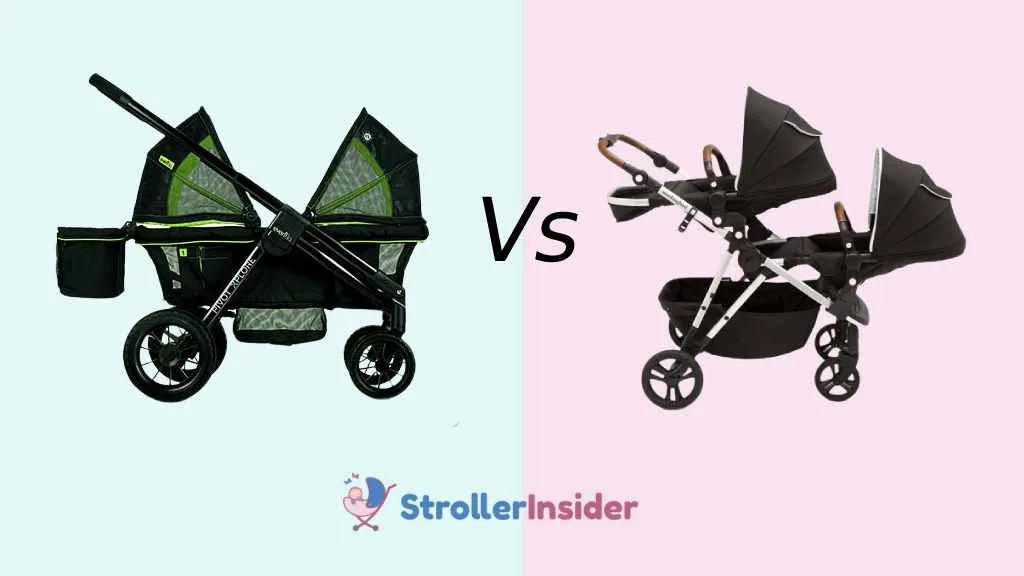
Image source: Bing (Web (fair-use with source credit))
Jogging Stroller
Jogging strollers have huge, air-filled wheels and superb suspension. They’re designed for speed and miles. If you run with your kids, you need a jogging stroller.
A wagon can’t handle a running pace safely. But a jogging stroller is terrible for cargo. You can’t fit a beach umbrella, a cooler, and two kids in a jogging stroller.
For a family outing where you’re walking slowly, the wagon is more versatile.
Basic Pull Wagon
You might already own one of those classic red Radio Flyer pull wagons. They’re great for hauling mulch or toys, but they’re not a stroller substitute. There’s no push handle, no brake, and no harness, at least not in the traditional sense.
Pulling a wagon is ergonomically awkward, and it’s harder to control. If you own one, keep it for the yard. Don’t try to take it to a paved trail or the zoo, you’ll regret it.
Bike Trailer / Stroller Combo
These convert from a bike trailer to a stroller. They’re excellent for active families who bike and walk. They have low centers of gravity and are very stable.
However, they’re lower to the ground than a wagon, which means less visibility for your kids. They also have limited cargo space and a lower weight capacity. If biking is a big part of your life, get a bike trailer.
If you need a box on wheels for everyday excursions, get a wagon.
| Alternative | Best For | Key Weakness |
|---|---|---|
| Full-Size Stroller | Infants under 6 months | Limited storage |
| Double Stroller | Narrow doorways, cities | Low weight limit |
| Jogging Stroller | Running and speed | No cargo capacity |
| Basic Pull Wagon | Backyard play | No safety features |
| Bike Trailer | Cycling families | Low visibility, small storage |
| Wagon Stroller | Multi-kid outings, cargo hauling | Heavy, bulky, expensive |
The bottom line here: if you have one infant, buy a standard stroller. If you have a toddler or two and a need for serious cargo space, the wagon makes sense. Some families end up owning both.
That sounds expensive, but many parents find the wagon replaces both their double stroller and their need for a car, because it’s easier to walk to the park when you can carry everything. The decision really comes down to whether you prioritize maneuverability or capacity.